
Home Services Roll Up Insurance for Acquisition Groups and Platforms
Your QoE Reviewed the Last Three Years of Income and Expenses. Nobody Checked the Last Ten Years of Jobs.

Index

Gordon B. Coyle
CEO, The Coyle Group
845-474-2924
How to get started
Eighteen months after you close your first deal, a water heater the seller installed in 2021 fails and floods a finished basement.
It could just as easily be a panel the seller wired years ago, a septic system they installed that backs up into the house, or a furnace that sends a family to the ER with carbon monoxide poisoning. The trade doesn’t matter. The exposure is the same.
TL;DR. Executive Summary
Home services roll up insurance is a sequence of decisions, not a list of policies. Get the sequence right and every add-on gets easier.
Every contractor you buy comes with its own broker, its own claims history and its own renewal date, and someone should read all of it before you sign. That’s the work we do. At a large brokerage, a group your size is a small fish in a big pond. Here, you’re a big fish in a small pond: senior people read your deals, we return calls and emails within one business day, and 95% of our clients stay with us.
Book a 15-minute call before your next deal.
The Coyle Group is a commercial insurance agency that handles the complex, high-value risks other agencies don’t know how to structure, where the details in the policy are the difference between a paid claim and a denied one.
This guide to home services roll up insurance is for groups buying heating, ventilation and air conditioning (HVAC), plumbing, electrical and septic companies, whatever you call yourselves: a home services platform, an independent sponsor, a search fund, a holding company or a roll-up. Our job is to help you protect your investment and grow with confidence, deal after deal.
Which one sounds like you?
Pick your situation and jump straight to the part of this guide written for it.
“We’re buying our first contractor”
When to bring a broker in, and what to ask the seller for.
“We own 2 or 3 and it’s messy”
One inventory, one renewal calendar and a 90-day plan.
“We’re raising capital for a deal”
What lenders and investors require, and when D&O comes in.
Who Is Home Services Roll Up Insurance For?
It’s for any group buying more than one trade business and combining them. The labels change, and that matters more than it sounds: what you call yourself decides who you ask for help, and a lot of buyers end up with insurance built for a single contractor, not a group that plans to buy five more.
What you call yourself |
What it means |
Where the insurance pressure starts |
|---|---|---|
|
Home services platform |
The first company a group buys, which later companies are added to |
Building a program the next add-on can join |
|
Independent sponsor |
A dealmaker who raises money deal by deal instead of from a fund |
Personal exposure for the partners and investor expectations |
|
Holding company or investment group |
A parent company that owns and runs several trade businesses |
Who is the named insured, and who protects the parent |
|
Roll-up or buy-and-build |
Buying several similar companies and combining them |
Mismatched renewals, carriers and claims histories |
|
Search fund or self-funded searcher (ETA) |
Someone buying and running a first business |
Diligence and closing on a first acquisition |
|
Permanent capital or family office |
Long-term owners with no plan to sell |
Your first deal can be smaller than that.
If you’re buying one small company with no plan for a second, a basic packaged policy may serve you fine, and I’ll tell you that.
Why Does Insurance Get Harder With Every Contractor You Buy?
Because each deal adds another broker, another set of carriers and another claims history, and none of them were built to fit together.
The trades are also fragmented: the Bureau of Labor Statistics (BLS) counted 597,918 private specialty trade contractor establishments in the first quarter of 2026 (a preliminary figure), so most targets come with a small local agent and a program nobody has read in years.
What this looks like in practice
The groups I work with rarely look like private equity. One was a few former professional athletes who pooled retirement savings and started buying HVAC, electrical, plumbing and pool contractors. Another is three college friends who all work in finance, buying contractors across more than one trade. A third bought a septic company in the Southeast, planned a few months to get its feet under it, then two or three bolt-on deals in the first year. In every case, the insurance question isn’t one company. It’s a program that has to keep growing with the group.
What doing nothing costs:
That’s why I use The Coyle Deal-to-Program Map, four stages with their own decisions and red flags:
Four stages. One coordinated insurance program.
Every contractor you buy moves through the same four stages. Each one has a decision to make and red flags to catch before they become your claims.
Before closing
Letter of intent to purchase agreementThe decision
What are we inheriting, and does it change the price?
Red flags
- Claims-made policies with no retroactive date
- A workers’ comp rating (EMR) above 1.2
- The founder holds the only master license
- Exclusions that don’t fit the real work
Closing day
The day you take ownershipThe decision
Is everything bound, notified and certified?
Red flags
- A gap between the seller’s coverage and yours
- Insurers never told about the ownership change
- Certificates that don’t match the lender’s list
- The seller’s D&O canceled with no tail
After closing
The first 90 daysThe decision
Which policies do we combine, and when?
Red flags
- A company missing as a named insured
- Renewal dates scattered across the year
- One add-on’s claims raising the group’s rate
- Four agents for three companies
Leadership protection
Once investors are inThe decision
Who protects the partners and the parent company?
Red flags
- No D&O because no one asked for it
- Technicians paid as 1099s who act like employees
- Large wires with no crime coverage
- Customer data spread across systems, no cyber
One broker for every deal. Review first, market later.We read the target’s file before you sign, then build a program the next add-on can join.
Book a 15-minute callThe Coyle Deal-to-Program Map, The Coyle Group
The rest of this page walks through how home services roll up insurance works at each stage.
When Should You Bring an Insurance Broker Into a Deal?
Before you sign the letter of intent, or the day you do. Most first-time buyers wait until the lender asks for certificates, and by then the findings can’t change the price, the escrow or who buys the tail.
Your QoE firm reads the financials. Nobody on the deal team reads the policies. Insurance diligence should run alongside QoE, not after it.
Many buyers have never purchased commercial insurance before, and the deal is often financed through a Small Business Administration (SBA) loan with its own insurance checklist. Your business broker or deal advisor may recommend an insurance broker; ask for one who reads the target’s file, not just one who can issue certificates.
Here’s how home services roll up insurance work lines up with the deal:
Deal stage |
Insurance work |
Why it matters then |
|---|---|---|
|
Before the letter of intent |
Policy summary and five years of loss runs; screen for deal-breakers |
A bad claims history can change what you offer |
|
Letter of intent to purchase agreement |
Full read of policies, claims and contracts |
Findings feed the reps, indemnity, escrow and tail |
|
Purchase agreement to closing |
Build the submission, approach insurers, confirm lender needs |
A rushed submission gets rushed terms |
|
Closing day |
Bind coverage, issue certificates, notify insurers |
No gap on day one |
|
First 90 days |
Policy inventory, renewal calendar, consolidation plan |
Sets up the next add-on |
For deal diligence, we may propose a fee, and we’ll discuss it before any work begins.
What to Ask the Seller For
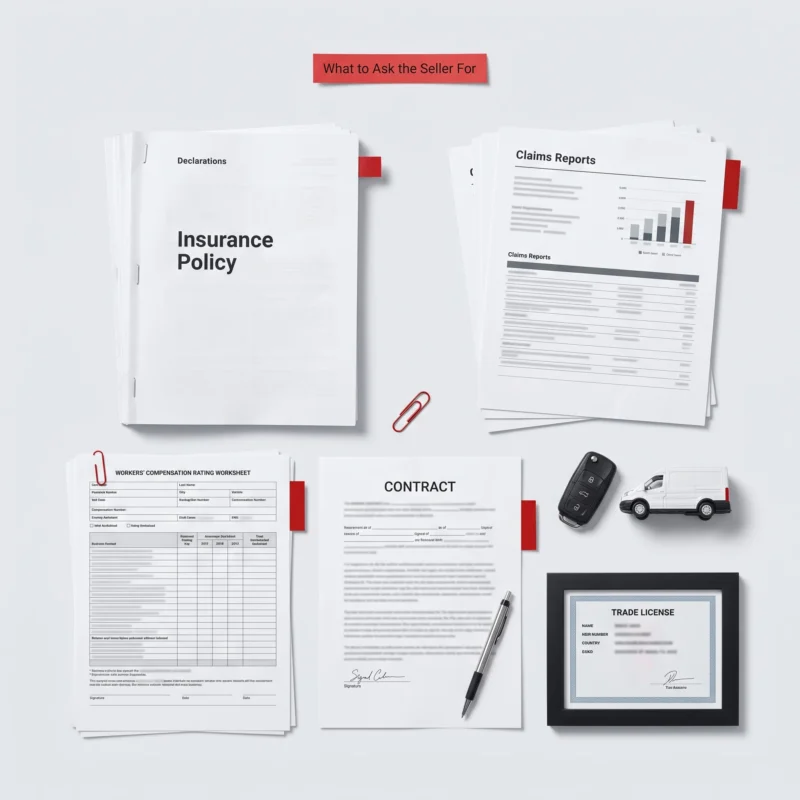
Have a deal under LOI? Send us the loss runs. Book a call and we’ll walk through the seller’s documents in 15 minutes.
What Should You Look for Before You Close on a Contractor?
Look for what the documents don’t announce: claims-made policies, exclusions that don’t match the real work, a workers’ compensation rating nobody checked. Clean loss runs can still hide a bad program. I’ve been in insurance for over 40 years, 18 of them auditing insurance programs during private equity due diligence, and the pattern repeats.
What I check first when home services roll up insurance diligence starts:
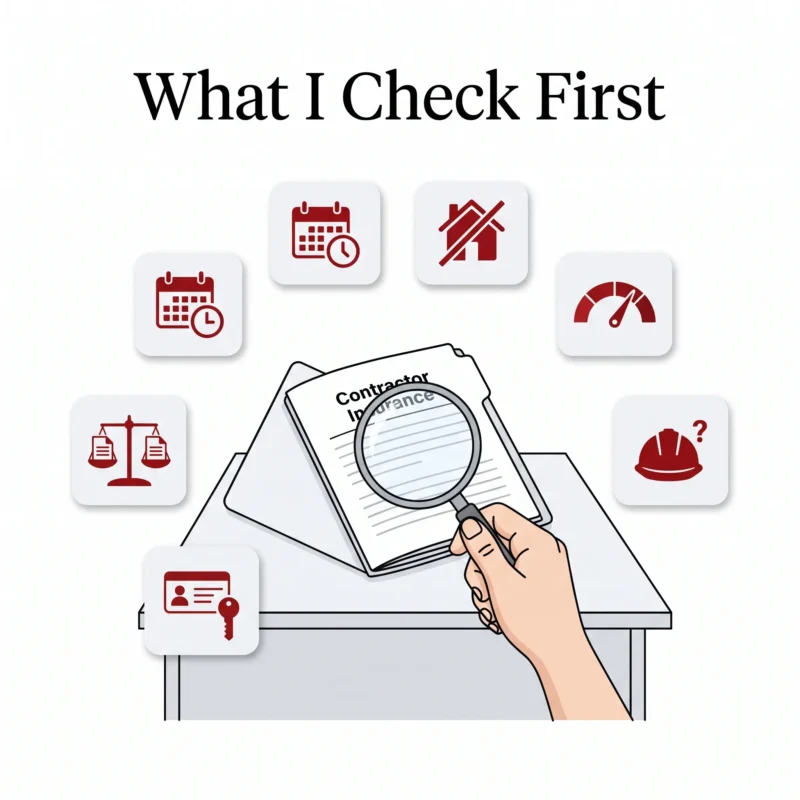
Clean loss runs are a good sign, but they only show claims that have already been made. They don’t show the jobs that haven’t failed yet, and with a contractor, that’s where most of the risk sits. So beyond the loss runs, here’s what I ask the seller for:
That’s the part nobody checks. Your QoE firm looked backward at the numbers. This looks forward at the jobs.
Illustrative scenario: the exclusion nobody read
Picture a buyer under LOI on a plumbing company doing about $4 million a year. The seller’s program looks complete. General liability, commercial auto and workers’ comp are all in place, the loss runs are clean, and the certificates check out.
Then someone reads the actual GL policy. There’s a residential exclusion on it, and about 80% of the company’s work is in people’s homes. Every water heater, every repipe and every drain job in a customer’s house falls outside the policy. The clean loss runs didn’t mean the work was safe. They meant nobody had filed a claim yet.
Found before closing, that’s a fixable problem. The buyer replaces the form, prices the risk into the deal, or asks the seller to cover it from the holdback. Found after closing, it’s the buyer’s problem, with the buyer’s name on the trucks.
That’s why I read the policy forms, not just the certificates and the loss runs.
How Do You Get Carriers to Accept the Seller’s Claims History?
Show underwriters that it’s the same business under new owners, and set up the deal and the submission so the history can follow. Workers’ compensation rules already lean your way. General liability and auto are where you have to make the case, and that case is won or lost before closing.
You closed on the heating and air conditioning company. The trucks, the technicians and the customers are the same as last week.
That’s the problem this section solves: getting a carrier to give you credit for years you didn’t own the company.
The National Council on Compensation Insurance (NCCI), the rating bureau in most states, says that generally, the past experience of the business will be transferred to the new owner.
You report the change on an ownership form, the ERM-14, within 90 days.
Three details matter in a roll-up:
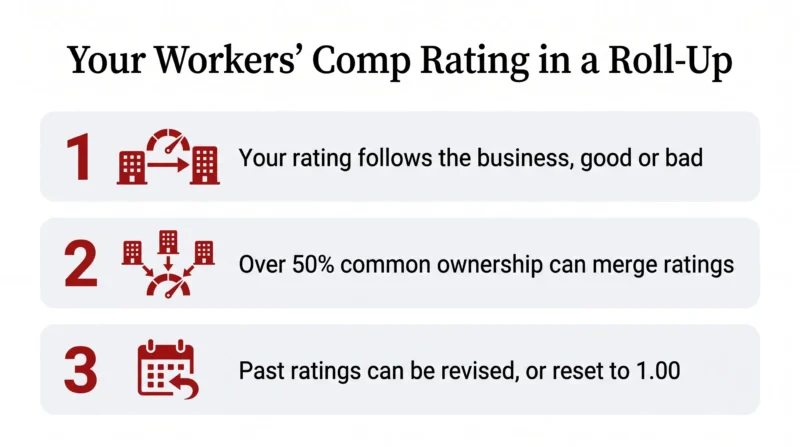
For general liability and auto, it’s underwriter judgment.
Here’s what moves it:
What helps |
Why it works |
|---|---|
|
A stock purchase |
The same legal entity keeps operating, so its history stays its own |
|
A continuity story in an asset deal |
Same managers, crews, trucks and customers, documented in the submission |
|
Keeping the seller’s carrier at first |
It already knows the account and its losses |
|
Key managers staying on |
Underwriters weigh who runs safety |
|
Access to more insurers |
Not every insurer gives credit for prior history |
No structure guarantees an insurer will accept the history, and I’ll tell you honestly when one won’t.
Buying a company whose history you want to keep? Book a call and we’ll plan the submission before closing.
What Has to Be in Place on Closing Day?
Coverage has to be bound and effective the moment you take ownership, with no gap, and the insurers have to know about the change. The tricky part is that “covered” on closing day often means a lender’s checklist, and a checklist can be satisfied by a program that still won’t pay the claim you’re worried about.
What Lenders and Investors Usually Require
Read the commitment letter early, because it lists the home services roll up insurance requirements your lender sets.
For a Small Business Administration (SBA) 7(a) loan, the SBA’s lending rules require hazard insurance on assets pledged as collateral, with details that vary by loan size, and the lender is typically named as loss payee or mortgagee.
Life insurance on a principal may be required when the loan isn’t fully secured and the business depends on one owner. Banks and capital partners set their own lists.
Have a closing date on the calendar? Contact us and we’ll review the target’s program first and go to market later.
Who Covers the Seller’s Old Work After You Buy?
The seller’s old policies only cover damage that happens while those policies are in force. Most completed-work claims happen after closing. So the real question is what responds when the seller’s 2021 water heater fails in 2027.
In an asset purchase, your new company didn’t do that work, and your policy may not cover it. The seller usually cancels their insurance after closing. The homeowner sues the company with the name on the trucks anyway. Lawyers call this successor liability: the argument that because you kept the name, the trucks, the phone number and the crews, you took on the old company’s mistakes too. Unless the seller buys discontinued completed operations coverage, or your policy is endorsed to pick up the predecessor’s work, nobody’s insurance may respond.
In a stock purchase, the coverage is there, because it’s the same company. But their workmanship now hits your deductible, your loss history and your next renewal.
Policy type |
What happens at closing |
What to arrange |
|---|---|---|
|
Occurrence (most GL and auto) |
Only covers damage that happens during the policy period. Once the seller cancels, a job that fails after closing isn’t covered by their policy. |
Asset deal: the seller buys discontinued completed operations coverage, or your policy is endorsed to cover the predecessor’s work. Stock deal: price the seller’s workmanship into your deductible and renewal. |
|
Claims-made (D&O, E&O, employment practices, many pollution forms) |
Stops covering new claims once canceled |
Tail coverage, usually 100% to 300% of annual premium |
|
Workers’ compensation |
Injuries before closing stay with the seller’s policy |
Verify open claims and reserves |
Who pays for the tail belongs in the purchase price conversation.
How Do You Get Control of Policies Across Several Companies?
If you’re the operations lead or CFO who inherited three brokers and a stack of renewal dates, start with one inventory of every policy you now own, then a single renewal calendar.
It sounds like admin, but it’s where most gaps turn up: a company missing from a policy, two umbrellas that don’t stack, a renewal nobody saw coming.
Home services roll up insurance gets manageable with one row per policy, for every company.
Track these columns:
Column |
What to record |
What it catches |
|---|---|---|
|
Company and policy |
Each entity and each line of coverage |
Companies missing from a policy |
|
Insurer and broker |
Who writes it and who services it |
Too many agents on one group |
|
Policy period |
Start and renewal dates |
Renewals nobody saw coming |
|
Limits and deductible |
Per claim, aggregate, retention |
Limits that don’t match the group |
|
Occurrence or claims-made |
Form type and retroactive date |
Tail and prior-acts gaps |
|
Named insureds |
Every entity listed on the policy |
The most common gap I find |
Then work a 90-day plan for your home services roll up insurance:
Own two or three contractors already? Contact us and we’ll build the inventory with you.
Should You Consolidate Policies or Keep Them Separate?
Consolidate where it makes sense, and keep companies separate where it doesn’t, for example when one of them would drag the rest down. That second part surprises people: a master program sounds cleaner, but if one add-on has a bad claims history, putting it on the group policy can reprice everyone.
Structure |
Best for |
Trade-off |
|---|---|---|
|
Keep legacy policies for now |
A new add-on with unusual risks or a renewal coming up soon |
Fragmented administration, uneven protection |
|
Group master program |
Similar trades, steady deal flow, clean records |
Needs underwriting, onboarding and consistent data |
|
Project wrap-up |
A single large construction project |
Not a tool for combining companies |
Search for home services roll up insurance and you’ll find wrap-up programs mixed in.
Treat them as separate tools.
A roll-up is not a wrap-up
The names sound alike. The insurance does completely different jobs.
Corporate strategy
Roll-up
One owner group buys several companies and combines them.
- What it insures
- The companies themselves, every job, every day
- Who is covered
- The holding company, each operating company and its people
- How long it lasts
- Ongoing, renewed every year as companies are added
- Who sets it up
- The buyer group and its broker
- Core coverage
- General liability with completed operations, auto, workers’ comp, umbrella, plus D&O, EPLI, cyber and crime for the owners
- Typical mistake
- Assuming each seller’s program fits the group
Project insurance
Wrap-up (OCIP or CCIP)
One insurance program built around a single construction project.
- What it insures
- One project site, for the length of the project
- Who is covered
- The owner, the general contractor and enrolled subcontractors on that site
- How long it lasts
- The project, plus a completed operations period
- Who sets it up
- The project owner (OCIP) or the general contractor (CCIP)
- Core coverage
- General liability, workers’ comp and excess limits for work on that site
- Typical mistake
- Thinking it replaces your company’s own insurance
The Coyle Group
Want to know which structure fits your group? Book a call and we’ll walk through it in 15 minutes.
Do the Owners Need Their Own Protection?
Usually yes, once outside investors, lenders or a board are involved, because the partners making acquisition decisions can be sued personally for them. No lender or SBA rule requires D&O, and in my experience almost no buyer asks about it. Any broker will sell you the policies the bank needs; an advisor tells you about the claim nobody mentioned. The decision should come from your exposure, not a lender’s checklist.
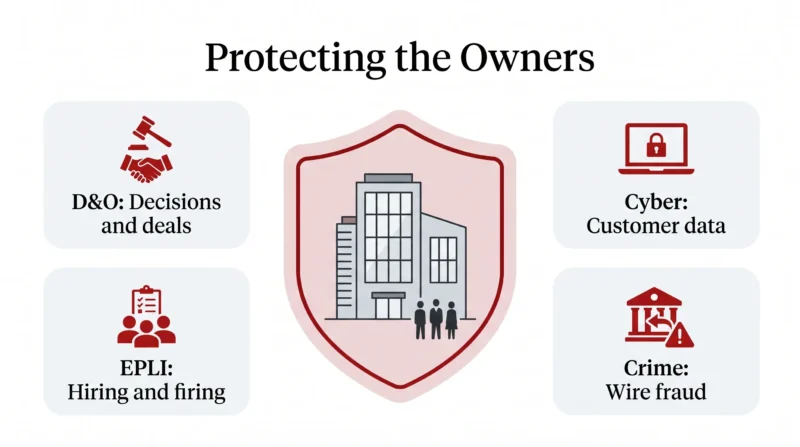
Which Trade Exposures Change the Program?
In home services roll up insurance, each trade brings its own claims, and a program built for one trade can miss the others.
Trade |
Exposures to price in |
What I check in the policy |
|---|---|---|
|
HVAC |
Refrigerant releases, rooftop rigging, design-build errors |
Pollution wording, E&O for design work |
|
Plumbing |
Water damage to customer property, backflow testing |
Water damage exclusions and sublimits |
|
Electrical |
Fire after an install, shock injuries, license continuity |
Completed operations limits |
|
Septic |
Spills and sewage releases, heavy vacuum trucks |
Contractors pollution liability and auto limits |
|
All trades |
Service vans, tools, technician injuries |
Auto schedules, tools coverage, class codes |
The BLS counted 2.3 recordable injury and illness cases per 100 full-time workers in specialty trade contractors in 2024, which is why the workers’ compensation plan deserves real attention.
A waiver of subrogation in a subcontract can also shift a loss onto your policy.
What Do Underwriters Look At, and What Drives Cost After a Roll-Up?
Underwriters price the combined risk you hand them: payroll, trades, vehicles, claims and controls. And here’s what most groups miss: they also judge how well you present it. One clean submission for the whole group gets a very different reception than five separate files with five different stories.
These are the five factors that decide eligibility and price for home services roll up insurance:
Factor |
Why underwriters care |
What to have ready |
|---|---|---|
|
Payroll by trade and state |
Drives workers’ compensation and GL rating |
Payroll by class code for every company |
|
Claims history and EMR |
Predicts future losses |
Five years of loss runs, EMR worksheets |
|
Fleet size and drivers |
Auto is often the largest exposure |
Vehicle schedule, driver list, safety program |
|
Trade mix and type of work |
Residential, commercial, pollution and design exposures |
Revenue split by trade and job type |
|
Subcontractor use |
Uninsured subs land on your policy |
Contracts, certificates, additional insured wording |
Everything else in home services roll up insurance pricing moves with the factors above.
Consolidation can improve terms, but it’s not a guaranteed discount.
Want your group’s numbers read before an underwriter sees them? Book a call for a 15-minute review.
How Do We Work With Acquisition Groups?
We start with a Confidential Review of what you have or what you’re buying, then build the program before anything goes to market. Every add-on tests whether the first program was designed or just assembled, so the order matters for a growing group: read first, then market.
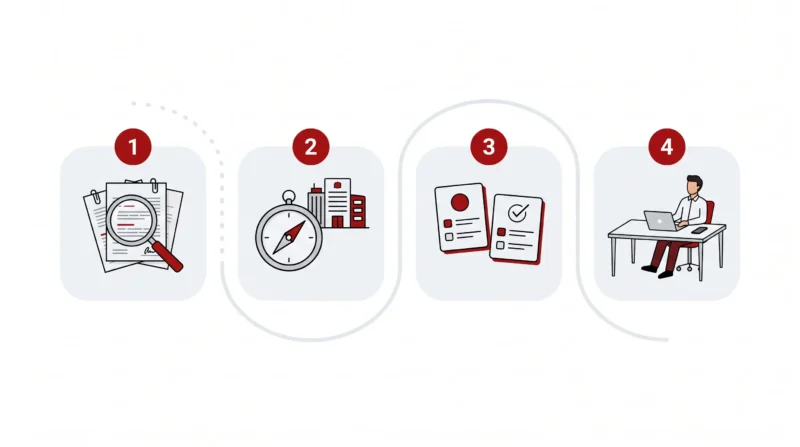
There are two ways in.
Why a Boutique Broker Fits a Growing Group
At a large brokerage, a group of three or four contractors is a small fish in a big pond.
Here, you’re a big fish in a small pond, and your account gets more personal, more directed attention.
What About Getting Quotes From Several Brokers?
Comparing options is smart.
Once one broker has approached an insurer, that insurer often won’t quote the same account through a second broker, and the account loses attention.
Red Flags in a Roll-Up Program
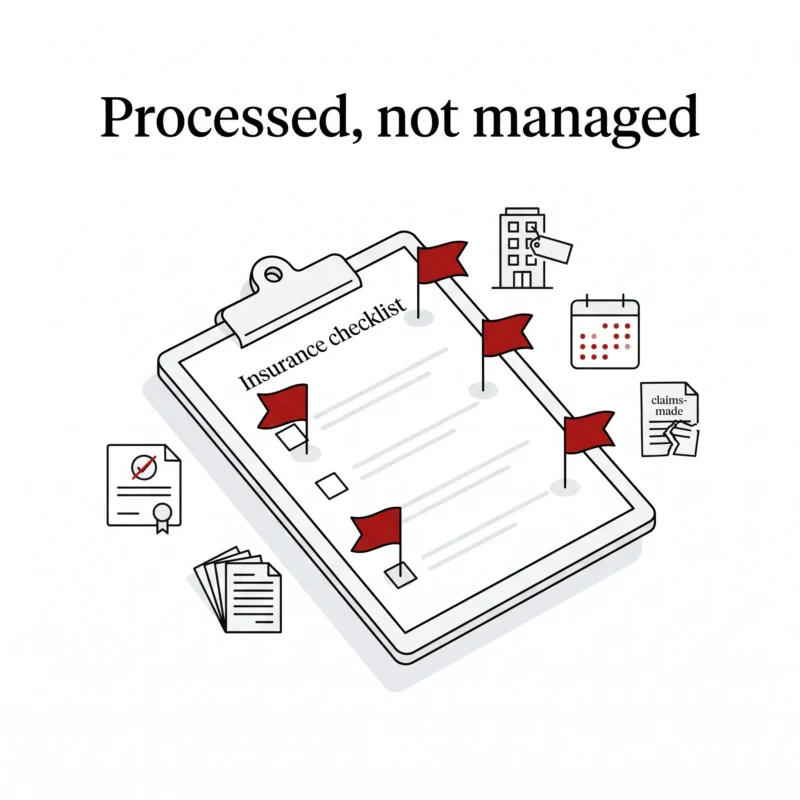
These are the signs your home services roll up insurance is being processed, not managed:
Questions about Home Services Roll Up Insurance?
Build One Insurance Program Your Next Add-On Can Join
Home services roll up insurance has to be built around how you buy and run companies, not around whichever broker each seller happened to use. That’s the difference between being covered and being adequately covered. It shows up when a claim from the seller’s old work lands or the next add-on has to fit in.
Our family has been in the insurance business since 1929, and we only do business insurance. We’re an independent boutique, so your group gets senior attention, not a place in the queue. You don’t need five brokers shopping your insurance. You need one capable broker making sure the right insurers compete for your business.
The first step costs nothing and doesn’t disrupt your current broker. We put the target’s policies, claims history and contracts side by side with your group’s program, then tell you what’s working, what’s missing and what I’d change.
Book a 15-minute call. If your program is solid, I’ll tell you that too.

This article was written by the CEO of The Coyle Group, Gordon B. Coyle, CPCU, ARM, AMIM, PWCA, who has over 40 years of experience working with business owners of all sizes and industries across the US, solving their insurance challenges.
Here’s how to take the next step
Schedule Your Insurance Confidence Assessment
In our 30-minute call, you’ll discover:
Not ready for a call?
Get Free Access to Our Gated Video:
“How to Finally Feel Confident in Your Coverage. “
And discover the exact system we use to help business owners eliminate hidden coverage gaps, stop overpaying, and finally feel confident in their protection.
What Peace of Mind Looks Like
Trusted by business owners across the U.S.
The Coyle Group is 1st class! Gordon and his team are knowledgeable, responsive, and attentive to detail. Gordon is that rare breed of professional who genuinely cares for his clients and works hard to exceed their expectations. I highly recommend them.


The insurance brokerage service was truly tailored to my needs, nothing like those big brokers who steer you toward random policies that don’t fit your profile. Thank you to the team for your help.

I was working with another broker and having difficulty acquiring General Liability coverage. A colleague recommended The Coyle Group. They were able to get coverage bound in just a couple of business days and a policy issued in ten days, and with a solid carrier at a competitive premium. Truly impressive results, plus it was a pleasure working with them. I highly recommend the Coyle Group!

If any business is looking to work with an insurance brokerage firm that is not only excellent at what the firm does, but one that deeply values the needs of the clients, then The Coyle Group is the firm for you. Give them a call and see for yourself. I can assure that you will quickly agree.

Want to know more?
See related blogs

The Crowdstrike Debacle and Cyber Insurance
Third Party Employment Practices Liability Insurance. Protect Your Business

Are You Overpaying or Underinsured on Your Business Insurance?
