
Commercial Insurance Coverage Gaps
The 9 That Trigger Denied Claims (and How to Find Yours)

Index

Gordon B. Coyle
CEO, The Coyle Group
845-474-2924
How to get started
You paid your premiums for years, you assumed your business was protected, and then something finally went wrong and you were told it was not covered.
That is the exact moment most owners discover a gap: after the loss, when a claim gets denied or paid at a fraction of what they needed.
One owner put it bluntly after a break-in, saying the loss exceeded 500,000 dollars but the policy only covered 80,000.
Another watched their doors stay boarded up for eight months with no income coverage at all.
Commercial insurance coverage gaps are the exposures your program does not actually cover, and they rarely announce themselves.
The Coyle Group is a commercial insurance agency for business owners who have outgrown one-size-fits-all coverage and need a specialist who understands the nuances, and this guide walks you through the nine gaps we see most, plus how to find them in your own policy before they find you.
You feel like your insurance is fine because it keeps renewing, but you are not sure it would actually pay in a real loss. That uncertainty is the gap. What we do is stress-test your program against the losses that actually happen, name the holes in plain language, and show you what to fix. Most programs we review hide commercial insurance coverage gaps the owner never knew about.
Book a no-obligation coverage review.
What is a commercial insurance coverage gap?
A commercial insurance coverage gap is any risk your program fails to fund: a missing policy, an excluded peril, or a limit set too low to cover the loss. Here is the part most owners miss. The most expensive gaps are not the risks you forgot to insure; they are the ones you assumed you already had.
If you are still shopping for your first policy rather than reviewing an existing one, the gaps below still matter, but the basics come first.
Sublimits and coinsurance are a second-year problem, not a first-year one.
Over more than 40 years reviewing programs, I have found it helps to sort gaps into three buckets:
The cost of leaving these alone is not theoretical. Nine out of ten insurance programs we review contain at least one fatal flaw, and the price of a single one runs into six figures fast.

If you want a second set of eyes, start with a conversation.
Why do coverage gaps happen if I already have insurance?
Most commercial insurance coverage gaps happen because the business changed and the policy did not. You added locations, revenue, payroll, equipment, vehicles, or contracts, and the program kept renewing on autopilot as if nothing moved. The trap is that renewal feels like a checkup when it is really just a copy-and-paste, and that quiet drift is exactly where exposure builds.
Nobody did anything wrong; the policy just stopped matching the company.
The same patterns show up again and again:
Bottom line is that almost all insurance programs we review contain at least one fatal mistake.
That is why what your broker reviews at renewal matters so much, and why gaps are so predictable once you know where to look.
A real review compares the policy against the business as it exists today, not as it existed three renewals ago.

The 9 most common commercial insurance coverage gaps
The most common commercial insurance coverage gaps cluster around nine exposures: cyber, business interruption, supply chain, property valuation, flood and earthquake, equipment breakdown, employment practices, management liability, and non-owned auto. What ties them together is one pattern: each looks covered on the surface, and each has a reason it quietly is not. Here is the full map.
Gap |
Why it is missed |
What to review |
|---|---|---|
|
Standard property and liability forms do not respond to breaches, ransomware, or social engineering |
First-party cyber, incident response, crime and social-engineering sublimits |
|
|
Business interruption |
Income period, payroll treatment, or indemnity period set too low |
Business-income worksheet, recovery period, civil authority |
|
Supply-chain disruption |
A supplier failure may not damage your own property, so ordinary BI does not trigger |
Contingent business interruption, dependent property, sublimits |
|
Values left at old numbers as replacement costs rise |
Statement of values, coinsurance or agreed value, inflation guard |
|
|
Flood and earthquake |
Excluded from standard commercial property |
Separate flood or earthquake coverage, flood-zone review |
|
Equipment breakdown |
Mechanical and electrical breakdown restricted under property forms |
Equipment breakdown, spoilage, lost income |
|
Employment practices (EPLI) |
General liability does not cover harassment, discrimination, or wrongful termination |
EPLI limits, third-party coverage, wage-and-hour sublimits |
|
General liability excludes financial loss from advice or management decisions |
E&O, D&O, contractual liability wording |
|
|
Hired and non-owned auto |
Employees’ personal and rented vehicles fall outside owned-auto coverage |
Hired and non-owned auto endorsement |
This is the gap I lose the most sleep over, because it is both the most common and the most misunderstood.
It will not.
According to the Insurance Information Institute, most traditional commercial general liability policies do not cover cyber risks, which leaves the exposure entirely uninsured unless you buy a dedicated policy.
Even owners who buy cyber often buy too little.
The ransom alone swallows a 100,000 dollar sublimit, before you touch forensics, legal, notification, and lost revenue.
If you carry cyber at all, confirm the real limits and the social-engineering coverage inside your cyber insurance before you need them.
Business interruption coverage exists to replace lost income when a covered event shuts you down, and it is one of the most frequently underbuilt lines on the page.
The catch is in the fine print: the income period, the payroll treatment, and the indemnity period all have to match how long a real recovery takes.
Owners tell me the same painful story, that neither policy compensated them for the months they sat closed.
To pressure-test this line, review:
Supply-chain gaps show up when a supplier or customer fails and your own property is never touched.
Ordinary business interruption requires direct physical loss at your location, so a vendor’s fire or a key customer’s shutdown can wipe out your revenue while your policy stays silent.
In practice, this gap hits hardest for manufacturers, distributors, and any business built on a small number of critical suppliers.
Review whether your program includes contingent business interruption coverage, whether suppliers are named or unnamed, and how the sublimits and waiting periods are set.
A single dependent supplier can carry more of your revenue than any one piece of equipment.
Property underinsurance happens when your building, equipment, and inventory are insured for less than it costs to replace them today.
If your values are too low, a coinsurance clause reduces what the insurer pays, so a covered claim still leaves you writing a large check.
From what we see in practice, this is the quietest gap of all, because the policy looks complete right up until the adjuster applies the math.
Confirm your statement of values reflects current replacement costs, ask whether you carry agreed value (a preset value the insurer won’t second-guess at claim time) or inflation guard (an automatic bump to keep pace with rising costs), and check for ordinance-or-law coverage (which pays the extra cost of rebuilding to current code) on older buildings.
Virtually every standard commercial property policy excludes flood and earthquake, which makes them pure uninsured gaps unless you add separate coverage.
It does not, and the geography of risk is wider than most people think.
FEMA notes that properties well outside mapped high-risk zones still flood.
The scale of the shortfall is striking.
Industry research cited by the III estimates that, on average, roughly 86% of flood losses and 90% of earthquake losses go uninsured.
If your business sits on a ground floor, holds inventory low, or depends on a single location, review a separate flood policy through the National Flood Insurance Program or a private market, plus earthquake coverage where the exposure warrants it.
Equipment breakdown covers the internal mechanical and electrical failures that standard property policies restrict or exclude.
Owners often assume a property policy covers anything that breaks.
This gap matters most for businesses that run on refrigeration, production equipment, HVAC, or specialized machinery.
Review whether your program includes equipment breakdown coverage, whether it extends to spoilage of perishable stock, and whether it replaces lost income during the repair.
The machine that runs your revenue deserves its own protection, not an assumption.
Employment practices liability covers claims your general liability policy specifically excludes: harassment, discrimination, retaliation, and wrongful termination.
This is one of the fastest-rising claim types we deal with.
The numbers make the case.
In any given year, US companies face roughly a 1-in-10 chance of an employment charge being filed against them, according to Hiscox, odds that stack up fast across the life of a business.
Once you pass roughly 25 employees, this coverage stops being optional.
Review your EPLI limit, whether it includes third-party coverage for customer claims, and any wage-and-hour defense sublimit.
Hired and non-owned auto covers the vehicles your business uses but does not own, from employees’ personal cars run on errands to rented trucks.
Owners assume that because they do not own a fleet, they carry no auto exposure.
If anyone drives a personal or rented vehicle for business purposes, even occasionally, confirm that you carry a hired and non-owned auto endorsement.
It is one of the least expensive fixes on this list and one of the most commonly missing.
That covers the nine, so the next question is how to find which of them are hiding in your own policy.

Professional liability and directors and officers coverage protect against financial and management risks that general liability was never built to cover.
That boundary is where a lot of businesses fall through.
If you give advice, deliver a professional service, sit on a board, or make decisions that affect employees, investors, or creditors, you likely need errors and omissions or directors and officers coverage.
Review whether these lines exist in your program and whether the wording matches what your company actually does.
That means the policy in force when a claim is filed is the one that responds, not the policy that was active when the mistake happened.
Switch carriers or let coverage lapse without carrying your retroactive date forward, and a mistake from years ago can come back to a policy with nothing behind it.
Confirm the retro date every time this coverage renews or changes carriers, not just the limit.
How do I identify the gaps in my own policy?
You identify commercial insurance coverage gaps by comparing your business as it operates today against your policy’s exclusions, sublimits, and limits, line by line. The most useful move is deceptively simple: read the declarations page and the exclusions with your actual operations in mind, not the insurance language in the abstract. That is where the mismatches surface.
Over the years I have found the fastest way to spot a gap is to ask operational questions, then trace each one back to the policy:
Each “no” or “not sure” points at a likely gap.
The frequency of these reviews matters as much as the depth, which is why we recommend a real look at least annually and after any major change.
Here is how often you should review your business insurance and what a genuine review includes.

Your commercial coverage-gap self-audit checklist
This checklist turns the nine gaps into a quick self-audit you can run to surface commercial insurance coverage gaps in about fifteen minutes. Work through it with your declarations page open, and treat every box you cannot confidently check as a gap to raise with your broker. It will not replace a professional review, but it tells you fast where you stand.
If more than one box gives you pause, you are in normal company, and it is worth a professional review.
What your general liability and BOP do NOT cover
Your general liability policy and business owner’s policy cover a narrow slice of risk, and the gaps live in everything they leave out. Most owners assume a BOP is an all-in-one shield. It is a solid foundation, but it was never built to answer for cyber, employment, professional, flood, or management exposures. That boundary is where the missing pieces hide.
Covered by standard GL / BOP |
NOT covered (separate policy or endorsement needed) |
|---|---|
|
Third-party bodily injury and property damage |
|
|
Basic building and business personal property |
Flood and earthquake |
|
Business income after a covered property loss |
Supplier-driven (contingent) business interruption |
|
Products and completed operations liability |
Employment practices claims (EPLI) |
|
Personal and advertising injury |
|
|
Owned-vehicle liability (with commercial auto) |
Hired and non-owned auto (without the endorsement) |
The takeaway is not that a BOP is weak.
It is that a BOP is a starting point, and closing your commercial insurance coverage gaps means layering the right coverage lines on top to match your real operations.
Mapping that layering is exactly what a specialist does.
What drives the cost of closing a gap
Closing a gap does not mean buying every coverage at the highest limit on the menu. Premium moves with a handful of concrete factors, and knowing them is what separates a real fix from an unnecessary upsell.
The right move is rarely “buy more.”
What to do when you find a gap
When you find a gap, the goal is not to panic-buy every policy on the menu; it is to close the exposures that would actually threaten the business first. The smartest owners turn a gap review into leverage, walking into the broker conversation able to tell a meaningful coverage improvement from a generic upsell. That shift, from guessing to knowing, is the whole point.
In practice, closing gaps well comes down to a few disciplined moves:
The right partner should be doing this with you, not selling around it.

A generalist can quote your general liability in an afternoon; closing gaps like these usually means placing coverage with carriers who actually underwrite the niche risk in front of them, negotiating sublimits instead of accepting the first number offered, and tracking a retro date across multiple renewals so old exposure never falls through the cracks.
If you are not sure yours is doing that, here is what your insurance broker should actually be doing on your behalf.
Real claim we handled
A distribution client came to us carrying what looked like a complete program. Buried inside it was a 100,000 dollar cyber sublimit, which the owner assumed was a full million-dollar policy. When we modeled a realistic wire fraud loss against it, the shortfall was staggering: the sublimit would not have covered the ransom, let alone the recovery costs and lost revenue. We restructured the program before an event forced the issue. Not every business gets that warning in time. One law firm we know of lost a 400,000 dollar wire fraud claim outright, denied because they had not followed the authentication procedures their policy required. The gap was not a missing policy. It was a limit and a condition nobody had read.
Quick answers and buying considerations
Questions about Commercial Insurance Coverage Gaps?
Get The Right Coverage For Your Commercial Insurance
You already carry insurance, so you assume your business is protected. The problem is that most coverage gaps stay hidden until a claim exposes them, whether that is a buried exclusion, a limit set too low, or a policy that never kept up as your business grew. By then, the cost lands on you.
With the right program, you gain more than a policy; you gain certainty. You will know your coverage is built to respond to the losses your business could actually face, from cyber and business interruption to the exposures a standard policy quietly leaves out.
Your revenue, your property, and everything you have built are too valuable to gamble on assumptions. Let’s find the gaps before a claim does.
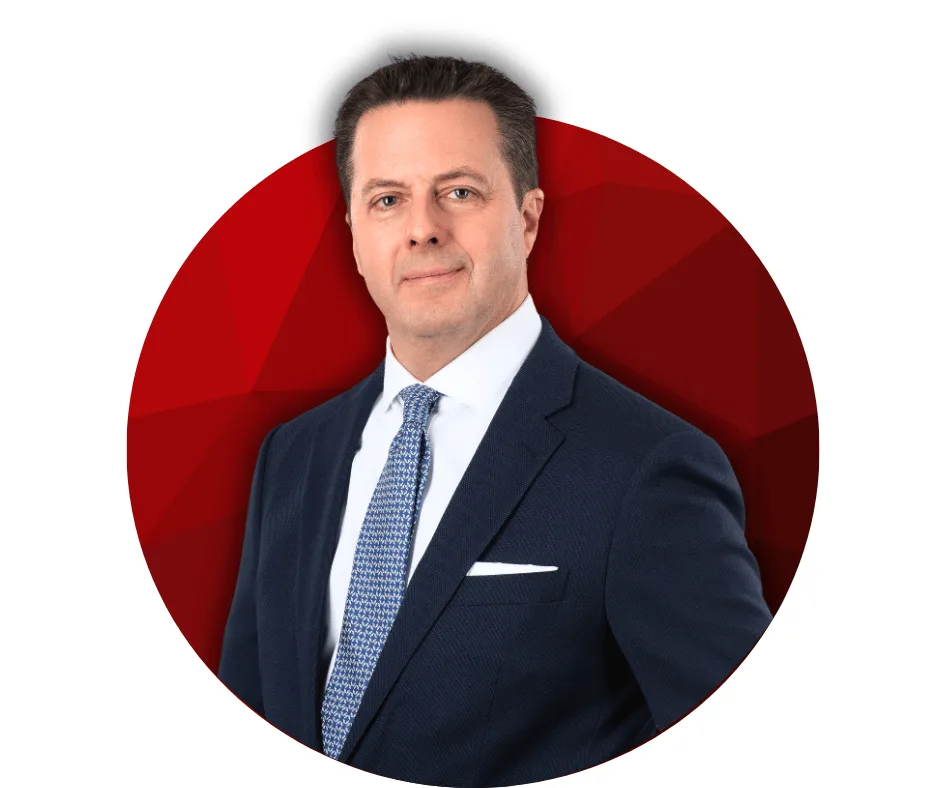
This article was written by the CEO of The Coyle Group, Gordon B. Coyle, CPCU, ARM, AMIM, PWCA, who has over 40 years of experience working with business owners of all sizes and industries across the US, solving their insurance challenges.
Here’s how to take the next step
Schedule Your Insurance Confidence Assessment
In our 30-minute call, you’ll discover:
Not ready for a call?
Get Free Access to Our Gated Video:
“How to Finally Feel Confident in Your Coverage. “
And discover the exact system we use to help business owners eliminate hidden coverage gaps, stop overpaying, and finally feel confident in their protection.
What Peace of Mind Looks Like
Trusted by business owners across the U.S.
The Coyle Group is 1st class! Gordon and his team are knowledgeable, responsive, and attentive to detail. Gordon is that rare breed of professional who genuinely cares for his clients and works hard to exceed their expectations. I highly recommend them.


The insurance brokerage service was truly tailored to my needs, nothing like those big brokers who steer you toward random policies that don’t fit your profile. Thank you to the team for your help.

I was working with another broker and having difficulty acquiring General Liability coverage. A colleague recommended The Coyle Group. They were able to get coverage bound in just a couple of business days and a policy issued in ten days, and with a solid carrier at a competitive premium. Truly impressive results, plus it was a pleasure working with them. I highly recommend the Coyle Group!

If any business is looking to work with an insurance brokerage firm that is not only excellent at what the firm does, but one that deeply values the needs of the clients, then The Coyle Group is the firm for you. Give them a call and see for yourself. I can assure that you will quickly agree.

Want to know more?
See related blogs
Third Party Employment Practices Liability Insurance. Protect Your Business

Are You Overpaying or Underinsured on Your Business Insurance?

Liberty Mutual Business Insurance Quotes
