
Many business owners have no idea whether they’re overpaying or underinsured on their business insurance until it’s too late. This guide reveals how to spot coverage gaps, why trusting the wrong broker costs you money, and what you can do to gain peace of mind and protection.
Table of contents
- Key Takeaways
- The Hidden Risks in Your Business Insurance
- Why Most Business Owners Don’t Know What They Have
- How Often Should I Review My Business Insurance?
- Insurance Doesn’t Look Broken Until It Fails
- What Are the Most Common Business Insurance Coverage Gaps?
- How Can I Tell If I’m Paying Too Much for Business Insurance?
- How to Know If Your Business Insurance Review Is Working For You
- Why “Just Getting Quotes” Isn’t the Solution
- What Questions Should I Ask During a Business Insurance Review?
- Why Do Business Insurance Claims Get Denied?
- The Better Way: Strategic Business Insurance Reviews That Work
- Signs You’re Underinsured: What to Watch For
- Don’t Wait for a Claim to Find Out
Key Takeaways
- 75% of small businesses are underinsured according to industry data
- Most business owners don’t realize insurance issues until claims are denied
- Annual business insurance reviews are essential but often neglected
- Strategic broker partnerships save money and prevent coverage gaps
The Hidden Risks in Your Business Insurance
How do you really know if you’re overpaying or underinsured on your business insurance? It’s a question I get constantly, and for good reason.
Many business owners come to me feeling uneasy, unsure, and nervous. They’ve been paying for insurance for years, but they don’t truly understand what they have. They’re uncertain if their policy is accurate, if the price is fair, or if the coverage even fits their current operations. Worse, they often have no real relationship with the broker who sold them the policy.
Given that your business is likely your most valuable asset, this uncertainty is both risky and potentially costly.
Why Most Business Owners Don’t Know What They Have
Here’s the hard truth: most business owners don’t realize their insurance is lacking until after a claim is denied or underpaid. That’s when reality hits, when it’s too late to make corrections.
According to recent industry data, 75% of small businesses are underinsured, and 90% of owners aren’t completely confident they have enough insurance coverage. Additionally, 96% of owners didn’t achieve a passing grade when quizzed about basic insurance knowledge.
Common Reasons for Insurance Blind Spots
- Outdated coverage limits that haven’t kept pace with business growth present significant risks. As your company expands, your insurance needs evolve too.
- Incorrect classifications due to operational changes can leave you exposed. What you did five years ago may not reflect your current business model.
Missing critical coverage such as:
- Cyber liability insurance for digital threats
- Employment Practices Liability Insurance (EPLI) for workplace claims
- International insurance coverage for global operations
- Professional liability for service-based businesses
Paying for unnecessary coverage that no longer applies to your operations wastes money and creates confusion.
What's worse: your broker may not realize these issues exist, especially if they're not conducting regular policy reviews or asking the right questions.

How Often Should I Review My Business Insurance?
Operating a business is dynamic in nature so we highly encourage you to reassess your business’s current insurance and your risk at least once a year. However, ideally, you should review your coverage:
- Annually at minimum
- Biannually for growing businesses
- Quarterly for high-risk or rapidly changing industries
- After major business changes such as new locations, equipment purchases, or service offerings
Research shows that 39% of businesses operating for ten years or more have never updated their general liability insurance. This statistic is alarming because it means nearly four in ten established businesses are operating with potentially outdated coverage.
Insurance Doesn’t Look Broken Until It Fails

Let’s say your premiums have only increased slightly each year. You haven’t had a major claim. Everything must be working fine, right? Not necessarily.
Insurance isn’t like a broken machine that stops working obviously. It fails silently, and you only discover the problem when a claim gets denied, leaving you stressed, exposed, and paying significant costs out of pocket.
That's why it's crucial to ask the tough question now: Am I overpaying or underinsured on my business insurance?
What Are the Most Common Business Insurance Coverage Gaps?
Understanding the most frequent coverage gaps can help you identify potential problems in your own policy:
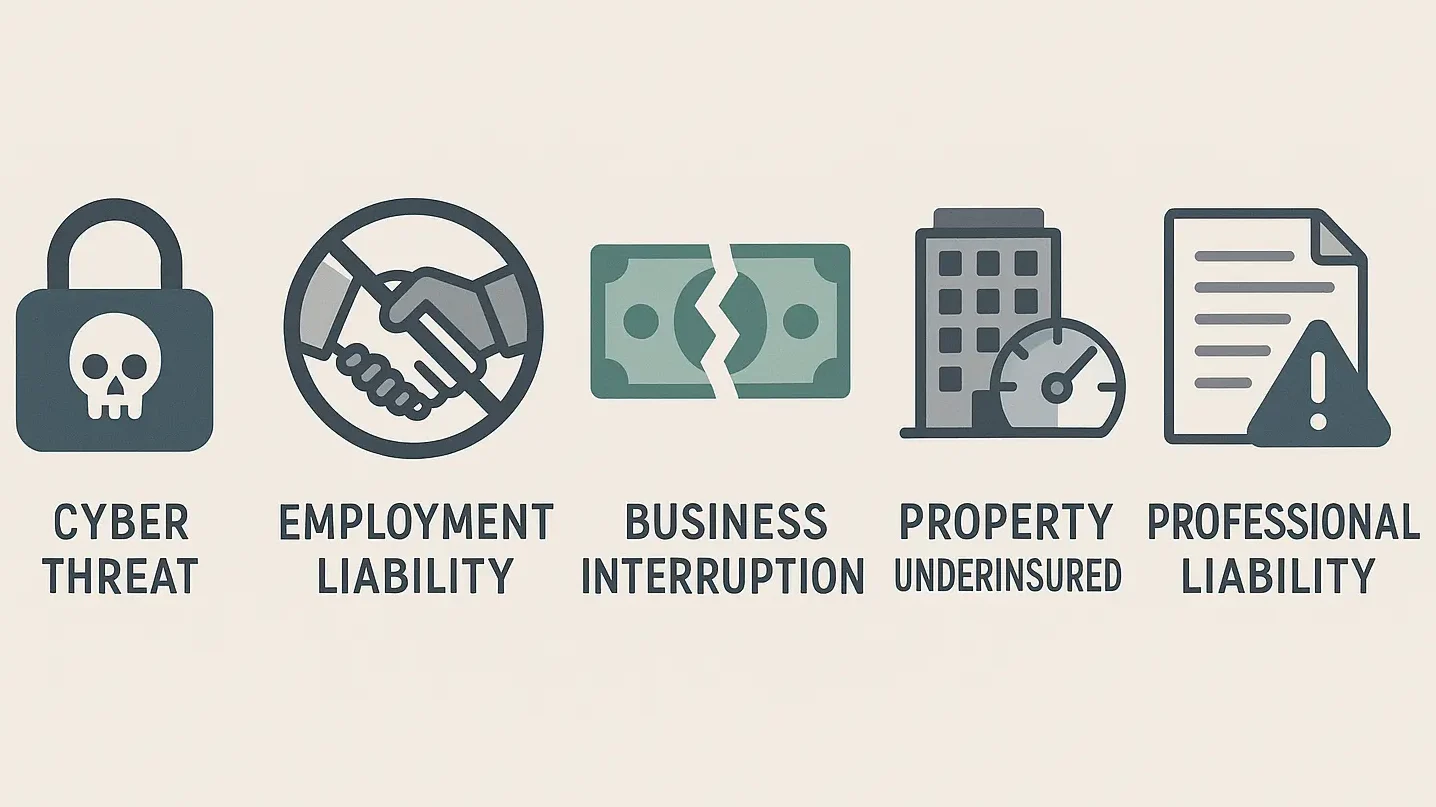
- Cyber liability gaps are increasingly common. Over 560,000 new cyber threats are discovered daily, and 81% of UK businesses that suffer from an attack are SMEs. Yet many businesses lack adequate cyber insurance protection.
- Employment practices liability issues affect businesses of all sizes. Without proper EPLI coverage, you’re vulnerable to discrimination, harassment, and wrongful termination claims.
- Professional liability exclusions can leave service providers exposed. Many general liability policies don’t cover professional errors or omissions.
- Adequate property limits often fall short. If you’re underinsured, it might mean that you’re not able to replace or repair vital equipment quickly or fully after a loss.
- Business interruption coverage is frequently overlooked or undervalued, leaving companies unable to cover expenses during forced closures.
How Can I Tell If I’m Paying Too Much for Business Insurance?
Several warning signs indicate you might be overpaying:
- Lack of annual reviews suggests your broker isn’t optimizing your coverage. The Annual Insurance Review is the most neglected task that Professional Office owners fail to do.
- Outdated risk assessments can result in higher premiums. If your business has become less risky over time, your rates should reflect that change.
- Wrong coverage types for your industry can inflate costs. Working with specialists who understand your sector helps ensure appropriate coverage and pricing.
How to Know If Your Business Insurance Review Is Working For You
If you’re not immersed in insurance daily, it’s challenging to have clarity or confidence in your coverage. That’s why working with a skilled insurance broker matters tremendously.
What a Great Broker Should Do During Your Business Insurance Review
A comprehensive approach includes several key elements:
- Conduct thorough coverage reviews, not just basic renewals. This means examining every aspect of your policy, not simply renewing what you had last year.
- Understand your business nuances including industry-specific risks, operational changes, and growth plans.
- Identify gaps and risks you didn’t know existed. Experience reveals potential problems before they become costly claims.
- Explain coverage importance so you understand why specific protections matter for your business.
- Offer ongoing strategic support, not just one-time quotes, but continuous partnership as your business evolves.
According to U.S. Small Business Administration data, there are 34.7 million small businesses in the United States, employing 45.9% of American workers. Small businesses represent 43.5% of GDP, making proper insurance protection crucial for economic stability.
That’s exactly what we do at The Coyle Group, leveraging our 90+ years of expertise to protect businesses like yours.
Why “Just Getting Quotes” Isn’t the Solution
You might be thinking: “Shouldn’t I just shop around and see who gives me the lowest rate?”
You could, but here’s the problem: That approach rarely gets you what you actually need.
What Happens When You Shop Based on Price Alone
- Incomplete applications result from brokers rushing to provide quick quotes without understanding your business.
- Confusing and conflicting quotes make it impossible to compare coverage accurately.
- Coverage gaps emerge when focus shifts from protection to price.
- You get stuck in the middle with no clear guidance on which option truly protects your business.
Additionally, insurance fraud costs American consumers approximately $308.6 billion annually, according to FBI data. This fraud translates into an extra $400 to $700 per year in premiums for the average family, highlighting the importance of working with reputable, trustworthy insurance professionals.
Insurance isn’t just about price—it’s about precision.
What Questions Should I Ask During a Business Insurance Review?
Asking the right questions ensures you get maximum value from your review:
- “What specific risks does my business face that I might not be aware of?” This question helps identify blind spots in your current thinking.
- “How have industry trends affected coverage needs in my sector?” Understanding evolving risks helps you stay ahead of potential problems.
- “What coverage limits make sense for my business size and revenue?” Proper limits protect you without unnecessary overpayment.
- “Are there any exclusions in my current policy that could cause problems?” Knowing limitations helps you make informed decisions.
- “What discounts or cost-saving opportunities am I missing?” Maximizing savings while maintaining protection is always valuable.

Why Do Business Insurance Claims Get Denied?
Understanding common denial reasons helps you avoid these pitfalls:
- Inadequate coverage limits that don’t match actual losses result in partial payments or denials.
- Policy exclusions that weren’t properly explained during purchase can void coverage.
- Incorrect classifications of your business operations can invalidate claims.
- Failure to report changes in your business promptly can affect coverage validity.
- Poor claims handling by inexperienced brokers can complicate the process unnecessarily.
Research indicates that over the next decade, 40% of small firms will file an insurance claim. Therefore, understanding these potential issues now is crucial for future protection.
The Better Way: Strategic Business Insurance Reviews That Work
Instead of chasing quotes, work with a broker who takes a strategic, relationship-based approach. This method helps you develop an insurance program built to protect your business, not just check a box.
When you work with us at The Coyle Group:
- We start with real conversation about your business, not just paperwork processing.
- We ask smarter, deeper questions that reveal risks others might miss.
- We review your current policy line by line to identify gaps and opportunities.
- We show you exactly where you stand and what needs fixing, with clear explanations.
You might discover you're in good shape. Or, you might uncover serious gaps that need urgent attention. Either way, you'll walk away with more clarity and confidence about your coverage.
The Strategic Advantage of Professional Reviews
Professional reviews offer several advantages over DIY approaches:
- Industry expertise helps navigate complex policy language and coverage options.
- Market knowledge ensures you’re getting competitive rates and appropriate coverage.
- Claims experience means understanding how policies actually work when you need them most.
- Ongoing support provides continuous protection as your business evolves.
The National Association of Insurance Commissioners (NAIC) reports that property and casualty insurance companies collect nearly $975 billion in direct written premiums annually, demonstrating the massive scope of the commercial insurance market and the critical importance of making informed coverage decisions.
This comprehensive approach, backed by our experience, ensures your insurance program truly protects your most valuable asset, your business.
Signs You’re Underinsured: What to Watch For
Several warning signs indicate your coverage may be insufficient:
- Premiums that seem too good to be true often reflect inadequate coverage rather than great deals.
- No coverage discussions with your broker about business changes suggests outdated protection.
- Confusion about your policy indicates poor broker communication and potentially inadequate coverage.
- Industry friends paying significantly more might signal your coverage is insufficient.
- Avoiding claims because you’re unsure about coverage suggests policy problems.
Underinsurance means the level of insurance cover you have isn’t enough, leaving you responsible for larger portions of any loss.
Don’t Wait for a Claim to Find Out
If you’re unsure whether you’re overpaying or underinsured on your business insurance, now’s the time to find out. Don’t wait until a claim forces you to face gaps in your coverage.
The statistics are clear: most businesses are underinsured, and most owners lack confidence in their coverage. However, with the right approach and expert guidance, you can ensure your insurance program truly protects your business.