
Funeral Home Insurance
What You Need, What It Costs, and Why Standard Coverage Falls Short
Index

Gordon B. Coyle
CEO, The Coyle Group
845-474-2924
How to get started
You are handling human remains, managing grieving families, operating specialized equipment, and employing staff exposed to hazardous chemicals every single day.
Yet most funeral home owners are sitting on a generic commercial policy that was never designed for any of that.
If you own or operate a funeral home and you are searching for real answers about what insurance you actually need, this guide is for you. Not burial insurance for families. Not prepaid funeral plans. This is about protecting your business, your license, and your livelihood.
Is your funeral home covered for what actually goes wrong?
Most funeral home owners discover too late that a generic Business Owners Policy does not cover body mishandling claims, cremation errors, or environmental contamination from embalming fluids. At The Coyle Group, we build insurance programs around the complex, high-value risks that other agencies do not know how to structure. With 40+ years specializing in commercial coverage, we know what funeral homes actually face.
Book a call and we will audit your current program at no charge.
Executive Summary
What Risks Do Funeral Home Owners Actually Face?
The consequences of the wrong insurance program for a funeral home can be catastrophic, and the risks are more varied than most owners realize.
In a real Illinois federal court case, a funeral home discovered that its insurer wrongfully denied coverage for a class action lawsuit alleging mishandling of bodies, arguing its standard Business Owners Policy did not exclude handling of dead bodies. The funeral home was left to fight both the lawsuit and its own insurance company at the same time. That kind of double exposure can cost hundreds of thousands of dollars or more.
Here are the risk categories that catch funeral home owners off guard:
Professional liability and body handling
Premises and property liability
Vehicle and transportation
Environmental and chemical exposure
Employment risks
The operating reality is that one serious uninsured claim in any of these categories can cost more than a decade of insurance premiums.
Contact us today to find out which of these risks your current policy actually covers.
What Does Funeral Home Insurance Cover? A Complete Breakdown
Funeral home insurance covers nine core categories when properly structured. Here is what each one does and why it matters for your specific operation.
Coverage |
What It Protects |
Why It Matters for Funeral Homes |
|---|---|---|
|
Third-party bodily injury and property damage on your premises |
Required for licensing in most states; covers slip-and-fall accidents by visiting families |
|
|
Negligence claims related to your professional services |
Covers cremation errors, body mishandling, embalming mistakes, and failure to follow family instructions |
|
|
Commercial Property |
Your building, equipment, casket inventory, urns, and furnishings |
Covers fire, theft, vandalism, and equipment breakdown for crematories and refrigeration |
|
Business Interruption |
Lost revenue when you must close due to a covered event |
Ensures you can pay staff and fixed costs while a covered disaster is resolved |
|
Commercial Auto |
Hearses, funeral coaches, procession vehicles, and transport vans |
Covers accidents, damage, and liability for your entire fleet |
|
Employee medical costs and lost wages for work-related injuries or illness |
Required by law in most states; critical for embalmers exposed to formaldehyde per OSHA hazard standards |
|
|
Data breaches involving client records and family personal information |
Funeral homes hold death certificates, Social Security numbers, and financial data |
|
|
Contamination from embalming fluids, formaldehyde, or chemical disposal |
Covers EPA violations and third-party contamination claims |
|
|
Bundles general liability, commercial property, and often business interruption |
Most cost-effective starting point for small to mid-sized funeral homes |
Professional liability deserves special attention. Most generic BOPs do not include it. You need to add it as a standalone endorsement or separate policy. It is also the coverage most likely to pay when a grieving family files a lawsuit, which makes it the coverage your operation cannot afford to skip.
If you switch carriers or let coverage lapse, you need a prior acts endorsement to maintain protection for services you have already performed. Ask your broker about the retroactive date before you bind coverage.
Do You Need a BOP or Separate Individual Policies?
For most small to mid-sized funeral homes, a Business Owners Policy is the right starting point, but it rarely covers everything you need on its own. A BOP bundles general liability, commercial property, and sometimes business interruption into one policy at a lower combined cost than buying each separately.
The problem is what it leaves out.
What a standard BOP typically includes:
What a standard BOP Rarely includes:
A BOP alone may be adequate if you operate a very small arrangement-only funeral home with no employees, no vehicles, no crematory, and no embalming services. That describes very few operating funeral homes.
A well-structured funeral home insurance program starts with a BOP and then adds the missing coverages as standalone policies or endorsements. The alternative, buying everything separately, usually costs more. Your broker should be building you a program, not just quoting a single product.
Book a call to have your current program reviewed against this checklist.
How Much Does Funeral Home Insurance Cost?
Funeral home insurance costs for a small to mid-sized operation typically run between $1,200 and $9,000 per year for a basic suite of coverages. The range is wide because the variables are significant. Here is a breakdown by coverage type.
Coverage |
Typical Annual Range |
|---|---|
|
General Liability |
$400 to $1,000 |
|
Professional Liability (E&O) |
$900 to $1,200 |
|
Commercial Auto (per vehicle) |
$1,000 to $3,000 |
|
Business Owners Policy (bundled) |
$1,000 to $3,000 |
|
Workers Compensation |
Varies by payroll and state |
|
Cyber Liability |
$500 to $1,500 |
|
Pollution / Environmental |
$800 to $2,000+ |
Factors that push your premiums higher:
Factors that can reduce your premiums:
The comparison that matters is not your premium versus a competitor’s quote. It is your premium versus the cost of a single uncovered claim. A professional liability lawsuit alleging mishandling of remains can run $50,000 to $500,000 or more, depending on the jurisdiction and the facts.
What Funeral Home Insurance Does NOT Cover: Where Claims Get Denied
This is the section most insurance guides leave out, and it is the one that costs funeral home owners the most money. Standard policies have exclusions, and if you are not aware of them, you will discover them at the worst possible moment.
Common exclusions to watch for:

In the Illinois body mishandling case referenced earlier, the funeral home’s insurer argued its standard BOP did not cover claims arising from the handling of bodies because the policy was not specifically written to address that exposure.
The court sided with the funeral home, but that litigation cost time and money no business should have to spend. The right program makes that argument irrelevant from day one.
What Insurance Do You Need to Maintain Your Funeral Home License?
Most states require specific insurance coverages as a condition of operating a licensed funeral home or mortuary. Requirements vary by state, but there are common mandates across most jurisdictions.
Commonly required coverages for licensing:
The National Funeral Directors Association maintains licensing requirement information by state, and your state funeral regulatory board is the authoritative source for your specific obligations.
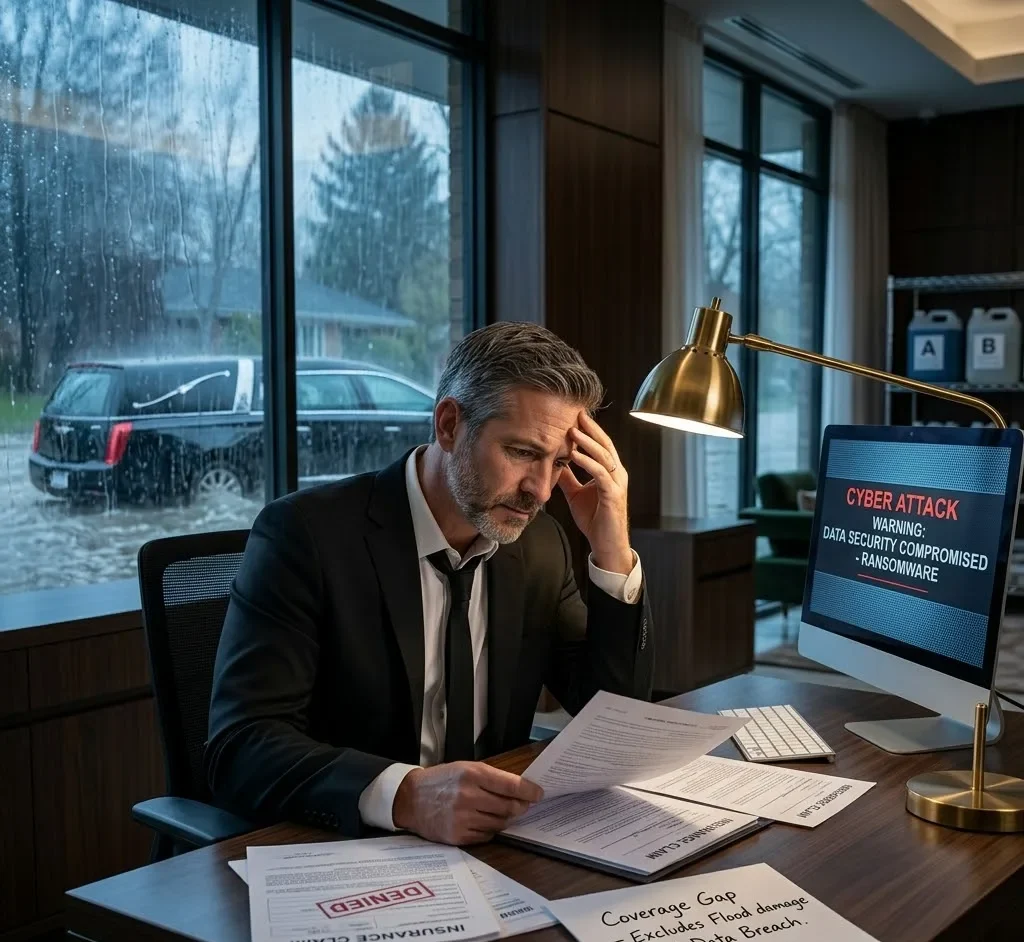
Losing your license due to an uninsured claim or a coverage gap is a business-ending event. The right insurance program protects your license by protecting your business from the financial consequences of claims before they threaten your ability to operate.
Talk to a specialist who understands funeral home licensing requirements and can build a program that meets and exceeds state minimums.
How Does Offering Cremation Services Change Your Insurance Needs?
The cremation rate in the United States reached a projected 63.4% in 2025, according to data from the National Funeral Directors Association.
That shift is the single most important factor reshaping funeral home risk profiles right now. Cremation services introduce exposures that traditional burial operations do not face, and many funeral home insurance programs have not been updated to reflect the change.
Additional risks from cremation services:
What you need added or upgraded:
If you added cremation services in the last three to five years and did not update your insurance program at the same time, there is a meaningful chance you have a gap in your coverage right now.
How to Find an Insurance Company That Actually Understands Funeral Homes
This is where most funeral home owners go wrong. They buy their business insurance from the same agent who handles their car and their home. That agent is a generalist.
A generalist does not know what professional liability language needs to say to cover a cremation error. A generalist does not know which carriers have specialized funeral home programs. A generalist does not know to ask about your crematory equipment, your fleet configuration, or your environmental exposure profile.
What to look for in a funeral home insurance broker:
Questions to ask any broker you are considering:

The answer to most of those questions from a generalist broker will be vague. From a specialist, it will be specific. That specificity is what stands between you and a denied claim.
Book a call with The Coyle Group and we will bring 40+ years of commercial insurance expertise to a review of your funeral home program.
A Real-World Example: The Coverage Gap That Cost a Funeral Home Everything
What happened: A family-owned funeral home with 12 years of operation and an existing BOP added cremation services without notifying their broker. Two years later, a family filed suit alleging that the wrong remains were returned. The funeral home’s BOP excluded coverage for professional errors in cremation because the service had never been disclosed to the carrier. The funeral home was uninsured for the claim. The lawsuit was settled for $220,000. The business owner paid it personally.
What should have happened: A program review when cremation services were added. A professional liability policy specifically written to cover cremation operations. A broker who asked the right questions when the business changed.
The lesson: Your insurance program should be reviewed every time your business changes, not just at renewal.
Have a Funeral Home and Not Sure If Your Current Policy Actually Covers You?
The Coyle Group reviews coverage programs for funeral homes and identifies gaps before a claim does.
Frequently Asked Questions About Funeral Home Insurance
Get the Right Funeral Home Insurance Program Built for Your Operation
At The Coyle Group, we have spent over 40 years building insurance programs for complex, high-liability risks that standard carriers struggle to write correctly, and funeral home insurance is one of the most frequently mishandled programs in commercial lines.
For funeral home owners, that means a program built across all the coverage layers your operation actually requires, with professional liability language specifically negotiated to cover cremation errors and body mishandling claims, not a generic BOP with funeral service exclusions buried in the endorsements.
If your funeral home is operating on a generic commercial policy, has never had a specialist review whether your professional liability explicitly covers cremation, or added services in the last few years without notifying your broker, that is worth a 30-minute conversation before your next policy renewal or any expansion of services.

This article was written by the CEO of The Coyle Group, Gordon B. Coyle, CPCU, ARM, AMIM, PWCA, who has over 40 years of experience working with business owners of all sizes and industries across the US, solving their insurance challenges.
Here’s how to take the next step
Schedule Your Insurance Confidence Assessment
In our 30-minute call, you’ll discover:
Not ready for a call?
Get Free Access to Our Gated Video:
“How to Finally Feel Confident in Your Coverage. “
And discover the exact system we use to help business owners eliminate hidden coverage gaps, stop overpaying, and finally feel confident in their protection.
What Peace of Mind Looks Like
Trusted by business owners across the U.S.
The Coyle Group is 1st class! Gordon and his team are knowledgeable, responsive, and attentive to detail. Gordon is that rare breed of professional who genuinely cares for his clients and works hard to exceed their expectations. I highly recommend them.

The insurance brokerage service was truly tailored to my needs, nothing like those big brokers who steer you toward random policies that don’t fit your profile. Thank you to the team for your help.

I was working with another broker and having difficulty acquiring General Liability coverage. A colleague recommended The Coyle Group. They were able to get coverage bound in just a couple of business days and a policy issued in ten days, and with a solid carrier at a competitive premium. Truly impressive results, plus it was a pleasure working with them. I highly recommend the Coyle Group!

If any business is looking to work with an insurance brokerage firm that is not only excellent at what the firm does, but one that deeply values the needs of the clients, then The Coyle Group is the firm for you. Give them a call and see for yourself. I can assure that you will quickly agree.

Want to know more?
See related blogs

The Crowdstrike Debacle and Cyber Insurance
Third Party Employment Practices Liability Insurance. Protect Your Business

Are You Overpaying or Underinsured on Your Business Insurance?
