
Habitational Insurance
What Landlords and Property Owners Need to Know

Index

Gordon B. Coyle
CEO, The Coyle Group
845-474-2924
How to get started
Executive Summary
Habitational insurance is a commercial insurance policy that protects owners of residential rental properties, including apartment buildings, rental homes, condos, and boarding houses, against property damage, tenant liability, lost rental income, and environmental claims.
That is an exact quote from a landlord whose property damage claim was denied, not because of the type of loss, but because of exclusion language buried in a policy they had been paying premiums on for years.
Standard homeowners’ policies are designed for owner-occupied homes. They are not built for the commercial residential risk created by tenants.
The Coyle Group works with property owners who carry complex, high-value risks. If your portfolio has grown or your current broker has never raised the question of habitational coverage, this guide covers exactly what you need to know.
What Is Habitational Insurance?
Habitational insurance is a commercial insurance policy designed for owners of residential rental properties, covering property damage, general liability, loss of rental income, and environmental risks in a single program. It is not a personal lines product and does not function like a homeowners policy. If tenants pay to live in a property you own, that property is a commercial risk, and it requires commercial coverage to match.
The term “habitational” comes from the insurance industry’s classification system. Any property where people habitually reside as paying tenants falls into the habitational risk category, regardless of size or tenant count. A landlord with one rented house carries the same commercial liability exposure as a developer with a 200-unit complex. The presence of a paying tenant transforms residential property from a personal asset into an operating business, and personal lines underwriters are not equipped to properly price or cover that exposure.
Most habitational insurance programs bundle the following coverages into a single commercial policy:
For property owners managing rental income as a business asset, habitational insurance is the standard commercial framework that aligns with how carriers actually underwrite and price residential rental risk.
Why the Wrong Policy Can Cost You Six Figures
The average liability verdict for a slip-and-fall at a residential rental property exceeds $75,000. A fire that displaces tenants from a 10-unit building can generate $200,000 or more in combined repair costs, legal fees, and lost rental income. A mold or pollution claim on an aging building can exceed $500,000 in remediation costs and legal exposure alone. Without a properly structured habitational insurance policy, every one of those dollars comes directly out of your pocket.
The problem is more widespread than most property owners realize. Thousands of landlords in the U.S. currently carry either a standard homeowners policy or a basic landlord policy on properties that require commercial habitational coverage. When a claim hits, the carrier has legal grounds to deny it based on a “commercial use exclusion” or a “habitability condition” clause that the policyholder never read.
Claim denial pattern:
The most commonly cited reason for denied rental property claims is a habitability exclusion, not the type of damage itself. A fire claim can be partially or fully denied if the insurer argues that a pre-existing habitability issue contributed to the loss. Policy language governs everything in habitational insurance. A generalist broker who does not specialize in this coverage may never flag exclusion language that will sink a claim at the worst possible moment.
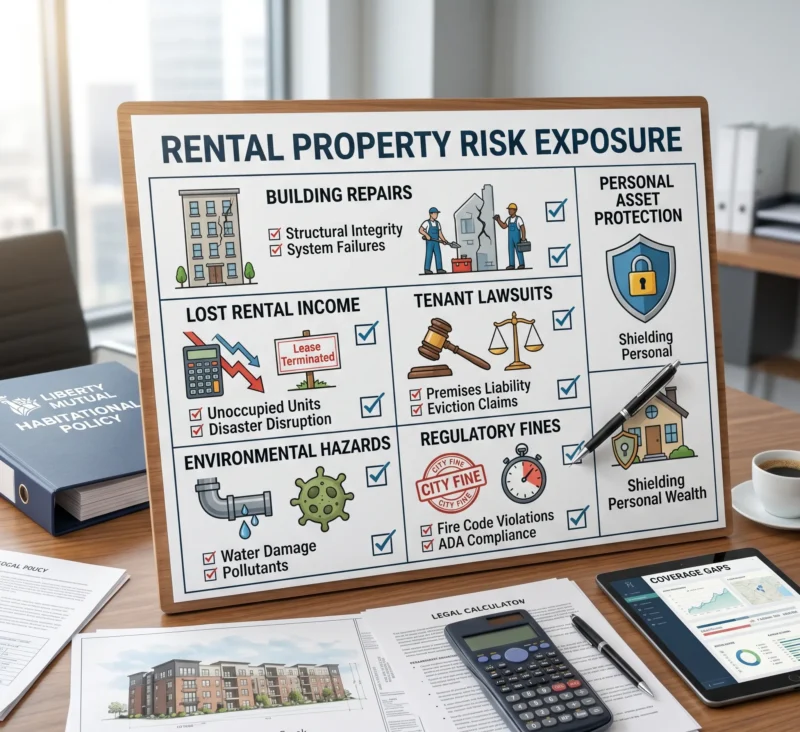
Carrying the wrong coverage structure for a rental property can expose you to:
Habitational insurance is not a luxury add-on for large portfolio owners. It is the baseline coverage structure for anyone operating a residential property as a rental business.
Who Needs Habitational Insurance?
Any property owner who collects rent from tenants living in a residential property needs habitational insurance. The key factor is not the number of units or the portfolio size; it is the presence of a tenant paying rent to occupy a space you own. The National Multifamily Housing Council estimates that over 44 million households in the U.S. rent their homes, representing the tenant exposure base that habitational policies are designed to address.
The Insurance Information Institute notes that personal lines homeowners policies are not appropriate for rental properties because the insured’s financial interest is commercial, not personal. This distinction is not administrative; it has direct consequences when a claim is filed. If you own any of the property types listed above and your broker has not confirmed that you hold a commercially underwritten habitational program, the next conversation you have should be with a specialist.
Habitational Insurance Coverage by Property Type
The right coverage structure varies by property type. Use this table as a starting point, then confirm specifics with a specialist.
Property Type |
Recommended Coverage Structure |
Key Considerations |
|---|---|---|
|
Single-family rental |
Basic habitational or endorsed landlord policy |
Vacancy clauses, tenant vandalism endorsement |
|
Multi-unit apartment (2–10 units) |
Commercial habitational package |
Loss of rental income, equipment breakdown |
|
Large apartment complex (10+ units) |
Specialty habitational program |
Umbrella required, carrier capacity matters |
|
Condo unit rented to tenant |
HO-6 with commercial endorsement or standalone habitational |
Gap between unit owner and HOA master policy |
|
Student housing |
Specialty habitational, often surplus lines |
Higher vacancy risk, higher liability exposure |
|
Section 8 / subsidized housing |
Commercial habitational, surplus lines often required |
Underwriting scrutiny, regulatory compliance |
|
Senior / assisted living |
Specialty senior living program |
Professional liability component often needed |
|
Short-term rental (Airbnb/VRBO) |
Check for short-term rental endorsement |
Standard habitational may exclude platform-based rentals |
What Does Habitational Insurance Cover?
Habitational insurance covers the property, the people on it, the income it generates, and the environmental and equipment risks that come with operating a residential rental.
Most commercial habitational programs include the following coverage components:
Coverage |
What It Protects |
|---|---|
|
Building property |
Fire, windstorm, hail, vandalism, explosion, and named or open perils |
|
General liability |
Tenant and visitor bodily injury, property damage, premises liability |
|
Loss of rental income |
Revenue replacement when the property is uninhabitable after a covered event |
|
Lead paint, mold, pollution, and environmental cleanup costs |
|
|
Equipment breakdown |
HVAC, boilers, elevators, water heaters, and other mechanical systems |
|
Additional limits above the primary liability coverage |
|
|
Employee theft, robbery, and dishonesty |
|
|
EPLI |
Employment practices liability for properties with on-site staff |
|
Cyber liability |
Data breach and cyber incident coverage for property management systems |
|
Flood |
Available as an endorsement; a separate NFIP policy may also be required |
Coverage can be written on a named-perils or open-perils (all-risk) basis. Open-perils coverage is generally preferred for habitational properties because it covers any peril not explicitly excluded, rather than requiring the loss to match a specific named peril. This distinction matters most in unusual or complex claims.
Real-world example: 8-unit apartment building, Georgia
A severe storm damages the roof, rendering three units uninhabitable.
Under the landlord’s habitational insurance policy, the carrier pays for:
Total claim paid: $127,000.
Without habitational insurance, the landlord would have absorbed all of this out of pocket. The policy paid for itself in a single weather event.
What Habitational Insurance Does NOT Cover
Understanding exclusions is as important as understanding what is included. Habitational policies typically exclude the following, and each exclusion is a potential uncovered loss if you are not aware of it:

The habitability condition exclusion deserves emphasis.
Landlords who receive a claim denial are often surprised to find that the issue was not the peril. It was a clause that allowed the insurer to link the loss to a pre-existing condition. Reviewing exclusion language before you need to file a claim is critical. The declarations page shows your coverage limits. The endorsements and exclusion forms show you what your policy will actually fight for when it matters.
How Much Does Habitational Insurance Cost?
Habitational insurance costs $375 to $1,400 per unit per year for apartment buildings in 2026, with final premiums driven by location, property age, construction type, occupancy type, and claims history. For a 12-unit building in a stable Midwestern market with no prior losses, the total annual premium might run $7,000 to $12,000. The same building in a CAT-exposed coastal market with older electrical wiring could be quoted at $20,000 or more.
Key factors that affect habitational insurance premiums:
The habitational insurance market has hardened considerably in recent years. Landlords on real estate forums consistently describe rates as “not going lower” and premiums as “skyrocketing” heading into 2025 and 2026. Admitted carriers have pulled back from certain markets, and properties in high-risk zones are increasingly being written in the surplus lines market at higher rates with tighter exclusions. Working with a broker who has access to both standard and E&S markets, not just standard carriers, matters more now than it did five years ago.
CAT-exposed states to watch:
Florida, Louisiana, coastal Texas, and California have the most restricted admitted markets for habitational insurance in 2026. Carriers have non-renewed or exited these markets entirely, pushing many landlords into surplus lines at significantly higher rates. If your portfolio includes properties in any of these states, work with a broker who has established E&S market relationships. Standard carrier quotes may simply not be available.
Habitational Insurance vs. Standard Homeowners and Landlord Insurance
The core question most landlords are actually trying to answer when they search for “habitational insurance” is not simply “what is this.” The real question is: “Do I have the right policy right now, and what happens if I do not?” The answer depends on understanding how these three policy types compare.
Policy Type |
Designed For |
Tenant Liability Included |
Loss of Rental Income |
Commercial Property Coverage |
|---|---|---|---|---|
|
Standard homeowners |
Owner-occupied residences |
No |
No |
No |
|
Basic landlord policy |
Small, simple rental properties |
Limited |
Sometimes |
Limited |
|
Habitational insurance |
Commercial residential rental properties |
Yes |
Yes |
Yes |
The risk of misclassification is significant. When a carrier writes a basic homeowners or landlord policy on a property that qualifies as commercial residential, they may honor smaller claims initially but challenge coverage at renewal or deny a large claim based on “commercial use” at exactly the moment you need help the most. This is not a hypothetical risk. It is a documented claim denial pattern.
How to Choose the Right Habitational Insurance Carrier
Not all carriers who write habitational coverage are equally equipped to handle it. The habitational market spans admitted carriers, surplus lines carriers, and specialty program administrators, each with different risk appetites, coverage forms, and claims reputations. Choosing the right one requires more than finding the lowest quote.
When evaluating a habitational insurance carrier, review the following:
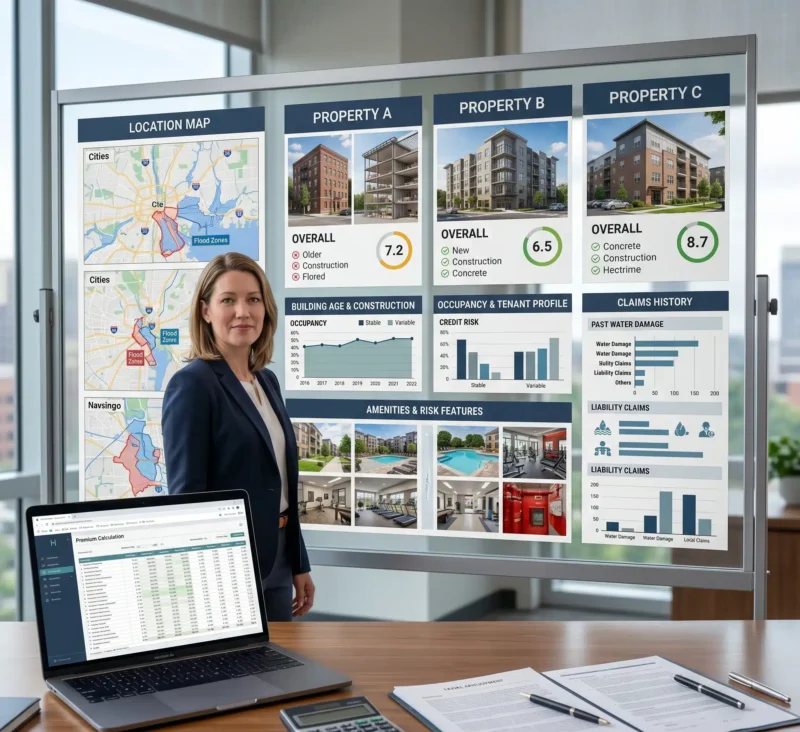
Choosing a generalist broker for a habitational program is one of the most common and costly mistakes rental property owners make. The Insurance by Coverage resources on The Coyle Group’s website cover the spectrum of commercial lines structures relevant to property investors. For your specific portfolio, working with a specialist matters.
How to Reduce Your Habitational Insurance Risk (and Lower Your Premium)
Habitational insurance protects you after a loss, but underwriters also look at what you do before a loss when setting your premium. Properties with documented risk management programs often qualify for better rates and fewer exclusions.
The top risk areas to address are:
Fire Prevention
Install smoke detectors in every unit, outside every sleeping area, and in common spaces. The National Fire Protection Association recommends replacing smoke alarms every ten years and testing them monthly. Interconnected alarm systems are increasingly a carrier requirement in older buildings.
Water Damage Monitoring
Water damage is one of the most frequent habitational claims. Walk-through inspections for signs of leakage, staining, or mold should happen at minimum quarterly. Consider water sensors in laundry rooms, boiler rooms, and ground-floor units.
Slip and Fall Prevention
Uneven sidewalks, worn carpet, and icy walkways are among the most common sources of general liability claims on rental properties. Repair uneven surfaces promptly, maintain lighting in stairwells and parking areas, and document all maintenance completed.
Pool and Amenity Safety
Pools, gyms, and playgrounds carry concentrated liability exposure. Follow Consumer Product Safety Commission guidelines for playground safety and post visible rule signage at pool areas. Carriers underwrite these features as higher-risk additions.
Electrical and HVAC Maintenance
Aging electrical systems and deferred HVAC maintenance are leading causes of both fire claims and equipment breakdown claims. Annual inspections and documented service records demonstrate responsible ownership to underwriters and support a favorable premium at renewal.
Vacancy Management
If a unit or building is going vacant, notify your broker before it happens. Vacancy voids or limits coverage at most carriers after 30 to 60 days. A vacancy endorsement or standalone vacant property policy keeps your coverage intact.
Carriers reward documented maintenance. Keep service records, inspection logs, and repair receipts. These records are the difference between a claim that pays and one that gets contested on habitability grounds.
Is Habitational Insurance Legally Required?
No federal law requires landlords to carry habitational insurance, but that framing misses the real risk. Most mortgage lenders require proof of commercial residential coverage as a condition of financing, making it functionally mandatory for any leveraged property. Beyond lenders, some local ordinances and commercial lease structures impose minimum coverage requirements on property owners.
More importantly, the question of legal requirement is the wrong question. The right question is: what happens if a tenant is injured and you do not have adequate coverage? A judgment in excess of your policy limits, or a denied claim under a non-habitational policy, becomes your personal financial obligation. For most landlords, that exposure far exceeds the annual cost of a properly structured habitational program.
Get The Right Coverage For Your Habitational Property
At The Coyle Group, we have spent over 40 years placing insurance programs for owners who need coverage that actually holds up at claim time. Habitational insurance is one of the most frequently misclassified programs in commercial lines, and one of the most costly to get wrong.
Our programs for property owners are structured around commercial-grade general liability, loss of rental income, environmental impairment, and the exclusion protections that personal-lines landlord policies don’t carry.
We access specialty markets that write habitational risks across admitted and surplus lines, including properties with prior claims, older construction, or CAT exposure. If your current policy has not been reviewed by someone who regularly places this class, that review is worth 30 minutes before your next lease or acquisition.

This page was written by Gordon B. Coyle, CPCU, ARM, AMIM, PWCA, CEO of The Coyle Group, who brings over 40 years of experience advising financial services firms, investment managers, and professional organizations across the United States.
Questions about Habitational Insurance?
Schedule Your Insurance Confidence Assessment
In our 30-minute call, you’ll discover:
Not ready for a call?
Get Free Access to Our Gated Video:
“How to Finally Feel Confident in Your Coverage. “
And discover the exact system we use to help business owners eliminate hidden coverage gaps, stop overpaying, and finally feel confident in their protection.
What Peace of Mind Looks Like
Trusted by business owners across the U.S.
The Coyle Group is 1st class! Gordon and his team are knowledgeable, responsive, and attentive to detail. Gordon is that rare breed of professional who genuinely cares for his clients and works hard to exceed their expectations. I highly recommend them.

The insurance brokerage service was truly tailored to my needs, nothing like those big brokers who steer you toward random policies that don’t fit your profile. Thank you to the team for your help.

I was working with another broker and having difficulty acquiring General Liability coverage. A colleague recommended The Coyle Group. They were able to get coverage bound in just a couple of business days and a policy issued in ten days, and with a solid carrier at a competitive premium. Truly impressive results, plus it was a pleasure working with them. I highly recommend the Coyle Group!

If any business is looking to work with an insurance brokerage firm that is not only excellent at what the firm does, but one that deeply values the needs of the clients, then The Coyle Group is the firm for you. Give them a call and see for yourself. I can assure that you will quickly agree.

Want to know more?
See related blogs

The Crowdstrike Debacle and Cyber Insurance
Third Party Employment Practices Liability Insurance. Protect Your Business

Are You Overpaying or Underinsured on Your Business Insurance?
