Auto Repair Shop Insurance

Protecting Your Business From Costly Risks

Home » Insurance By Industry » Auto Repair Shop Insurance

Executive Summary. TL;DR

  • Purpose: a shop-specific package that protects against liability, damage to customer vehicles, employee injuries, property loss, environmental claims, and downtime.
  • Why not a basic policy: you need garage liability for on-site and road exposures and garage keepers for customer cars in your care; standard BOP or GL often leaves gaps.
  • Biggest risks: theft or hail damage to stored vehicles, paint booth or welding fires, slips and chemical burns, faulty repairs, spills and waste violations, and shutdowns after a loss.
  • Core coverages to carry: garage liability, garage keepers (prefer direct primary, not legal liability), workers’ comp, commercial property, business interruption, equipment breakdown, and pollution liability.
  • Common misses: mechanics E&O for workmanship errors, coverage for employee-owned tools, BI trigger limits, and per-vehicle deductibles under garage keepers.
  • Cost drivers: payroll and services performed, number and value of vehicles stored, equipment and property values, security controls, location weather/crime, and claims history.

Key insight

A tailored garage program keeps you solvent after a claim and prevents one incident from turning into a six-figure hit.

And protect your business today

What Is Auto Repair Shop Insurance?

Definition & Core Purpose

Auto repair shop insurance (also known as garage insurance or automotive repair business insurance) refers to a suite of insurance coverages tailored to businesses that repair, maintain, store, or service automobiles. Its purpose is to protect the shop from financial loss due to liabilities, vehicle damage, bodily injury, property loss, environmental risks, and operational interruption unique to the auto repair business.

HowIt Differs From Standard Business Insurance

Specific exposures

Customer vehicles stored in your care, tools and equipment, machinery, hazardous chemicals, flammable materials.

Special liability categories

Garage liability, garage keepers liability are more specialized than generic general liability.

Regulatory overlap

Environmental regulations, state-level workers’ comp mandates for auto services are stricter.

Operation-driven risk

Shop operations include test drives, mobile pickups, vehicle movement inside the shop, bodywork, welding, etc., which standard policies often exclude or under-insure.

Why Auto Repair Shops Need Specialized Coverage

Unique Risks in the Auto Repair Sector

Mechanic examining a hail-damaged car at night outside an auto shop, highlighting the need for auto repair shop insurance for property and customer vehicle protection.
  • Damage to customer vehicles in your care: Scratches, vandalism, theft, fire while in shop bays or storage yards
  • Employee injuries: Mechanics lift heavy parts, use power tools, exposure to slips (oils/lubricants), chemical burns, hearing damage.
  • Property risk: Fire hazards (welding/painting), equipment breakdown, theft of tools, damage from storms.
  • Environmental liability: Spills, waste disposal issues, chemical runoff. State/EPA regulations can impose steep penalties.
  • Business interruption: A disastrous fire or other claim that puts you out of business, even temporarily can push you into bankruptcy.
  • Faulty repairs / errors: Mistakes in diagnosis or repair can lead to harm, lawsuits, customer complaints, reputational risk.

Real-World Claim Examples

1

Stolen Vehicle on Premises

A mid-size auto repair shop in New York parked finished vehicles in an unsecured lot. Overnight, thieves stole a $65,000 SUV awaiting pickup. The shop had no garage keepers insurance, forcing them to reimburse the customer out of pocket. That single loss erased half of their annual profit.

2

Fire from Paint Booth Ignition

An auto body shop in Colorado specialized in collision repair and painting. A spark during welding ignited paint fumes in the spray booth, causing a fire that spread to two bays. Damage totaled over $400,000 between property loss, destroyed customer cars, and temporary closure. With the right mix of property coverage, garage liability, and business interruption, the owner reopened in three weeks instead of shutting down permanently.

3

Employee Injury with Long-Term Costs

In Georgia, a mechanic suffered severe chemical burns after mishandling a solvent. Workers’ comp covered $85,000 in medical bills and lost wages, but the real blow came later: the shop’s experience modification rate (EMR) spiked, raising its workers’ comp premiums by nearly 40% the following year. Without a formal safety program, the claim became a recurring financial drag.

4

Faulty Repair Leads to Lawsuit

A customer in Illinois sued an auto repair shop after faulty brake work caused an accident, injuring two passengers. The claim settled for $250,000, which was covered under the shop’s garage liability policy. Without it, the shop would likely have gone bankrupt from the legal costs and damages.

These real-world examples demonstrate why standard business insurance falls short. Let’s explore the specific coverages that address these unique auto repair exposures.

Key Coverages Every Auto Repair Shop Should Consider

Running an auto repair shop without the right insurance is like driving without brakes. The exposures are unique, and one overlooked gap can turn into a six-figure loss.
Here are the coverages most critical for repair businesses.

 Garage Liability Insurance

  • Definition: Garage liability insurance provides two essential protections. First, it provides premises liability, covering customer slip-and-fall injuries, property damage, or other accidents that occur on your shop floor or lot. Second, it provides auto liability, covering bodily injury or property damage caused while a customer’s vehicle is being test driven or moved by your staff.
  • Why it matters: Unlike standard general liability, garage liability is built for the realities of auto service. It responds to both the risks of operating a public-facing business and the risks of handling vehicles on the road.
  • Example: A customer slips on an oil spill in the waiting area, fracturing a hip. Two days later, a technician takes a repaired car for a road test, and a brake failure causes a collision. Garage liability responds in both cases, covering medical bills, legal defense, and settlements that otherwise could devastate the shop financially.

 Garage Keepers Insurance

  • Definition: Protects customer vehicles while they’re in your care, custody, or control, whether parked in your lot, stored overnight, or inside a service bay.
  • Why it matters: Standard property insurance does not cover vehicles you don’t own. Without garage keepers, you’re exposed to theft, vandalism, fire, and storm damage.

Important Footnote

Garage Keepers Insurance can be sold on a primary direct basis or on a legal liability basis. Direct coverage provides you protection without having to prove who was negligent in causing the claim.
Legal Liability Basis means you have to be negligent for the claim to be covered. What that really means is that your customer has to file a claim under their auto policy for damages you caused to their auto and then have their insurance company fight you for reimbursement for your insurance to kick in.

Legal coverage is cheaper but it’s terrible and damages your reputation if a claim happens.

  • Example: A hailstorm damages 12 vehicles parked outside a Texas shop overnight. Repairs total $180,000. Garage keepers insurance steps in, sparing the shop from writing checks to each vehicle owner.

 Workers’ Compensation Insurance

  • Definition: Provides wage replacement and medical benefits for employees injured on the job. Required in nearly every state.
  • Why it matters: Auto repair is a physically demanding, high-risk environment. According to OSHA, auto mechanics and technicians experienced 9,950 nonfatal occupational injuries and illnesses resulting in time away from work in 2020. Slips on oil, heavy lifting, repetitive motion injuries, and burns are common.
  • Example: A technician herniates a disc while lifting a transmission. Medical care and lost wages total $95,000. Workers’ comp covers the costs and shields the employer from being sued directly.

 Commercial Property Insurance

  • Definition: Covers your building, tools, lifts, diagnostic equipment, office space, and inventory.
  • Why it matters: Shops often house hundreds of thousands of dollars in specialized equipment, plus flammable chemicals and paints that increase fire risk.
  • Example: A shop fire destroys two hydraulic lifts and diagnostic equipment, halting operations. Property coverage pays for replacements, allowing the shop to reopen instead of closing permanently.

 Business Interruption Insurance

  • Definition: Reimburses lost income and extra expenses if your shop is forced to close temporarily due to a covered event, like fire or storm damage.
  • Why it matters: Even a two-week shutdown can drain cash reserves and drive customers to competitors.
  • Example: After a major fire, a shop in Florida was closed for six weeks. Business interruption coverage replaced $120,000 in lost revenue and helped cover rent and payroll during downtime.

Equipment Breakdown Insurance

  • Definition: Covers sudden breakdowns of essential equipment such as lifts, compressors, and diagnostic systems.
  • Why it matters: Repairs and replacements are costly, and downtime means no revenue.
  • Example: A computerized alignment machine shorts out, costing $30,000 to replace. Equipment breakdown coverage pays for both the replacement and expedited installation.

 Pollution Liability Insurance

  • Definition: Protects against claims related to hazardous waste, spills, or environmental contamination.
  • Why it matters: Auto repair shops handle solvents, oils, paints, and refrigerants. Improper disposal or accidental spills can trigger EPA or state fines.
  • Example:A solvent spill seeps into a neighboring property’s soil. Cleanup costs exceed $200,000. Pollution liability coverage pays for remediation and legal defense.

Understanding what coverages you need is just the first step. The next question most shop owners ask is about cost and budgeting.

How Much Does Auto Repair Shop Insurance Cost?

When business owners ask about cost, the honest answer is: it depends. Auto repair shop insurance isn’t a flat-rate product. Premiums are shaped by dozens of variables that reflect the risk profile of your specific operation. If you want to understand how garage insurance pricing actually works, you can review this breakdown of common cost drivers:

Cost Drivers

Several factors directly influence the cost of your insurance program:

Auto shop technician safely moving a tire inside a service bay, representing workplace liability and equipment coverage under auto repair shop insurance.
  • Payroll and Workforce Size. Workers’ compensation premiums are driven largely by payroll. The more employees you have, and the more physically demanding their roles, the higher the cost. Shops with strong safety programs and clean records often see meaningful savings.
  • Annual Revenue. Revenue is a proxy for activity. The more vehicles you service, the more opportunity there is for liability exposure, customer claims, or property losses.
  • Services Performed. Collision repair, welding, spray painting, and towing all present higher risks than basic maintenance. The nature of your work directly affects pricing.
  • Customer Vehicles in Your Care. Garage keepers liability costs scale with the number and value of vehicles you store. A shop with ten high-end luxury cars in the lot will pay more than one handling routine sedans.
  • Property and Equipment Values. Insurance costs rise in proportion to the value of your building, lifts, tools, diagnostic equipment, and other assets. A shop with state-of-the-art systems will pay more than a small facility with minimal equipment.
  • Security Measures. Insurers reward shops that reduce the risk of theft and vandalism. Features such as fenced-in lots, good exterior lighting, 24/7 security cameras, and monitored alarms can all help lower premiums.
  • Location and Surroundings. Urban versus rural, high-crime areas, or regions prone to floods, hail, or hurricanes will all affect pricing. Local building codes and fire protection ratings are also factored in.
  • Claims History. Nothing impacts pricing more than your past performance. Shops with frequent claims or OSHA citations face steep increases, while those with clean records can negotiate favorable rates.

Case-Style Examples

A repair shop in New Jersey with a spotless safety record, fenced and monitored lots, and strong employee training pays significantly less than a peer down the street with repeat back injuries and no security systems.

Two collision shops in the same city, both with $3M in revenue, see premiums nearly double apart. The difference? One has an NFPA approved paint booths and well-documented safety protocols; the other has outdated equipment and no formal training program.

A multi-location operator in Texas invests in preventative maintenance for its lifts and compressors. Claims stay low, and the insurer applies credits that keep premiums competitive year over year.

The cost reality: In my experience, two shops of the same size in the same state can see premiums two to three times apart depending on what services they offer, the vehicles they store, their safety culture, and their security features. The only way to know your true cost is through a tailored quote.

Common Coverage Gaps and Pitfalls

One of the biggest mistakes auto repair shop owners make is assuming a standard business owner’s policy (BOP) or general liability plan has them covered. In reality, gaps are common and costly.

 Policy Exclusions Most Business Owners Miss

  • Damage to customer vehicles. Standard property insurance excludes cars you don’t own. Without garage keepers coverage, you’re on the hook.
  • Faulty workmanship. Many liability policies exclude the cost of redoing defective work. A botched repair that causes further damage could leave you paying out of pocket.
  • Pollution liability. Oil spills, solvent leaks, and improper waste disposal are often excluded unless you’ve added a pollution rider.
  • Employee tools. Mechanics often bring their own expensive tools. Unless specifically endorsed, those personal tools aren’t covered under your property policy.
  • Business interruption triggers. Many shop owners assume all closures are covered. In reality, events like utility outages or pandemics may not trigger business interruption protection.

Example

A shop in Ohio discovered after a break-in that their mechanics’ personal tools, worth more than $75,000, weren’t insured. The standard property policy only covered equipment owned by the business.

Auto Mechanics Errors & Omissions (E&O): The Overlooked Coverage
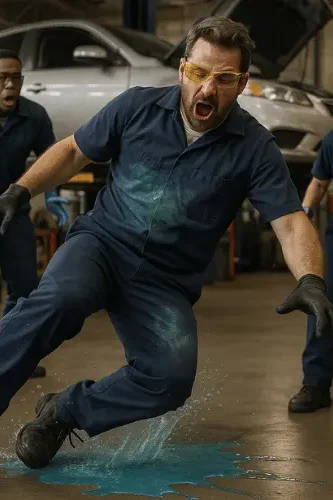
Mechanic slipping on spilled liquid in a repair shop while coworkers react, showing common liability hazards addressed by auto repair shop insurance.
  • What It Does: E&O coverage protects against claims that your shop’s professional services, inspections, diagnostics, or repairs were performed incorrectly and caused a loss. Unlike garage liability (which covers accidents), E&O is about mistakes in your work.
  • Why It’s Needed:Every repair carries risk. Misdiagnosing an engine issue, failing to torque lug nuts properly, or overlooking a worn brake line can all lead to accidents, injuries, or further damage. Standard liability often excludes “your work”, meaning the cost of fixing or defending against these claims could fall entirely on you.
  • Why It’s Overlooked:Many shop owners think garage liability covers everything. It doesn’t. Garage liability responds to accidents, but if the root cause is a faulty repair, insurers often deny the claim without E&O in place.
  • Example:An auto shop replaced brake pads but failed to properly install them. Two days later, the customer’s brakes failed, causing an accident with multiple injuries. The lawsuit alleged negligent workmanship. Garage liability declined the claim, but E&O coverage would have provided defense and settlement.

Risk Management Beyond Insurance

Insurance transfers financial risk, but it doesn’t stop accidents, claims, or regulatory fines from happening in the first place. Strong risk management reduces losses, keeps premiums competitive, and makes your shop more attractive to insurers.

Safety Programs and OSHA Compliance

Auto repair is one of the more hazardous service industries, and OSHA pays close attention. Shops that invest in formal safety programs not only protect employees but also save money long-term.

  • Training matters: Regular instruction on lifting techniques, chemical handling, lockout/tag out, and use of protective equipment reduces injury frequency.
  • Housekeeping counts: Clean, dry floors and clearly marked walkways prevent costly slip-and-falls. Proper disposal of garbage, and especially oily rags helps prevent fires.
  • OSHA record keeping: Shops that maintain logs, post safety notices, and document training avoid fines and gain credibility with insurers.

Example

A shop in Illinois cut workers’ comp claims in half after instituting monthly safety meetings and requiring PPE for all chemical handling. The savings showed up not just in fewer claims but in lower insurance costs over time.

Supply Chain and Contingency Planning

Even the best-run shops can be crippled by parts shortages or unexpected downtime. Building resilience helps avoid long interruptions.

  • Parts sourcing: Maintain relationships with multiple suppliers for critical components.
  • Backup vendors: Don’t rely on a single paint or fluid provider; redundancy ensures continuity.
  • Emergency planning: Having a disaster recovery plan for fires, storms, or power outages ensures a faster return to operations.

Example

After a regional storm disrupted supply chains, one body shop with multiple supplier agreements kept work flowing while competitors sat idle for weeks.

Using Technology (IoT, Predictive Maintenance, Sensors)

Technology is increasingly part of risk management in auto shops. Insurers often provide credits or favorable terms to shops that adopt it.

  • Cameras and sensors: Security cameras and lot sensors deter theft and vandalism.
  • IoT monitoring: Sensors on compressors and lifts can detect early signs of breakdown, preventing costly accidents or downtime.
  • Digital record keeping: Electronic maintenance logs and repair records protect against disputes and strengthen defense in E&O claims.

Example

A shop using IoT sensors caught a failing hydraulic lift before it collapsed. Preventing one serious injury avoided a six-figure workers’ comp claim and the reputational damage that could have followed.

With a solid understanding of coverages, costs, and risk management, you’re ready to select the right insurance program for your auto repair operation.

How to Choose the Best Auto Repair Shop Insurance Program

Not all insurance programs are created equal. The right program balances coverage, cost, and service in a way that fits the specific risks of your operation. Choosing wisely means knowing what to look for and what to avoid.

What to Look for in a Policy

When evaluating policies, shop owners should focus on:

Technicians performing welding work in an auto repair workshop with flammable materials nearby, emphasizing fire and equipment risks covered by auto repair shop insurance.
  • Comprehensive coverage, not just price. Cheap policies often carry exclusions that leave costly gaps.
  • Industry-specific endorsements. Look for garage liability, garage keepers, and mechanics’ E&O, which are not included in a basic business policy.
  • Adequate limits. Liability claims from accidents or faulty repairs can easily surpass $500,000. Higher limits provide a crucial buffer.
  • Flexibility and scalability. Your insurance should adapt if you add services like towing, body work, or expand to multiple locations.

Benefits of Working With The Coyle Group

Running an auto repair business means dealing with risks that most generalist brokers don’t fully understand, from garage liability to mechanics’ errors to environmental exposures. The Coyle Group brings industry-specific expertise that helps protect your shop and your livelihood.

  • Expanded Market Access. We work directly with carriers that specialize in garage and auto service businesses, giving you more options and competitive terms.
  • Risk Identification. Beyond the basics, we highlight overlooked exposures such as pollution liability, faulty work coverage, or mechanics’ E&O, and build them into your program.
  • Claims Advocacy. When accidents happen or disputes arise, we step in to manage the claim and advocate for the best possible settlement on your behalf.
  • Better Coverage, Smarter Pricing. With the right broker, repair shops consistently secure broader protection and more competitive premiums than those relying on one-size-fits-all, online policies.

At The Coyle Group, we combine market access, industry insight, and decades of claims experience to make sure your insurance program actually works when you need it most.

95+

Years of Family Legacy in Insurance

40+

Years Personal Experience

95%

Client Retention Rate

600+

Educational Videos

Questions to Ask Before You Buy

Before signing, ask your broker or carrier:

  • Does this policy include garage liability and garage keepers liability, or are they excluded?
  • Are employee tools, loaner cars, and faulty workmanship covered?
  • What exclusions apply to business interruption coverage?
  • How are deductibles structured, per occurrence, per vehicle, or per claim?
  • Does the insurer have experience handling auto repair shop claims, and what is their track record?

Example

A shop owner in Pennsylvania discovered too late that his policy had a per-vehicle deductible under garage keepers, not per-incident. A hailstorm that damaged 20 vehicles triggered 20 deductibles. The right questions upfront would have saved tens of thousands.

Questions about Auto Repair Shop Insurance?

At a minimum, most states require workers’ compensation if you have employees, plus general/garage liability. If you store customer cars, garage keepers’ insurance is essential. Depending on your state, pollution liability or specific safety coverages may also be mandatory.
 
Requirements vary by state. Shops should confirm compliance with state labor departments, OSHA, and local fire codes.

Garage keepers cover customer vehicles in your care, custody, or control from risks like theft, vandalism, fire, or storm damage.
 
Without it, you may be personally responsible for damage to any car on your lot. Deductibles can be per-vehicle or per-incident — a critical detail to negotiate.

No. General liability covers slip-and-fall accidents and third-party property damage, but not vehicles you handle. Garage liability combines premises liability with auto liability, covering both on-site accidents and those involving customer vehicles on the road.
 
Auto repair shops should carry garage liability, not just general liability, to close this gap.

Mechanics E&O covers claims of faulty workmanship, misdiagnosis, or negligent repairs that cause loss or injury.
 
Standard liability policies often exclude “your work.” Without E&O, a brake repair mistake or overlooked defect could trigger a lawsuit your policy won’t cover.

It varies widely based on payroll, revenue, services performed, claims history, security features, and location.
 
Two similar shops can pay two to three times different premiums depending on safety culture, vehicles stored, and risk controls. The only accurate way to know your cost is through a tailored quote.

Not automatically. Most property policies cover business-owned tools, not employee-owned ones.
 
Many insurers offer an endorsement to cover mechanics’ personal tools. Without it, a theft or fire could leave employees footing the bill for thousands in lost equipment.

Yes, if you carry garage liability insurance. It covers bodily injury and property damage caused during test drives by your employees.
 
Without garage liability, accidents during test drives are typically excluded, leaving the shop exposed to lawsuits and repair bills.

If your shop uses solvents, oils, paints, or refrigerants, yes. Pollution liability covers spills, leaks, and contamination cleanup.
 
Many shops overlook this until it’s too late. Even small spills can trigger environmental fines or neighbor lawsuits.

Absolutely. It covers lost income and extra expenses if your shop is forced to close after a covered event.
 
Fires, storms, or major equipment breakdowns can halt operations for weeks. Business interruption coverage helps pay payroll, rent, and other fixed costs during downtime.

Yes. A specialized broker understands industry-specific risks, negotiates with multiple carriers, and helps avoid costly gaps.
 
Many generic agents miss exposures like E&O or garage keepers details. A broker with auto repair expertise ensures coverage aligns with your real risks.

Get the Right Coverage for Your Auto Repair Business

Running an auto repair shop means carrying risks most standard business policies simply don’t address. From slip-and-fall injuries to faulty repairs, customer cars in your lot to environmental exposures, the wrong insurance program can leave you paying out-of-pocket when it matters most.

The right program protects more than just your assets, it safeguards your reputation, stabilizes cash flow, and gives you confidence that one claim won’t derail your business.

At The Coyle Group, we’ve spent decades helping auto repair shop owners identify blind spots, close coverage gaps, and build programs that stand up under pressure.

This article was written by Gordon B. Coyle, CPCU, ARM, AMIM, PWCA, CEO of The Coyle Group. With over 40 years of experience advising auto repair shops, collision centers, mobile mechanics, and multi-bay service operations across the United States.

Ready to protect your shop?

Schedule Your Insurance Confidence Assessment

In our 30-minute call, you’ll discover:

  • Whether your current coverage matches your actual risks
  • If you’re getting fair value for what you’re paying
  • How your service experience compares to what’s possible
  • What questions you should be asking but probably aren’t

Not ready for a call?

Get Free Access to Our Gated Video:
How to Finally Feel Confident in Your Coverage.

And discover the exact system we use to help business owners eliminate hidden coverage gaps, stop overpaying, and finally feel confident in their protection.


What Peace of Mind Looks Like

Client Testimonials

Want to know more?

See related blogs