
Environmental Remediation Insurance
Why Your General Liability Won’t Cover a Cleanup, and What Will

Index

Gordon B. Coyle
CEO, The Coyle Group
845-474-2924
How to get started
TL;DR. Executive Summary
Environmental remediation insurance is a family of policies, not one product, that pays for pollution cleanup and third-party pollution claims your general liability plan will not touch.
Standard GL has excluded pollution since the mid-1980s, so if your business owns, operates, or works on a site with any contamination exposure, you likely need site pollution liability (PLL/EIL), contractors pollution liability (CPL), or a cost-cap policy, not a small endorsement.
Premiums for a straightforward risk typically run $2,500 to $30,000 a year, with larger or high-hazard exposures priced well above that.
If you’re not sure your policy would respond to a spill or a contamination finding, you’re not alone.
Most business owners assume general liability handles it. It almost never does. The Coyle Group builds environmental and pollution programs for owners, contractors, and developers who cannot afford to find out the hard way, and we have seen the sequence a denied claim sets off.
If that uncertainty describes you, book a call and we will walk through your actual exposure before it becomes a claim.
If you own, operate, or do contracting work on a site with any history of chemicals, fuel, waste, or industrial use, you have probably heard some version of this from another business owner: “we thought we were covered.”
The business assumed its general liability policy, or a small pollution endorsement tacked onto it, would respond if contamination showed up.
Then a claim hit, and the carrier pointed to the pollution exclusion and walked away.
Nobody told them pollution was excluded.
Nobody explained that a fuel spill, a discovered plume of groundwater contamination, or a demolition that disturbed asbestos would fall entirely outside a standard commercial policy.
What Is Environmental Remediation Insurance?
Environmental remediation insurance is coverage that pays to clean up contaminated soil, groundwater, or surface water, and that defends and pays third-party pollution claims your general liability plan excludes. It is not one policy. It is a family of forms, and picking the wrong one is exactly how a business ends up eating a $550,000 out-of-pocket bill, like the warehouse claim below.
“Environmental remediation insurance” is really a catch-all term for several distinct products: site pollution liability (also called PLL, or environmental impairment liability, EIL), contractors pollution liability (CPL), remediation cost-cap policies, and, less often, environmental lender liability or storage tank liability forms.
What they all share is the same job: pay for cleanup and liability that a standard commercial policy was never built to cover. In my experience, the confusion isn’t about whether coverage exists.
It’s about which form actually matches the role the business plays.
Not sure which form applies to your operation? Contact us and we will sort out where you actually sit in this picture.
Why Won’t My General Liability Policy Pay for a Pollution Cleanup?
Your general liability policy will not pay for a pollution cleanup because nearly every GL form written since the mid-1980s carries an absolute pollution exclusion. That single clause causes more denied claims than almost anything else I see, and it does not care whether the contamination was an accident, a legacy condition, or a single fuel spill.
That sequence is what hits business owners hardest: they file a claim assuming the policy will respond, and instead they absorb the entire cost themselves.
What this looks like in practice
A warehouse operator filed a general liability claim after a pollution event on its property. The carrier denied the claim outright, citing the policy’s pollution exclusion. The result was a $550,000 out-of-pocket expense the business had to absorb directly, with no insurance behind it. (Source: Amwins)
This is exactly why environmental remediation insurance exists as its own category rather than an add-on.
Standard commercial general liability policies provide little to no pollution coverage, and cleanup plus most third-party pollution claims require a standalone policy built for that purpose, according to the Insurance Information Institute.
If your only protection is a GL policy or a narrow endorsement, you carry this exposure yourself, whether you realize it or not.
What Does Environmental Remediation Insurance Actually Cover (and Exclude)?
A well-built environmental remediation policy covers on-site and off-site cleanup, third-party bodily injury and property damage from contamination, legal defense, and often business interruption. What trips people up is the exclusions list, because a policy that looks comprehensive on the declarations page can still leave you exposed the moment a real claim tests its actual wording.
Coverage varies by carrier and form, but a properly structured policy should respond to a defined set of triggers, and just as importantly, should make its gaps visible before you buy it, not after a claim.
Typically Covered |
Commonly Excluded or Restricted |
|---|---|
|
On-site cleanup and remediation |
Known or pre-existing contamination not disclosed at binding |
|
Off-site migration cleanup (soil, groundwater, surface water) |
Pollution events before the policy’s retroactive date |
|
Third-party bodily injury and property damage |
Gradual pollution, unless expressly written in |
|
Legal defense (inside or outside the limit, by form) |
Asbestos, mold, or PFAS without a specific endorsement |
|
Regulatory response and cleanup-order compliance |
Remediation costs incurred without insurer approval |
|
Business interruption from a covered pollution event |
Undeclared operations or unapproved subcontractors |
|
Transportation and non-owned disposal site liability |
Late notice or failure to follow claim-reporting rules |
|
Completed operations (for contractors) |
First-party cleanup on your own site under a liability-only form |
That last row catches more businesses than any other. A liability-only policy pays a third party’s claim, but it will not pay to clean up your own property unless the form specifically includes first-party cleanup.
If you own the site, that distinction separates a policy that protects your balance sheet from one that only protects everyone else’s.
If you want a plain answer on whether your current policy would actually pay in a real event, book a call and we will go through the wording together.
Environmental Remediation vs. Pollution Liability vs. Contractors Pollution Liability: Which Do I Need?
Which policy you need depends on your role, not the size of your business. Site owners and operators need pollution liability (PLL/EIL), contractors need contractors pollution liability (CPL), and project owners on long cleanups often need a cost-cap policy layered on top of either one. Choosing based on what a neighbor bought is how gaps happen.
This is where I see the most expensive mistakes, because these products sound interchangeable and are not. A CPL policy a contractor carries does not extend to the site owner, and a site owner’s PLL policy does not cover a subcontractor’s spill unless that subcontractor is scheduled or added as an additional insured.
Form |
Who It’s For |
Trigger |
First-Party Cleanup? |
Common Gap |
|---|---|---|---|---|
|
Site Pollution Liability (PLL/EIL) |
Owners/operators of a fixed site |
Pollution on or migrating from the insured site |
Often, if written in |
Retroactive-date mismatch on older sites |
|
Contractors Pollution Liability (CPL) |
Contractors working at other sites |
Pollution caused by the contractor’s operations |
Rarely; job-site focused |
Sub not scheduled or lacking own coverage |
|
CGL Pollution Endorsement |
Businesses with minor, defined exposure |
Narrow, scheduled pollutant only |
No |
“Sudden and accidental” only, low sublimit |
|
Remediation Cost-Cap |
Project owners on long cleanups |
Cost overruns on a known remediation project |
Yes, by design |
Requires a defined remediation plan upfront |
|
Environmental consultants/engineers |
Errors in assessment or remediation design |
No |
Confused with general E&O, leaving design work uncovered |
If you’re a contracting firm bidding on excavation, demolition, or remediation work, start with contractors pollution liability, since it is increasingly a contract requirement before you can even bid.
If you own or lease the site, the broader pollution liability coverage built for site owners is the right starting point.
Contact us and we will map your actual role, owner, contractor, or both, to the form that actually fits it.
How Serious Is the Liability? CERCLA, Superfund, and Who’s on the Hook.
Federal environmental liability under CERCLA is strict, and it can be joint and several, meaning a business can be pursued for the entire cost of a cleanup even if it did not cause the contamination. That single fact is why I tell clients this isn’t a risk you manage by hoping you’re not the one who gets sued.
CERCLA, the Superfund law, defines potentially responsible parties broadly: current owners, former owners at the time contamination occurred, companies that arranged for disposal, and even transporters of hazardous waste.
The EPA can pursue any one of them for the full cleanup cost and let them sort out contribution from the others later.
The scale here is real, not theoretical.
The NAIC has separately flagged that businesses often assume they carry coverage they don’t, which lines up with exactly what I see in program audits.
Which Businesses Need It?
Any business that owns, operates, or works on a site with a real contamination exposure needs some form of environmental remediation insurance, not just chemical plants. The list is wider than most owners assume, and it includes several industries that consider themselves low-risk until a Phase I assessment says otherwise.
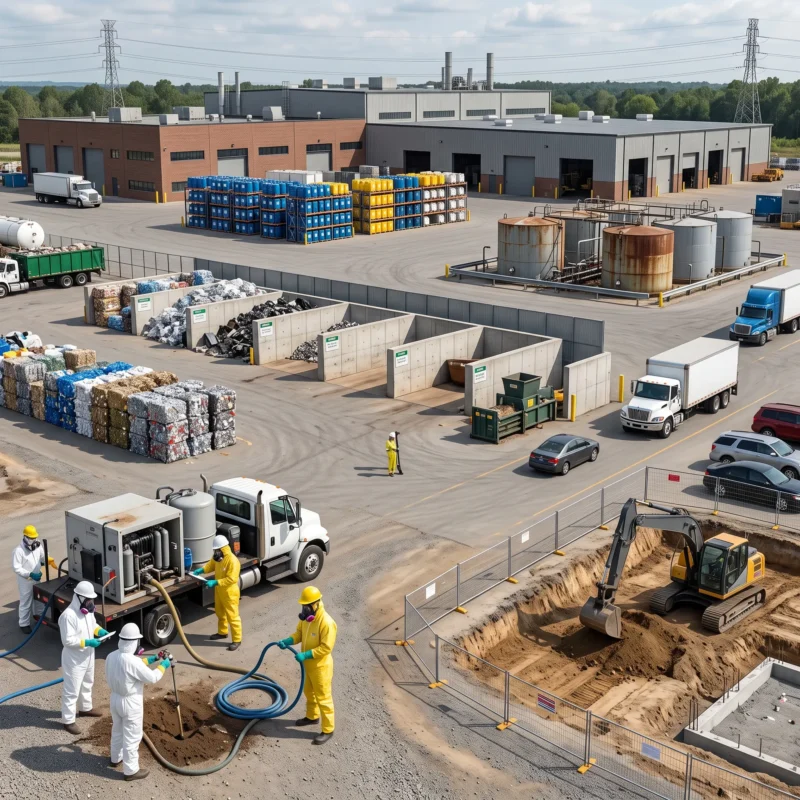
If your business fits any one of these categories, the honest conversation isn’t whether you need coverage.
It’s which form fits your role.
Book a call if your operation touches any category above and you aren’t certain what’s currently in force.
How Much Does Environmental Remediation Insurance Cost?
Environmental remediation insurance typically runs anywhere from $2,000 a year for a low-risk small business to well over $75,000 a year for large industrial or high-hazard operations, and your site and operations drive that number far more than your revenue does. Here is how the ranges break down by profile.
Business Profile |
Indicative Annual Premium |
Typical Limits |
|---|---|---|
|
Low-risk small business |
~$2,000–$5,000 |
$1M–$2M |
|
Small/moderate contractor (CPL) |
~$2,500–$15,000 |
$1M–$5M |
|
Remediation/excavation contractor |
~$7,000–$30,000+ |
$2M–$10M |
|
Light industrial/warehouse |
~$5,000–$15,000 |
$1M–$5M |
|
Mid-market industrial |
~$15,000–$75,000+ |
$10M–$15M |
|
Large, high-hazard operation |
~$50,000–$500,000+ |
$15M–$25M+ |
In my own book of business, a straightforward contractors pollution liability placement runs about $2,500 to $10,000 for standard project scopes, with larger or higher-hazard jobs priced well above that once the underwriter reviews the site and substance list.
Our pollution liability insurance cost breakdown goes deeper on how underwriters build that number.
Want a real number instead of a range? Contact us with your site details and we will get you an actual indication.
Buying It Without a Gap: Contaminated Property, Transactions, and Due Diligence
If you’re buying, selling, financing, or redeveloping a property with any contamination history, environmental coverage is what lets the deal close on schedule instead of stalling in negotiation. It complements, rather than replaces, the environmental due diligence your team should already be doing.

Why Claims Get Denied, and What to Do After a Spill
Most environmental claims get denied for reasons that have nothing to do with whether the pollution actually happened. They get denied over paperwork, timing, or scope. Knowing the common denial triggers ahead of time is the easiest way to keep a real event from becoming an uncovered one.
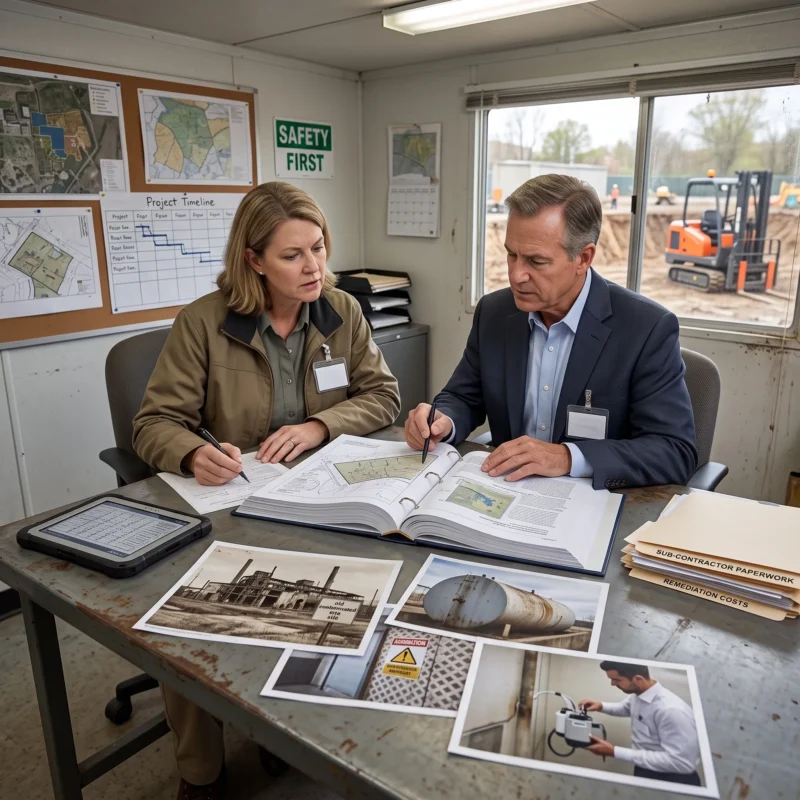
If a spill or contamination turns up, the sequence matters as much as the coverage itself. Notify your carrier immediately, before starting any cleanup beyond what’s needed to prevent immediate harm.
Contain what you can safely contain.
Document everything: photos, dates, substances involved, and everyone you notified.
Use an insurer-approved remediation contractor and plan rather than authorizing work on your own, since unapproved remediation costs sit near the top of that denial list.
Book a call before a claim happens, not after. That is the only point where we can actually change the outcome.
How a Specialist Structures This Coverage
A specialist structures environmental coverage by starting with your actual site and operations, not a template, because the wrong form filed correctly is still the wrong form. After 40 years auditing commercial insurance programs, this is one of the coverage areas where I see the most expensive mistakes hiding in plain sight.
They compare the premium to the cost of cleanup alone, when the real exposure is what I think of as the full cost of the claim: cleanup, legal defense, business interruption while the site sits offline, and, in a transaction, a stalled deal or a discounted sale price while buyers wait for the contamination question to get resolved.
That full number is almost always a multiple of the cleanup estimate on its own, and it’s the number that should drive your limits, not the premium quote.
That mistake shows up here as often as anywhere I audit: a business carrying a real pollution exposure with no standalone policy, or the wrong form for its role.
The Pollution Liability Insurance practice at The Coyle Group exists specifically to close that gap before a claim tests it.
If you’re not certain your current program would respond to a pollution event, book a call and let’s find out before a claim forces the answer.
Questions about Environmental Remediation Insurance?
Get The Right Coverage For Your Environmental Exposure
Pollution and environmental exposure is one of the areas I see get mishandled the most, not because the risk is rare, but because it doesn’t fit the standard general liability template. A form built for everyone tends to leave gaps for anyone with a real site or job-site exposure.
That’s why I don’t hand a client a generic pollution endorsement and call it done. I structure coverage around what you actually do: whether you own the site, work on someone else’s, or manage a project that runs for years, and I build the policy around that role, not a checkbox.
After 40 years auditing commercial insurance programs, I still find a fatal gap in roughly nine out of ten I review. My job is making sure yours isn’t one of them, so when a claim comes, you’re not the business left explaining what your broker never told you.

This article was written by the CEO of The Coyle Group, Gordon B. Coyle, CPCU, ARM, AMIM, PWCA, who has over 40 years of experience working with business owners of all sizes and industries across the US, solving their insurance challenges.
Here’s how to take the next step
Schedule Your Insurance Confidence Assessment
In our 30-minute call, you’ll discover:
Not ready for a call?
Get Free Access to Our Gated Video:
“How to Finally Feel Confident in Your Coverage. “
And discover the exact system we use to help business owners eliminate hidden coverage gaps, stop overpaying, and finally feel confident in their protection.
What Peace of Mind Looks Like
Trusted by business owners across the U.S.
The Coyle Group is 1st class! Gordon and his team are knowledgeable, responsive, and attentive to detail. Gordon is that rare breed of professional who genuinely cares for his clients and works hard to exceed their expectations. I highly recommend them.


The insurance brokerage service was truly tailored to my needs, nothing like those big brokers who steer you toward random policies that don’t fit your profile. Thank you to the team for your help.

I was working with another broker and having difficulty acquiring General Liability coverage. A colleague recommended The Coyle Group. They were able to get coverage bound in just a couple of business days and a policy issued in ten days, and with a solid carrier at a competitive premium. Truly impressive results, plus it was a pleasure working with them. I highly recommend the Coyle Group!

If any business is looking to work with an insurance brokerage firm that is not only excellent at what the firm does, but one that deeply values the needs of the clients, then The Coyle Group is the firm for you. Give them a call and see for yourself. I can assure that you will quickly agree.

Want to know more?
See related blogs

The Crowdstrike Debacle and Cyber Insurance
Third Party Employment Practices Liability Insurance. Protect Your Business

Are You Overpaying or Underinsured on Your Business Insurance?
