
We Added a New Location. Does Our Business Insurance Still Cover Us?
Does Business Insurance Cover A New Location

Index

Gordon B. Coyle
CEO, The Coyle Group
845-474-2924
How to get started
Direct answer
Does business insurance cover a new location?
Not automatically, and not in full. Most policies include a temporary “newly acquired locations” extension, commonly 30 to 90 days, capped at a modest sublimit (a lower dollar cap within your main limit, often far below what a real building or inventory loss would cost), but permanent protection requires formally adding the address, updated property values, and the right endorsements. Treat a new location as a trigger to review your whole program, not just update an address.
We audit what you actually have against what the new location actually needs, values, operations, employees, vehicles, and income exposure, before a claim finds the gap for you. One call tells you where you stand.
One business owner expanding to a new site put it plainly in a thread I came across recently: their insurer told them flatly that it “does not cover businesses with multiple locations under the same entity,” because the carrier couldn’t figure out how to price the business income risk across sites.
The Coyle Group is a commercial insurance agency for business owners who’ve outgrown one-size-fits-all coverage and need a specialist who understands the nuances.
Over 40 years, I’ve watched the same pattern repeat across manufacturers, distributors, importers, and retailers alike: a business grows into a new location, and the insurance program quietly falls behind it.
It just happens in the gap between “we’re expanding” and “someone reviewed the whole policy,” and that gap is where claims get denied.
If you are buying your very first policy for your very first address, most of what follows still applies, but you will get more direct value from talking to an advisor first, which the small-business section further down points you to.
Why Does Adding a New Location Change Your Insurance?
Does business insurance cover a new location the same way it covered your first one? Rarely, and that gap is exactly where what I call the new-location blind spot lives. A new location changes your actual risk, not just your address, and in my experience that is the exposure nobody prices for until a claim forces the question. I audit programs for a living, and I find a fatal flaw in roughly 9 out of 10 of them. A new location is one of the single most common moments that flaw gets created, because the operational change happens in weeks and the insurance review, if it happens at all, gets squeezed into a five-minute call about the address.
A new office, warehouse, plant, or storefront can shift nearly every line of your program at once, and most business owners only think to update one or two of them:
That is the new-location blind spot in practice: a growing business creates a coverage gap without realizing it, because the address changes faster than the paperwork does, and nobody circles back to check.
What Can Go Wrong If the New Location Isn’t Added Correctly?
What goes wrong is rarely “no coverage at all.” It is a claim that gets denied or capped because the new address was never added to the schedule of locations, the exact document your insurer checks first when a loss happens. I have watched this cost a client real money, and the fix was always available before the loss, never after.
The specific ways this shows up in practice:
This is not theoretical.
Most businesses do not get that lucky.
Real-world example
A manufacturing client of ours expanded to a second facility and never updated the property policy to reflect it. When a fire broke out at the new site, the location simply was not listed. That mistake cost them hundreds of thousands of dollars out of pocket, on a problem that a single phone call to their broker would have prevented before the loss, not after it. From what I’ve seen, that phone call almost always feels unnecessary right up until the day it isn’t.
Not sure if your policy would actually respond to a loss at your new address? Contact us, and we will check it before it becomes a problem.
How to Evaluate Whether Your New Location Is Actually Covered
Does business insurance cover a new location well enough to survive a real claim, or just well enough to look fine on a declarations page? The only way to know is to test it against specifics, not assumptions, and this is the exercise I walk clients through directly.
Ask these four questions before you assume anything:
If you cannot answer all four with confidence, that is your answer.
What Should Your Broker Review Before the Location Opens?
A proactive broker treats a new location as a full review trigger, not a form to fill out, and the difference between those two approaches is exactly where coverage gaps get created or caught. If your broker’s only question was “what’s the new address,” that is a sign, not a review.
None of these questions are complicated on their own.
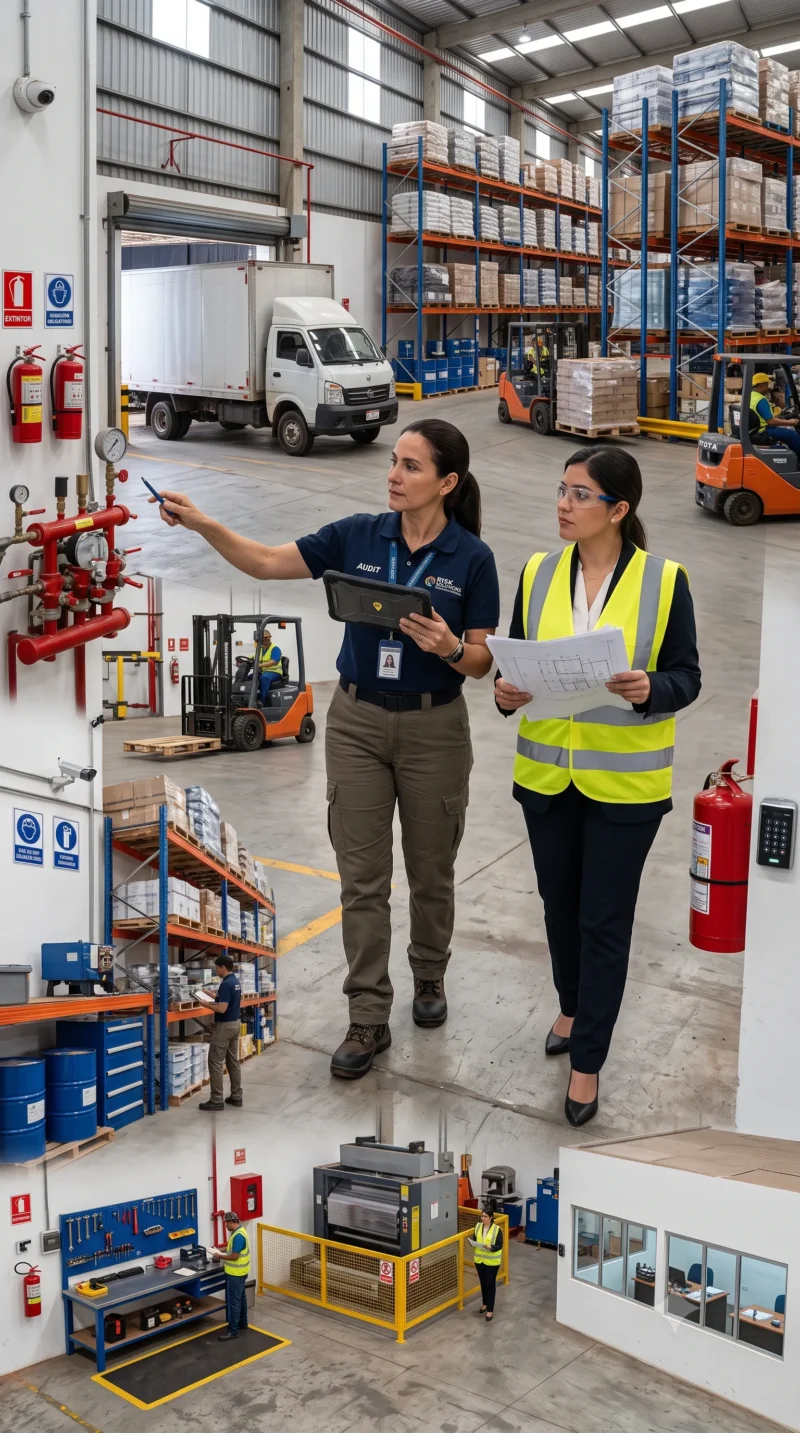
Which Coverage Areas Need a Second Look After Adding a Location?
Every major coverage line needs a specific answer, not a general assumption that “it’s probably fine,” and the fastest way to see where you actually stand is side by side.
Coverage |
What changes with a new location |
|---|---|
|
Commercial property |
New building, tenant improvements, business personal property, and inventory must be listed and valued correctly |
|
Business interruption |
Income, payroll, and continuing expenses at the new site need to be reflected in your limit |
|
General liability |
New premises and operations need coverage, especially with customers, vendors, or delivery drivers on site |
|
Workers’ compensation |
Employees need correct state and class code assignment for the new location |
|
Commercial auto |
Vehicles, drivers, and delivery routes tied to the new site need to be current |
|
Cyber and crime |
New systems, devices, and theft exposure at the location need to be accounted for |
|
Umbrella or excess liability |
Needs to follow the underlying policies correctly once the new location is added |
A business owners policy can often absorb a new location cleanly if it is structured correctly from the start, which is exactly why this belongs in the same conversation as your insurance by coverage review, not a separate one.
The table above is a starting point, not a substitute for someone actually reading your declarations page line by line.
What actually drives the cost of adding a location?
Mostly the same handful of factors every time: the building’s replacement value, the type and value of inventory or equipment on site, how many employees work there and in what roles, and the location’s own risk profile, including crime rate, flood zone, and construction type.
A cold-storage facility or a warehouse full of high-value inventory will cost more to insure correctly than a small office, and that is not a broker padding the bill. It is the actual exposure changing. The one thing that never lowers your real cost is under-reporting these values to keep the quote small. That does not reduce your risk. It just guarantees a coinsurance penalty waiting for you at claim time.
What a standard policy typically will not cover at a new location, without extra steps:
What’s Different About a Warehouse or 3PL Location?
A warehouse is not just a bigger version of your office, and treating it that way is one of the most common mistakes I see when a business adds one. Standard commercial property insurance covers what you own. A warehouse or third-party logistics site often holds goods that belong to your customers, which standard property coverage was never built to protect.
The distinction that matters here:
It is a reason to have someone who actually understands warehouse legal liability, not just general property forms, look at the policy before the first pallet arrives.

Industry-Specific Examples
Coverage needs shift differently depending on what actually happens at the new site, and generic advice tends to miss exactly the exposures that matter most across different industries.
Manufacturers.
A new facility can change property values, equipment schedules, workers’ compensation exposure, business interruption, and product liability all at once.
Contingent business interruption is the one I see missed most often here, since it covers you when a key supplier’s loss disrupts your production, not just a loss at your own site.
If you are opening a new plant, our manufacturing insurance coverage walks through equipment breakdown and contingent business interruption specifically.
Distributors.
A new warehouse can change inventory values, cargo handoff exposure, fleet coverage, and customer contract requirements.
This is where the warehouse legal liability question becomes real money, not a theoretical distinction, since most of what sits in that new warehouse may not even belong to you.
Our wholesalers and distributors insurance guidance covers this in more depth.
Importers.
A new U.S. warehouse or distribution center often increases product liability exposure, since importers are frequently treated as the manufacturer of record for insurance purposes, unlike domestic distributors who can point back to a manufacturer’s own coverage.
Our importer insurance page addresses this directly.
Food and beverage businesses.
A new facility may require a fresh look at spoilage coverage, contamination and product recall exposure, refrigeration equipment breakdown, and business interruption tied to supply chain disruption.
Our food processing insurance coverage goes deeper on this.

Multi-location and ecommerce retailers.
A new store or fulfillment point can change property limits, inventory exposure, theft and crime coverage, EPLI, and business income by location.
Peak-season inventory spikes at a new location are also worth flagging early, since a limit sized for a normal month rarely holds up during your busiest one.
If you are running an ecommerce operation alongside physical retail, your review needs to cover both sides of the business together.
Want the coverage review built around your specific industry, not a generic checklist?
When Should You Get a Second Opinion?
A second opinion makes sense the moment your gut tells you the review was thinner than the decision deserved, and in my experience that instinct is usually right. You do not need a claim to justify checking, and waiting for one is the single most expensive way to find out you were right to be suspicious.
Consider one if:
Multi-state expansion adds another layer worth checking, since insurance requirements and workers’ compensation rules are set state by state, not nationally.
If you are opening a location in a new state, your state insurance department is a useful starting point for confirming what is actually required there before you assume your current program travels with you.
A five-minute confirmation now is cheaper than finding out at claim time that it didn’t.
The Coyle Second Opinion
9 out of 10 business insurance policies we review have a gap that would sink a claim
Yours might be one of them, and the only time you find out is when you file a claim and it gets denied. Send us your policy for an independent, confidential read: what’s covered, what’s missing, what you’re overpaying for. We never contact your broker or shop the market. Flat $2,500, refunded in full if you don’t get real value.




The team that reads your policy, line by line.
Small-Business Path
If you are opening your first small office, storefront, or single additional location and simply need help choosing the right basic coverage, you likely do not need a full second-opinion review. You should still talk with an advisor before the location opens, so your policy actually reflects the new address, property, employees, and operations, rather than catching up to it after a loss.
Usually not in full, for the same reasons outlined above, just at a smaller scale and with less at stake if it’s caught early.
This is also a good moment to build in a habit: reviewing your business insurance on a regular cadence, not just when something changes, keeps this from becoming a recurring blind spot as you keep growing.
Businesses that are underinsured rarely find out gradually.
They find out all at once, at the worst possible moment.
Need help adding a new location to your business insurance? Contact us before you open.
Questions about Does Business Insurance Cover A New Location?
Get Your New Location Covered Right
The gaps in a growing business’s insurance program are not obvious. They show up when a new warehouse never makes it onto the schedule of locations and a claim gets denied, when your business income limit still reflects your old footprint after a fire, or when employees at the new site get assigned to the wrong state or class code.
Your job is to make the decision to review your coverage. Our job is to find every gap and fix it before a claim does.
Start with a conversation. We will walk you through exactly what a complete insurance program looks like for your new location, with no obligation and no pressure.

This article was written by the CEO of The Coyle Group, Gordon B. Coyle, CPCU, ARM, AMIM, PWCA, who has over 40 years of experience working with business owners of all sizes and industries across the US, solving their insurance challenges.
Here’s how to take the next step
Schedule Your Insurance Confidence Assessment
In our 30-minute call, you’ll discover:
Not ready for a call?
Get Free Access to Our Gated Video:
“How to Finally Feel Confident in Your Coverage. “
And discover the exact system we use to help business owners eliminate hidden coverage gaps, stop overpaying, and finally feel confident in their protection.
What Peace of Mind Looks Like
Trusted by business owners across the U.S.
The Coyle Group is 1st class! Gordon and his team are knowledgeable, responsive, and attentive to detail. Gordon is that rare breed of professional who genuinely cares for his clients and works hard to exceed their expectations. I highly recommend them.


The insurance brokerage service was truly tailored to my needs, nothing like those big brokers who steer you toward random policies that don’t fit your profile. Thank you to the team for your help.

I was working with another broker and having difficulty acquiring General Liability coverage. A colleague recommended The Coyle Group. They were able to get coverage bound in just a couple of business days and a policy issued in ten days, and with a solid carrier at a competitive premium. Truly impressive results, plus it was a pleasure working with them. I highly recommend the Coyle Group!

If any business is looking to work with an insurance brokerage firm that is not only excellent at what the firm does, but one that deeply values the needs of the clients, then The Coyle Group is the firm for you. Give them a call and see for yourself. I can assure that you will quickly agree.

Want to know more?
See related blogs
Third Party Employment Practices Liability Insurance. Protect Your Business

Are You Overpaying or Underinsured on Your Business Insurance?

Liberty Mutual Business Insurance Quotes
