
Stock Throughput Insurance
The One Policy That Closes the Gap Your Cargo and Property Coverage Leave Open

Index

Gordon B. Coyle
CEO, The Coyle Group
845-474-2924
How to get started
The short version
Stock throughput insurance is one policy that covers your owned inventory continuously, from your supplier, across the ocean, through ports and customs, into your warehouse, and back out to your customer, instead of the two separate policies (commercial property + cargo/transit) most businesses run.
Those two policies leave a gap right at the handoffs, where a loss can land in a seam neither insurer will pay. If you’re a distributor, wholesaler, or importer with inventory in motion, this is the coverage built to close that gap.
It doesn’t.
That is the moment most importers, wholesalers, and distributors first realize their inventory is not actually covered end to end.
It sits on a ship, waits at a port, rides an inland leg, gets stacked on racking, and ships back out, and somewhere in that path, most businesses are running two separate policies that were never built to meet in the middle.
It follows your owned inventory continuously, from your supplier to your customer, under one policy instead of two.
If you’re running a commercial property policy for the warehouse and a separate cargo or transit policy for goods on the move, you likely have a coverage seam right where your business is most exposed.
Gallagher’s 2026 supply chain research found 86% of companies had a supply chain loss last year, and only about a third were fully insured for it.
That is not a small-business problem. It’s a structural one, and it’s fixable with the right policy.
Book a call with our team to walk through where your current program has seams, or with a description of how your goods move and we’ll tell you honestly whether stock throughput is the right fix.
The Coyle Group is a commercial insurance agency that handles the complex, high-value risks other agencies don’t know how to structure, where the details in the policy are the difference between a paid claim and a denied one.
What Does a Loss Cost When Inventory Falls Between Two Policies?
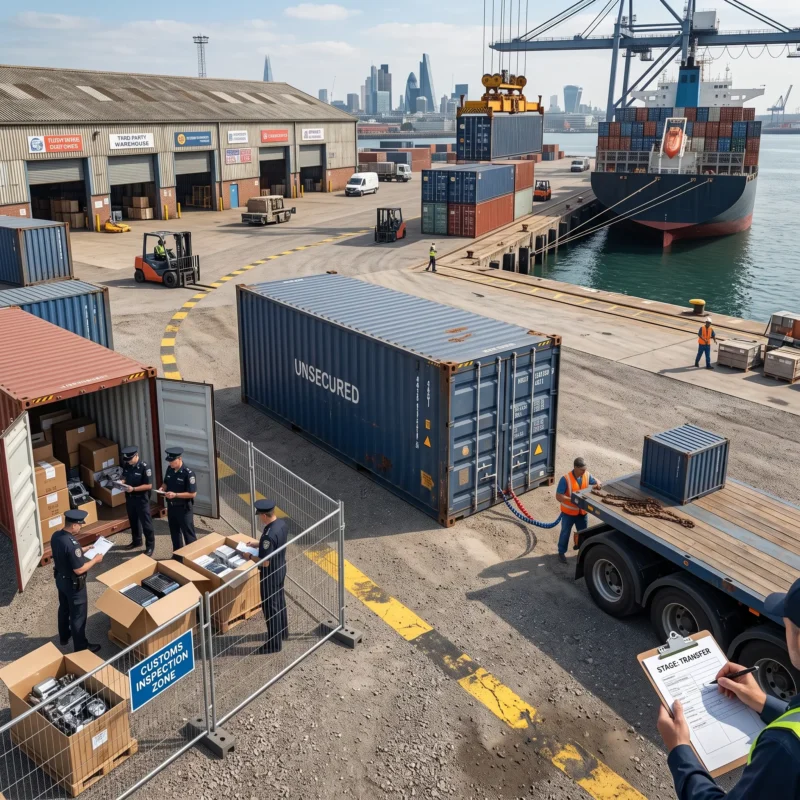
A loss that falls in the seam between your property and cargo policies usually means one thing: nobody pays. Two insurers can each point at the other’s definitions of “in transit” and “on premises,” and while that argument plays out, your business absorbs the loss.
In my experience auditing distributor and importer programs, this is one of the most common findings I run into: coverage gaps that seem to sink distributors all the time, and they rarely show up until a claim is already in dispute.
The scale of this is not hypothetical.
Research found that 86% of companies experienced a supply chain loss in the past year, and only about one in three were fully insured for it.
That means roughly two-thirds of businesses that had a loss were partially insured or not insured at all for it.
A standard business owners policy typically caps off-premises inventory near $10,000, which is nowhere near enough once a container of goods is sitting at a port or a third-party warehouse.
Here’s what that looks like in practice:
What Is Stock Throughput Insurance and How Does It Work?
Stock throughput insurance is a single marine-family policy that insures your owned inventory continuously, from the moment you take an interest in it at the source through to final delivery, regardless of whether it’s in production, on the water, at a port, in a warehouse, or on the road. It closes the coverage gap I just described by design, and it’s worth being direct about where it comes from: this is not a standard property form. It’s a marine manuscript policy, which means the wording is negotiated to fit how your goods actually move rather than pulled off a generic template.
Business owners often search for this concept before they know its name, and that’s worth naming here: if you’ve been looking for insurance for inventory at warehouse and in transit without knowing what to call it, stock throughput is very likely the answer.
Those two terms get you to the right specialist faster than describing it as standard business property.
A stock throughput policy typically combines three components:
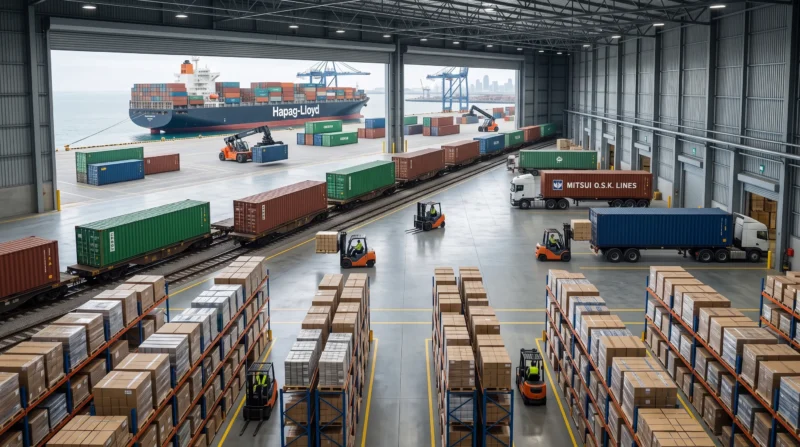
Instead of buying these as three separate contracts from three different starting points, stock throughput unifies them under one form, with one set of definitions, and one point of contact if a claim happens.
If that combination sounds like it matches how your goods actually move, contact us and we’ll confirm whether it fits before you spend time on quotes that may not.
Where Does the Property-and-Cargo Patchwork Actually Break?
The patchwork breaks at the handoffs, not in the middle of either policy’s coverage. A property policy is anchored to a building. A cargo policy is anchored to a voyage. Both do their individual jobs well. The problem is that they were bought as two separate contracts, often from two different carriers, and neither one was written with the other in mind. That’s exactly the shape of coverage gaps between property and cargo insurance that business owners run into without realizing it until a claim gets disputed.
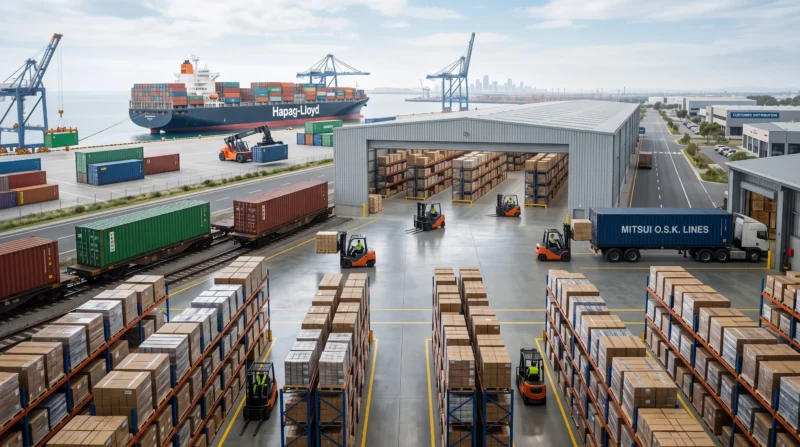
In my experience, the businesses that get surprised by this are the ones who assumed “in transit” always meant “covered.” It often doesn’t, not once goods are staged at a dock, held during a customs examination, or sitting in a third-party facility between shipping legs.
Book a call if you want us to walk through your specific supply chain and show you exactly where your seams are.
What Does Stock Throughput Cover, Stage by Stage?
Stock throughput covers your owned inventory at every stage of its journey, not just the stages a standard policy happens to reach. Here’s the stage-by-stage breakdown, because seeing it laid out this way is usually what makes the gap obvious to a business owner for the first time.
Stage |
What’s happening to your goods |
Typical standalone coverage |
Stock throughput |
|---|---|---|---|
|
Production |
Raw materials, work in process |
Often excluded or limited |
Covered |
|
Ocean or air transit |
Goods moving overseas |
Ocean cargo policy |
Covered |
|
Port or customs hold |
Goods staged or examined |
Frequently a gap |
Covered |
|
Inland transit |
Goods moving by truck or rail |
Inland marine or cargo policy |
Covered |
|
Third-party warehouse |
Goods stored off your own premises |
Often excluded from property policy |
Covered |
|
Your warehouse racking |
Goods stored on-site |
Commercial property policy |
Covered |
That per-location structure is worth understanding before you talk to a broker, because it changes how the policy responds compared to a standard property form.
Major catastrophic perils like flood, windstorm, and earthquake are typically carved out with their own annual aggregate sublimits, separate from the per-location limit that applies to everything else.
A program built this way can absorb a relatively low limit per location while still providing significant total coverage across a whole supply chain, which is part of why stock throughput often ends up more efficient than stacking multiple property schedules on top of each other.
Book a call to see how this structure would actually apply to your locations and shipment values.
What Does Stock Throughput NOT Cover, and What Handles It Instead?
Stock throughput answers one specific question: physical loss or damage to your own product. It does not answer every insurance question your business has, and naming exactly where it stops is what actually prevents the confusion I see most often in this space, the same confusion behind nearly every “does my 3PL cover my inventory” question I hear from clients directly.
Here’s the honest map:
If the question is… |
The answer is… |
|---|---|
|
Is damage to my own goods covered anywhere they move? |
Stock throughput |
|
Are the customer’s goods I’m holding for them covered? |
Warehouse legal liability (bailee’s coverage), not stock throughput |
|
Is my building and stationary inventory covered? |
Commercial property, which often runs alongside stock throughput |
|
Did my product injure or damage something belonging to someone else? |
General liability / product liability |
|
Was the loss on my own delivery truck? |
Commercial auto |
|
Do I need limits above my primary layers? |
Umbrella liability |
That distinction matters more than it looks.
Stock throughput answers damage to your product. It does not answer harm your product causes someone else once it’s sold, which is a completely separate exposure carried under product liability coverage built for distributors.
Owners blur these two more often than any other pair of coverage lines in this space, and it’s an easy mistake to make since both can trace back to the same pallet of goods.
A distribution or wholesaling operation that owns the inventory in motion is the operator this coverage is actually built for, and it sits under our broader wholesalers and distributors insurance program alongside the other coverage lines your operation carries.
Who Actually Needs Stock Throughput Insurance?
Stock throughput is built for businesses whose money is in motion, not sitting still in one place. If some of your inventory is on the water, some at a port, some on a truck, and some on the racking, all at the same time, insuring only the warehouse leaves the largest and most mobile part of your balance sheet exposed exactly when it’s most at risk.

A warehouse operation that only stores other companies’ freight is generally the exception here.
Not sure which category your operation actually falls into? Contact us and describe how your inventory moves. We’ll tell you plainly whether this coverage fits before you spend time chasing quotes.
What Extra Exposure Do Importers Face: Duty, Freight, and General Average?
If you import, your insured value needs to include more than the price you paid your supplier, and general average is the exposure most importers have never heard of until it costs them money. By the time your goods are on the ocean, the value at risk already includes the duty and freight you’ve paid to get them there. A policy written around the bare merchandise cost leaves you recovering only part of what you actually spent if there’s a total loss.
General average is an old shared-sacrifice principle of ocean shipping.
When part of a cargo or the vessel itself is deliberately sacrificed to save the whole voyage, such as goods jettisoned in a storm, the loss is shared proportionally among every cargo owner aboard, including owners whose goods arrived completely untouched.
That means an importer can be billed for a loss they had no part in and never saw coming.
What we see in practice is that many importers assume their overseas supplier’s insurance covers this. It typically doesn’t.
Offshore supplier policies exclude US coverage almost as a rule, and weight-based limits from freight forwarders, which price coverage per pound of goods rather than actual value, routinely fall short of what a real loss costs.
Anyone bringing goods across a border should also understand how duties and import documentation factor into the value at risk, since that landed cost is part of what a properly structured policy needs to reflect.
Contact us if you’re importing regularly and have never had someone walk you through how general average and landed value affect your coverage. Most brokers never bring it up.
How Should Coverage Be Sized for Seasonal Inventory Swings?
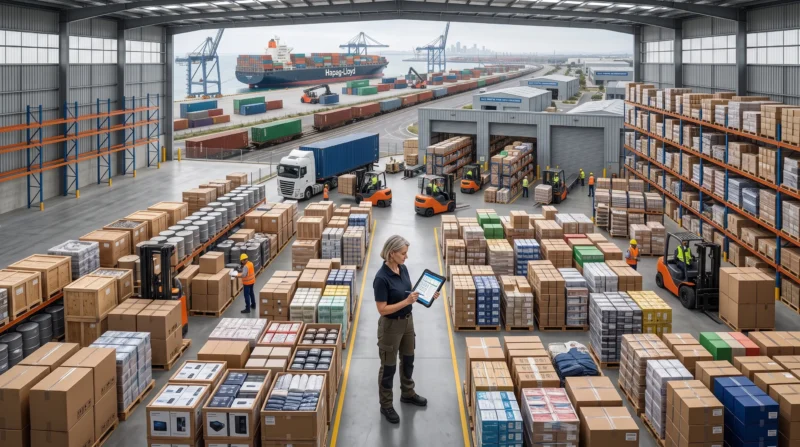
Your inventory value is not a flat line, and pricing your coverage as if it were is one of the more common mistakes I see. Values climb as you build stock ahead of a selling season and fall as it ships out, which means your exposure is often highest in the weeks right before your busiest period, when the warehouse is fullest and the most product is simultaneously in transit toward you.
A loss during a peak buildup hits the largest concentration of value your business carries all year. Coverage that was adequate in a slow month can be dangerously short during a peak one if nobody adjusted it.
Why Does Stock Throughput Require More Than a Generic Policy?
I have spent over 40 years working with business owners, including 7, 8, and 9 figure operations, helping them navigate the complex world of commercial insurance. When I audit a distributor or importer’s program, I find fatal flaws in roughly 9 out of 10 of them, not because these business owners made bad decisions, but because most brokers are order-takers who quote what the client already had instead of starting from what the operation actually needs.
The seam between property and cargo coverage is not an edge case. It is close to the default state of most programs I encounter, and it is entirely fixable once someone actually looks for it.
One example from the kind of gap this closes
A distributor’s general property policy covered losses at their warehouse but excluded goods damaged in transit due to port congestion and handling delays.
The shipment was insured on one end and uninsured on the other, and the loss landed squarely in the gap between the two.
A stock throughput policy would have covered that same loss without a second conversation, because the coverage would never have stopped following the goods in the first place.
Book a call if you’d rather have someone find your gaps before a claim does.
What Does Stock Throughput Insurance Cost?
Stock throughput pricing is built around your maximum concentration of value, not a single flat premium quote, and that structure is exactly why it can end up costing less than the patchwork it replaces. Because the policy assesses stock-related risk on its own terms instead of folding it into a general property rate, pricing tends to be more accurate to your actual exposure.
Premium is driven primarily by:

What I always come back to with clients is total cost of risk, not just the premium line. A policy that costs slightly more but eliminates a coverage argument at claim time is worth more than a cheaper policy that leaves you fighting two insurers over whose definition applies.
That is the actual comparison to make, not premium against premium. Isolating stock from your general property schedule also tends to help your loss ratio over time.
Movable, high-value inventory can disproportionately drag down an otherwise clean property program when the two are priced together, especially for operations where inventory is frequently in transit or held in higher-risk storage.
Separating the two lines lets each be underwritten and priced on its own terms, which in my experience leads to a healthier renewal history on both sides rather than one bad year on inventory dragging up your building’s rate along with it.
Book a call, and we’ll walk through what actually drives your number before you commit to anything.
What to Know Before You Buy Stock Throughput Insurance
If you only take a few things from this page, take these.
The Coyle Second Opinion
9 out of 10 business insurance policies we review have a gap that would sink a claim
Yours might be one of them, and the only time you find out is when you file a claim and it gets denied. Send us your policy for an independent, confidential read: what’s covered, what’s missing, what you’re overpaying for. We never contact your broker or shop the market. Flat $2,500, refunded in full if you don’t get real value.




The team that reads your policy, line by line.
Questions about Stock Throughput Insurance?
Get the Right Coverage for Your Stock Throughput Insurance
Most stock throughput programs get built one piece at a time, a cargo policy from one carrier and a property policy from another, with nobody checking whether the two definitions actually meet in the middle. That seam sits right where your goods move between a dock, a port, and a warehouse, and it stays invisible until a claim lands in it.
A real review does more than compare premiums. It traces your inventory through every stage it actually moves through, production, transit, storage, and the handoffs in between, and it tells you plainly where your current program stops covering your product before a loss finds that gap for you.
At The Coyle Group, we build stock throughput programs around how your goods actually move instead of pulling from a generic template. We size your limits to your real exposure, structure your deductibles by stage, and make sure your coverage never stops where someone else’s paperwork does.
95+
Years of Family Legacy in Insurance
40+
Years Personal Experience
95%
Client Retention Rate
600+
Educational Videos

This article was written by the CEO of The Coyle Group, Gordon B. Coyle, CPCU, ARM, AMIM, PWCA, who has over 40 years of experience working with business owners of all sizes and industries across the US, solving their insurance challenges.
Here’s how to take the next step
Schedule Your Insurance Confidence Assessment
In our 30-minute call, you’ll discover:
Not ready for a call?
Get Free Access to Our Gated Video:
“How to Finally Feel Confident in Your Coverage. “
And discover the exact system we use to help business owners eliminate hidden coverage gaps, stop overpaying, and finally feel confident in their protection.
What Peace of Mind Looks Like
Trusted by business owners across the U.S.
The Coyle Group is 1st class! Gordon and his team are knowledgeable, responsive, and attentive to detail. Gordon is that rare breed of professional who genuinely cares for his clients and works hard to exceed their expectations. I highly recommend them.


The insurance brokerage service was truly tailored to my needs, nothing like those big brokers who steer you toward random policies that don’t fit your profile. Thank you to the team for your help.

I was working with another broker and having difficulty acquiring General Liability coverage. A colleague recommended The Coyle Group. They were able to get coverage bound in just a couple of business days and a policy issued in ten days, and with a solid carrier at a competitive premium. Truly impressive results, plus it was a pleasure working with them. I highly recommend the Coyle Group!

If any business is looking to work with an insurance brokerage firm that is not only excellent at what the firm does, but one that deeply values the needs of the clients, then The Coyle Group is the firm for you. Give them a call and see for yourself. I can assure that you will quickly agree.

Want to know more?
See related blogs

The Crowdstrike Debacle and Cyber Insurance
Third Party Employment Practices Liability Insurance. Protect Your Business

Are You Overpaying or Underinsured on Your Business Insurance?
