
Your HVAC system fails on the hottest day of the year. Your walk-in refrigerator shuts down over a holiday weekend. Your main production line motor burns out the morning of a critical shipment. These are not worst-case scenarios. They are the calls we take from business owners every month.
When equipment fails, the cost is never just the repair bill. It is lost revenue, spoiled inventory, emergency overtime, regulatory exposure, and in some cases, a business that never recovers. Equipment breakdown insurance is the coverage that closes the gap between what your standard property policy actually covers and what really happens when your machinery gives out.
Here is everything you need to understand about equipment breakdown insurance before your next equipment failure.
What Does Equipment Breakdown Insurance Cover?
Equipment breakdown insurance covers the sudden and accidental failure of mechanical and electrical equipment. It pays for repairs, replacement parts, and business income lost while your operations are suspended. The coverage is designed to fill a specific gap in your standard property policy, which protects against external damage but excludes the internal failures that cause most equipment losses. What surprises most business owners is how expensive that gap is when a claim hits.
Covered Equipment Types
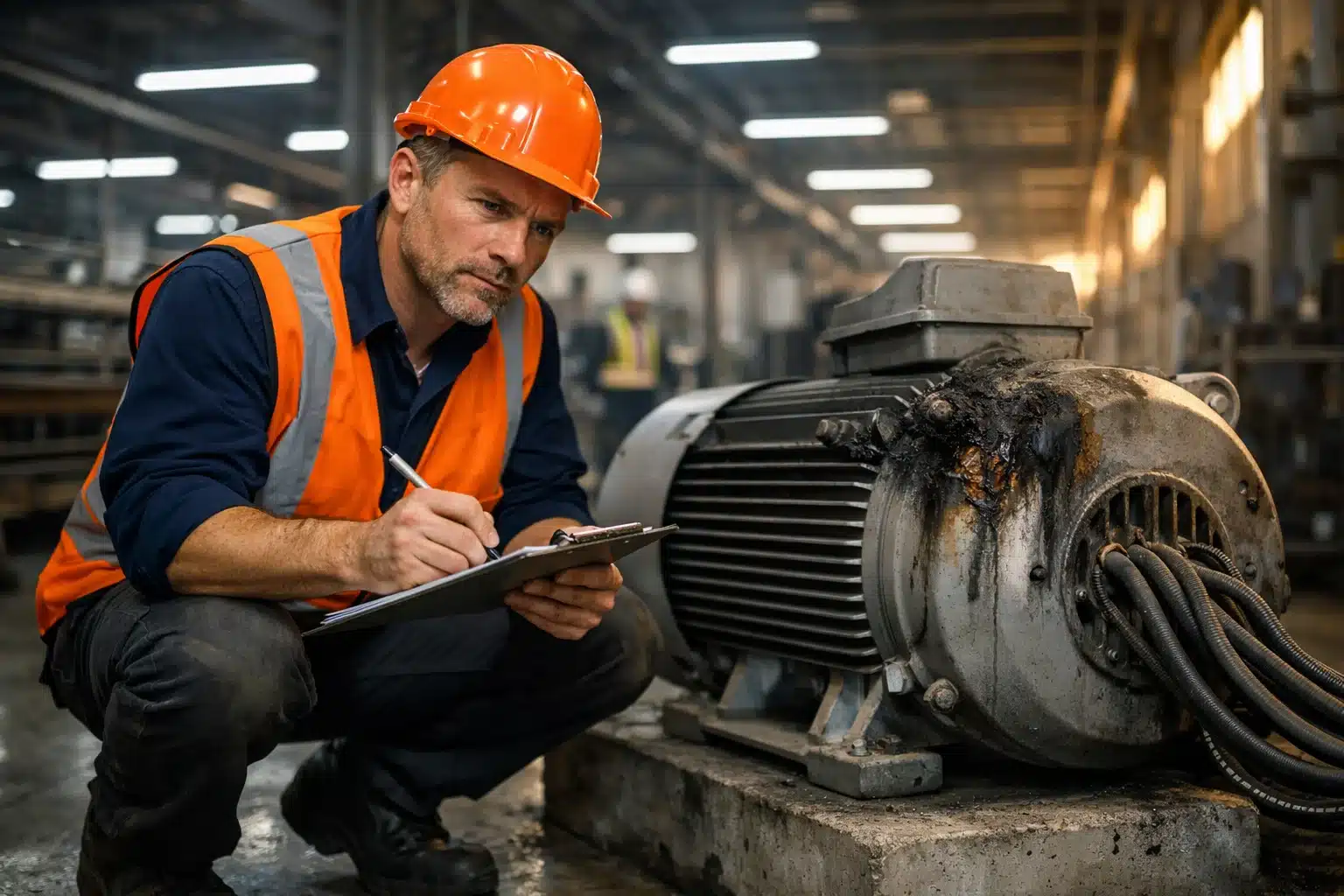
Equipment breakdown insurance covers a wide range of machinery and systems. Most policies include:
What the Policy Pays For
When a covered breakdown occurs, equipment breakdown insurance typically responds by paying for:
The Insurance Information Institute confirms that mechanical breakdown coverage, available as an add-on to a standard Businessowners Policy, covers mechanical or electrical breakdown to boilers, pressure vessels, refrigeration systems, piping, and mechanical and electrical machines or apparatus that generate, transmit or use mechanical or electrical power.
Why Your Standard Property Policy Will Not Protect You
This is the conversation most business owners never have with their broker until after a denied claim. Your commercial property policy covers external events: fire, storm damage, theft, vandalism. What it does not cover is what happens on the inside. Electrical arcing. Motor burnouts. Power surges. Mechanical failures. These are explicitly excluded from standard property and Businessowners policies.
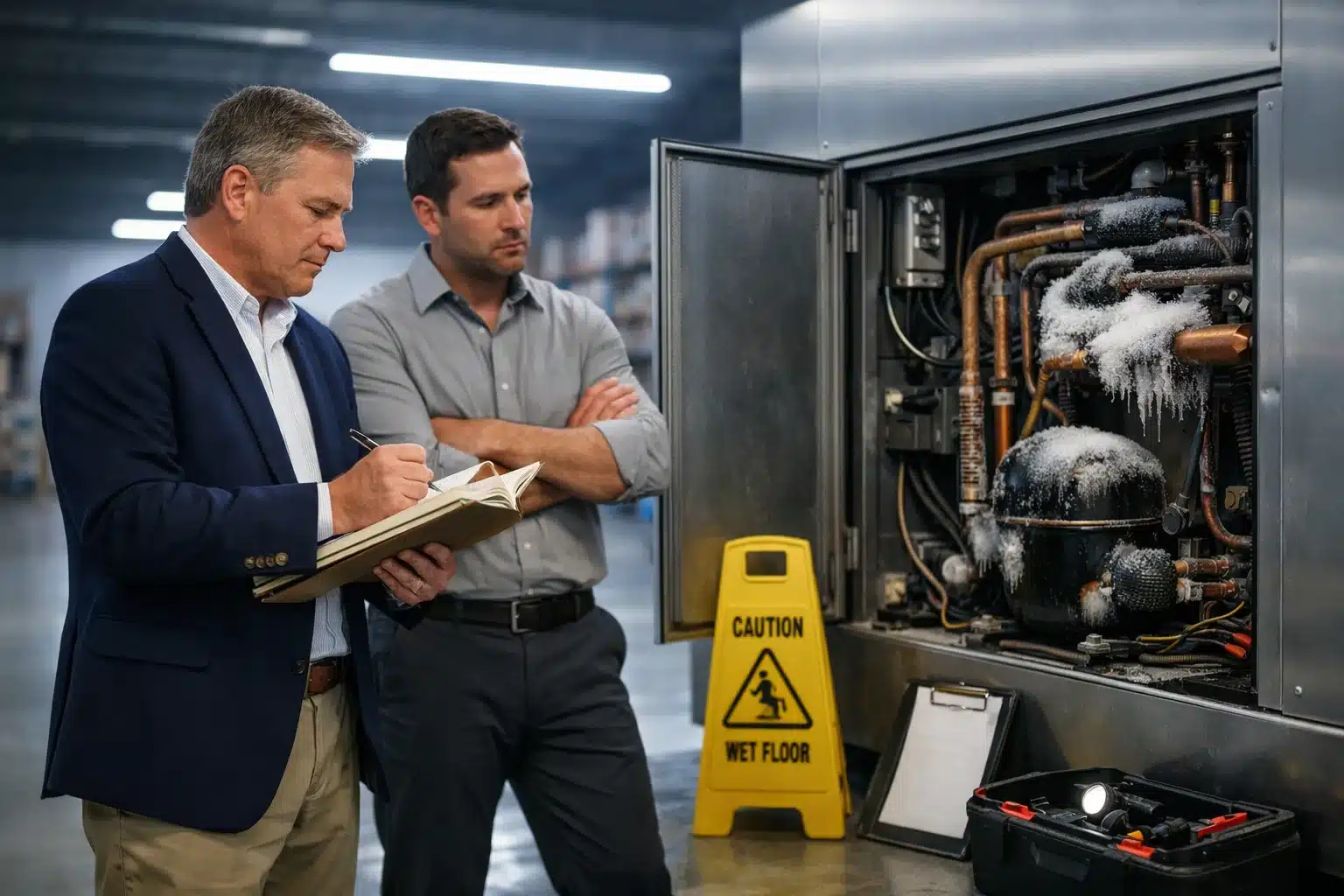
Your commercial property policy covers external events: fire, storm damage, theft, vandalism. These are the perils that happen to your equipment from the outside. Property insurance handles them well.
What property insurance does not cover is what happens on the inside. Electrical arcing. Motor burnouts. Power surges. Mechanical failures. These are the actual reasons equipment breaks down, and they are explicitly excluded from standard property and Businessowners policies.
The standard BOP lists steam boiler breakdown as an explicit exclusion. The same is true for power failure caused by internal malfunction. If the cause of the damage originates inside the equipment, your property policy will not respond.
The Coverage Gap at a Glance
Scenario |
Property Policy |
Equipment Breakdown Policy |
|---|---|---|
|
Fire damages your HVAC unit |
Covered |
Not applicable |
|
Power surge destroys your electrical panel |
NOT covered |
Covered |
|
Motor failure shuts down production line |
NOT covered |
Covered |
|
Storm destroys rooftop mechanical equipment |
Covered |
Not applicable |
|
Short circuit damages your server room |
NOT covered |
Covered |
|
Refrigeration breakdown spoils food inventory |
NOT covered |
Covered |
|
Boiler malfunction halts operations |
NOT covered |
Covered |
According to the National Fire Protection Association, electrical failures cause an estimated $1.5 billion in direct property damage each year in the United States. Arcing serves as the heat source in 63% of electrical fires. These are internal failures. They are not acts of nature. Property insurance does not cover them. Equipment breakdown insurance does.
Which Businesses Need Equipment Breakdown Insurance Most?
Any business that relies on mechanical or electrical equipment to generate revenue has an exposure that equipment breakdown insurance is specifically designed to address. Some industries carry a significantly higher risk than others, and for those businesses, this coverage is not optional.
Healthcare and Medical Facilities
An MRI unit, CT scanner, or laboratory analyzer that fails does not just create a financial loss. It delays patient care and creates liability exposure. Equipment breakdown insurance for healthcare facilities covers these high-value assets and the income lost during repair periods. Healthcare facilities have some of the highest per-incident equipment breakdown losses of any industry.
Food Service, Distribution, and Hospitality
Refrigeration and freezer systems are the lifeblood of restaurants, food distributors, and hospitality operations. Equipment breakdown insurance for food businesses covers both the repair cost and the spoiled inventory loss from a compressor failure, which regularly reaches tens of thousands of dollars overnight, in addition to regulatory compliance issues and health department scrutiny.
Technology Companies and Data Centers
Technology businesses rely on servers, cooling infrastructure, and data processing equipment that can fail without warning. A server room failure during business hours creates immediate revenue loss and potential data exposure.
Manufacturing and Production
U.S. manufacturers lose an estimated $50 billion per year to unplanned equipment downtime. Machine breakdowns account for 55% of all manufacturing incidents. For a facility running a single production line, one motor failure can cost tens of thousands of dollars per hour in lost output. Equipment breakdown insurance is foundational coverage for any manufacturing operation.
Auto Repair Shops and Trade Contractors
Lift systems, compressors, diagnostic equipment, and specialized tools are all covered under equipment breakdown policies. For shops where the equipment is the business, coverage is essential.
What Are the Most Common Equipment Breakdown Claims?
Understanding what actually triggers claims helps you assess your own risk and set the right coverage limits. These are the failure types that drive the majority of equipment breakdown insurance losses across all industries.
Electrical Arcing (the Leading Cause)
Electrical arcing accounts for up to 60% of all equipment breakdown losses. Arcing occurs when electrical current jumps between conductors due to worn contacts, damaged wiring, or faulty connections. It can destroy expensive equipment in seconds and often triggers fires that compound the loss significantly.
Power Surges and Short Circuits
A single utility spike can burn out electrical panels, motors, and sensitive electronics across an entire facility. Power surges are particularly dangerous for businesses that run computer-intensive operations or depend on automated systems.
Motor Burnout
Motors fail when they are overloaded, when ventilation becomes blocked, or when they operate past their rated capacity over time. Motor burnout is one of the most common causes of production line shutdowns in manufacturing and food processing.
Mechanical Failure
This category includes broken gears, seized bearings, cracked housings, and alignment failures in production machinery. Mechanical failures often develop gradually but present as a sudden, unexpected event when they finally occur.
Refrigeration System Failure
For food businesses, a refrigeration failure creates a compounded loss: the cost of repairing or replacing the system plus the full value of spoiled inventory. These claims regularly exceed $25,000, and in large distribution operations, can run well into six figures.
Average equipment breakdown claims across all industries exceed $25,000. Complex claims involving manufacturing shutdowns or significant business income losses can reach hundreds of thousands of dollars.
What Is the Business Income Provision and Why It Matters
The physical cost to repair your equipment is often the smaller part of the total loss. The bigger financial impact is what you cannot earn while your equipment is being fixed.
Equipment breakdown insurance includes a business income provision that reimburses your lost net income and continuing operating expenses during the period your operations are suspended due to a covered breakdown. Most policies also cover extra expenses you incur to minimize the suspension of operations, such as renting replacement equipment, outsourcing production to another facility, or temporarily relocating.
Key Facts About Business Income Coverage Under Equipment Breakdown Policies
A professional office that loses a server may face two or three days of reduced productivity. A manufacturer that loses a production line may face weeks of shutdown. These are very different exposures, and the right coverage limit requires a careful analysis of your specific situation.
According to the Insurance Information Institute, only 35% of small businesses carry any form of business interruption insurance. That means roughly two out of three small businesses are absorbing the full revenue loss from any shutdown out of pocket.
What the Exclusions Are and What Can Catch You Off Guard
Equipment breakdown insurance is precise about what it covers. Understanding the exclusions before a loss occurs is as important as knowing the coverage. These are the policy boundaries that determine whether your claim is paid in full or partially denied.
The Standard Exclusions
Wear and Tear
Wear and tear is the most commonly misunderstood exclusion. The insuring agreement requires the event to be sudden and accidental. Gradual deterioration, depletion, rust, corrosion, erosion, and any gradually developing condition are excluded. This is the language from the actual policy, and it matters in claim settlement.
Poor Maintenance
Poor maintenance creates ambiguity in claims. When a breakdown results from deferred maintenance or improper upkeep, insurers will investigate whether the failure was truly sudden or the result of a condition that developed over time. Documented maintenance records are your best protection.
External Perils
External perils including fire, flood, storm, and earthquake are covered by your property policy, not your equipment breakdown policy. The two coverages are designed to work together, not overlap.
Software Failures and Cyber Events
Software failures and cyber events are explicitly excluded. System crashes caused by malware, ransomware, or hacking are not equipment breakdown claims. That exposure requires cyber insurance, which is a separate policy with separate underwriting.
Operating Outside Equipment Specifications
Operating outside equipment specifications can void coverage. If equipment is deliberately overloaded or run outside its rated parameters, the insurer may argue the breakdown was foreseeable and not accidental.
Real-World Example: Why Maintenance Records Matter
A food distribution company discovered its walk-in freezer had failed over a holiday weekend. The compressor had been running warmer than normal for several weeks, but maintenance had been deferred due to operational demands. The insurer denied a portion of the claim, citing evidence that the breakdown resulted from gradual deterioration rather than a sudden accidental failure. The company recovered partial compensation but absorbed over $40,000 in losses not covered under the policy.
The lesson: scheduled maintenance is not just good operating practice. It is essential evidence when a legitimate claim is challenged.
Common Reasons Equipment Breakdown Claims Get Denied
Equipment breakdown claims most often get denied for one of three reasons: the failure is classified as ordinary wear and tear rather than a sudden breakdown, maintenance records can’t show the equipment was properly serviced, or the loss falls under an excluded cause like an external peril, a software failure, or operating the equipment outside its rated specifications. The policy is built to pay for sudden, accidental mechanical, electrical, or pressure failures, not gradual deterioration.
The most avoidable denial is the maintenance one. Insurers can and do request service records after a claim, and a breakdown traced to a skipped inspection or an overdue service interval gives the carrier grounds to deny even when the mechanical failure itself was genuinely sudden. Keep dated maintenance logs for anything covered under the policy, they’re often the single piece of documentation that decides whether a claim gets paid or contested.
How Much Does Equipment Breakdown Insurance Cost?
Equipment breakdown insurance is one of the most cost-effective commercial policies available relative to the losses it protects against. Premiums vary widely depending on your industry, equipment type, and coverage structure, but the cost of carrying equipment breakdown insurance is almost always a fraction of a single uncovered claim.
Factors That Affect Premium
For many businesses, equipment breakdown coverage is added as an endorsement to an existing BOP for a modest additional premium. Larger manufacturers or commercial facilities with heavy equipment may require a standalone policy with higher limits.
If you are evaluating your total insurance spend, our guide to managing business insurance costs covers strategies that do not sacrifice coverage for price.
How to File an Equipment Breakdown Claim
The actions you take in the first hours after a breakdown directly affect whether your equipment breakdown insurance claim is approved and how quickly you are paid. The process is sequential and documentation-driven.
The Claim Process, Step by Step
The OSHA 2023 work-related injury summary reinforces that equipment failures create workplace safety risks in addition to financial ones, making timely reporting and professional assessment critical for both insurance and compliance purposes.
Frequently Asked Questions About Equipment Breakdown Insurance
Author’s Expertise
This article was written by Gordon B. Coyle, CPCU, ARM, AMIM, PWCA, CEO of The Coyle Group, who has over 40 years of experience working with business owners of all sizes and industries across the US, solving their insurance challenges.


