
Pollution Liability Coverage

What’s Actually Protected (And What’s not)

Home » Insurance By Coverage » Pollution Liability Insurance » Pollution Liability Coverage: What’s Actually Protected

Executive Summary

Your general liability claim was just denied. The reason? Pollution exclusion. Or maybe you’re bidding on a contract that requires pollution coverage you’ve never heard of. Either way, you’re discovering what thousands of business owners learn the hard way: standard insurance won’t protect you from environmental liability.

At The Coyle Group, we’ve helped hundreds of contractors, manufacturers, and property owners navigate this coverage gap. Pollution liability coverage isn’t optional for many businesses. It’s the difference between surviving an environmental claim and facing financial devastation.

The Bottom Line (TLDR)

  • General liability excludes virtually ALL pollution claims (absolute pollution exclusion in 98% of policies)
  • Three main policy types: CPL (contractors), PLL (property owners), Site Pollution
  • Annual cost range: $2,500 to $15,000 for most SMBs (median: $223/month)
  • Contract requirements are the #1 reason businesses purchase this coverage
  • You can typically get quoted in 24 to 48 hours and bound within a week
  • Claims-made policies require careful attention to retroactive dates when switching carriers

If any of this sounds familiar, it’s worth a short conversation.

What Is Pollution Liability Coverage?

Pollution liability coverage is a specialized insurance policy that protects businesses from financial losses arising from pollution events, including the release, discharge, or escape of pollutants into the environment.

It covers third-party bodily injury, third-party property damage, environmental cleanup and remediation costs, legal defense expenses, and regulatory fines where insurable by law.

Businesses need this coverage because standard general liability and property insurance policies exclude pollution-related claims.

Coverage Component

What It Protects

Third-Party Bodily Injury

Illness or injury from pollution exposure to non-employees

Third-Party Property Damage

Contamination of neighboring properties, natural resources

Cleanup/Remediation Costs

Environmental restoration, soil removal, groundwater treatment

Legal Defense

Attorney fees, regulatory response, litigation costs

Business Interruption

Lost income during mandatory cleanup periods

Emergency Response

Immediate containment and mitigation costs

Natural Resource Damages

Wetlands, waterways, wildlife habitat restoration

Regulatory Fines

EPA, state agency penalties (where insurable by law)

What Is Contractors Pollution Liability (CPL)?

Contractors Pollution Liability (CPL) is an insurance policy that protects contractors from claims arising from pollution incidents caused by their work at third-party job sites. CPL covers third-party bodily injury, property damage, cleanup costs, and legal defense for pollution events resulting from contracting operations, transportation of materials, and completed work. It does not cover pollution at locations the contractor owns or leases.

Who needs CPL:

  • General contractors
  • Excavation and demolition contractors
  • HVAC and plumbing contractors
  • Electrical contractors
  • Landscaping companies
  • Environmental remediation contractors

What CPL covers:

  • Pollution from your work at client job sites
  • Transportation of materials to and from job sites
  • Completed operations (claims arising after the job is done)
  • Subcontractor pollution on your behalf
  • Non-owned disposal site liability

What Is Pollution Legal Liability (PLL)?

Pollution Legal Liability (PLL) is an insurance policy that protects property owners and facility operators from claims arising from pollution conditions at, on, under, or migrating from locations they own, lease, or operate. PLL covers third-party bodily injury, property damage, on-site and off-site cleanup costs, and legal defense. Unlike CPL, PLL can often cover pre-existing contamination discovered after policy inception.

Who needs PLL:

  • Commercial property owners
  • Real estate investors
  • Manufacturing facility operators
  • Healthcare facilities
  • Warehouse and distribution center operators
  • Hotels and hospitality properties

What PLL covers:

  • Contamination at your owned or leased locations
  • Pollution migrating onto neighboring properties
  • Pre-existing conditions (often covered, unlike CPL)
  • Indoor air quality issues (mold, legionella, asbestos)
  • Historical contamination from previous owners

Does General Liability Cover Pollution?

No. Standard general liability insurance does not cover pollution claims. The “absolute pollution exclusion” found in 98% of GL policies eliminates coverage for virtually any environmental event. According to the National Association of Insurance Commissioners (NAIC), many business owners mistakenly believe their general liability covers pollution, but it does not.

The only narrow exceptions in most GL policies are smoke from a hostile fire or fumes from a faulty HVAC system. Everything else falls outside your GL coverage:

  • Chemical spills
  • Dust and silica
  • Mold and biological contaminants
  • Contaminated soil
  • Underground tank leaks
  • Sewage backups
  • Stormwater runoff
  • Asbestos and lead paint disturbance

For a deeper look at what your GL policy excludes, see our guide to general liability insurance exclusions.

If this exclusion surprised you, you’re not alone.

What Happens If I Don’t Have Pollution Liability Coverage?

Without pollution liability coverage, you pay all cleanup costs, legal fees, and damages out of pocket. Environmental claims typically range from $50,000 to $500,000+, and your general liability policy will deny the claim under the pollution exclusion.

Incident Type

Typical Out-of-Pocket Cost

What Drives the Cost

Underground tank discovery

$75,000 to $250,000

Soil removal, groundwater testing, disposal fees

Mold remediation (commercial)

$50,000 to $150,000

Containment, removal, HVAC cleaning, testing

Chemical spill on neighboring property

$100,000 to $500,000+

Third-party property damage, cleanup, legal defense

Sediment/stormwater runoff violation

$25,000 to $100,000

EPA fines, mitigation, engineering studies

Asbestos disturbance during renovation

$150,000 to $400,000

Abatement, air monitoring, potential lawsuits

Fuel tank leak at job site

$50,000 to $200,000

Soil excavation, disposal, monitoring wells

Real-World Example: The Underground Tank Discovery

A general contractor excavating for a commercial foundation hits an abandoned underground storage tank. Contaminated soil spreads across the site and neighboring property. The contractor’s GL policy? Denied under the pollution exclusion.

Final cost without CPL coverage: $175,000 in cleanup, 6-week project delay, and a lawsuit from the neighboring property owner that settled for $85,000. Total exposure: $260,000. See more pollution insurance claims examples.

With a $1M CPL policy costing $2,800/year, the entire incident would have been covered minus deductible.
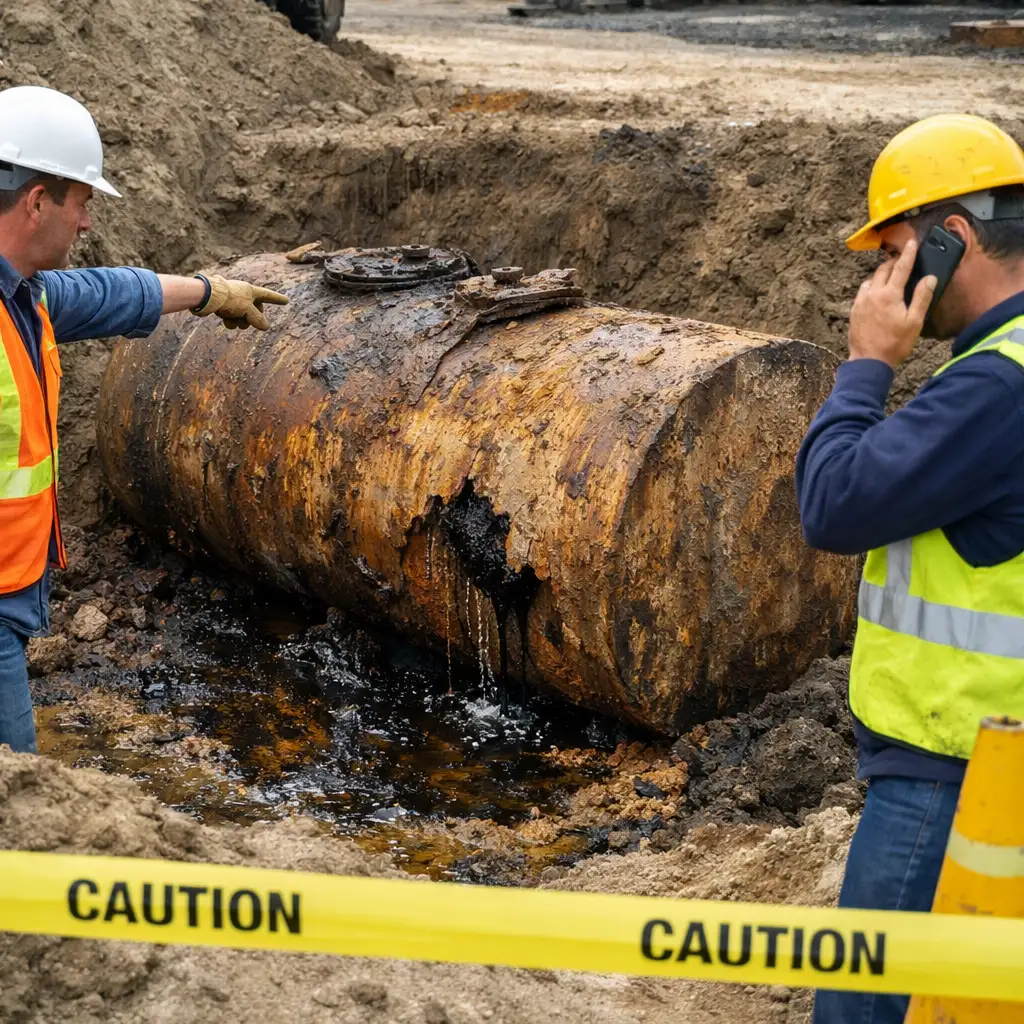
Construction workers uncover leaking underground tank during excavation, highlighting the financial risks without pollution liability coverage.

What Triggers a Pollution Liability Claim?

Pollution claims are triggered by the discovery of contamination, third-party complaints, regulatory enforcement, or lawsuits alleging pollution-related injury or damage. You don’t have to cause the pollution to face a claim. Property owners can be held liable for contamination from previous owners under federal Superfund law.

Common claim triggers include:
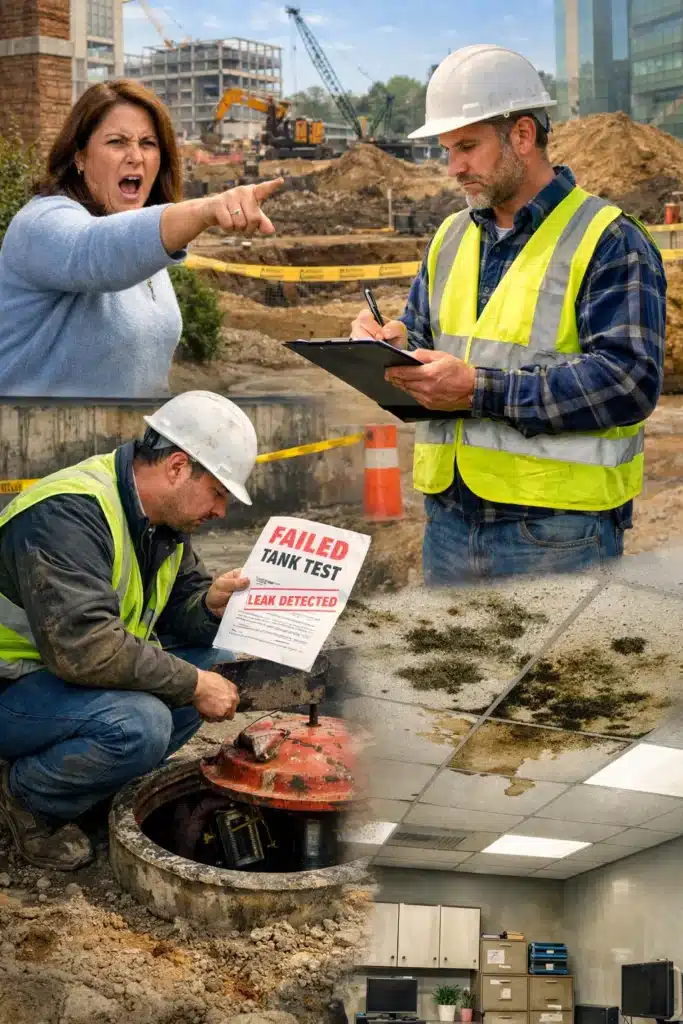
  • Neighbor complaints about odors, dust, or runoff to local authorities
  • Phase I/II environmental assessments during property transactions that discover contamination
  • Regulatory inspections from EPA, state environmental agencies, or OSHA
  • Construction activities that disturb existing contamination you didn’t know about
  • Stormwater runoff carrying sediment or chemicals off your site
  • Indoor air quality complaints from building occupants (mold, legionella, VOCs)
  • Failed tank tightness tests on underground or aboveground storage tanks
  • Subcontractor activities on your job site that release pollutants
Composite image showing neighbor complaint, environmental inspection, failed tank test, and indoor mold damage—key triggers for pollution liability coverage claims.

What Is the Difference Between CPL and PLL?

CPL covers contractors for pollution from their work at job sites they don’t own. PLL covers property owners for pollution at locations they own or lease. Contractors typically need CPL. Property owners need PLL. Some businesses need both.

Feature

CPL (Contractors Pollution Liability)

PLL (Pollution Legal Liability)

Who Needs It

Contractors working at job sites

Property owners, facility operators

Coverage Scope

Pollution from your contracting work at third-party sites

Contamination at/from locations you own or lease

Pre-existing Conditions

Generally excluded

Often covered (key advantage)

Transportation Coverage

Yes (materials to/from job sites)

Sometimes

Completed Operations

Yes (claims after job is done)

N/A

Non-Owned Disposal Sites

Usually included

Usually included

Typical Min. Premium

$1,000 to $2,500

$3,000+

Our manufacturing insurance and wholesalers and distributors insurance programs address industry-specific pollution exposures.

Is a GL Pollution Endorsement Enough?

A GL pollution endorsement may be sufficient for low-risk businesses, but it provides significantly less protection than standalone pollution liability coverage. Endorsements typically only cover “sudden and accidental” pollution with low sublimits ($25,000 to $100,000), while standalone policies cover both sudden and gradual pollution with limits of $1M or more.

A GL endorsement might be enough if:

  • You’re a low-risk contractor (office buildouts, painting, basic electrical)
  • You don’t work with chemicals, fuels, or hazardous materials
  • Your contracts don’t specifically require standalone CPL coverage
  • You don’t own or lease property with environmental exposure

A standalone policy is necessary if:

  • You do excavation, demolition, HVAC, plumbing, or environmental work
  • You handle hazardous materials, chemicals, or fuels
  • Your contracts require specific pollution liability limits
  • You own or lease property with potential environmental exposure
  • You need coverage for gradual pollution, not just sudden and accidental

According to industry research, 9 in 10 insurance placements fail to meet contract pollution insurance specifications, even when the certificate of insurance claims the coverage exists.

If you’re on the fence, a short conversation can clarify it.

What Pollutants Am I Liable For?

You are liable for any substance that causes environmental damage when released, including common materials like fuel, dust, sewage, and even water in certain circumstances. Liability depends on your industry and operations.

Contractors (General, Excavation, Demolition):

  • Silica dust from cutting concrete
  • Asbestos and lead paint disturbance
  • Fuel spills from equipment
  • Sediment runoff into waterways
  • Contaminated soil discovery

HVAC/Plumbing Contractors:

  • Refrigerant releases
  • Mold and legionella from improper installation
  • Sewage backups
  • Water damage leading to biological growth

Manufacturers:

  • Chemical storage tank leaks
  • Air emissions
  • Wastewater discharge
  • Hazardous waste disposal
  • Product contamination

Property Owners/Distributors:

  • Underground storage tank leaks
  • Historical contamination from previous owners
  • Tenant operations creating pollution
  • HVAC system biological contamination
  • Stormwater management failures

How Much Does Pollution Liability Coverage Cost?

Pollution liability coverage costs $2,500 to $15,000 annually for most small and mid-sized businesses. According to Insureon, the median cost is $223 per month ($2,675/year). Costs vary based on business type, operations, location, and coverage limits.

Business Type

Annual Premium

Typical Limits

Low-risk contractors

$1,000 to $3,000

$1M/$1M

General contractors

$2,500 to $7,500

$1M/$2M

HVAC/Plumbing contractors

$2,000 to $5,000

$1M/$2M

Manufacturers

$5,000 to $15,000

$1M/$2M to $5M/$5M

Property owners

$3,000 to $10,000

$1M/$2M

High-risk operations (remediation, hazmat)

$10,000 to $25,000+

$2M/$5M+

What Do I Need to Get a Quote?

Most carriers need:

  • Basic business information (revenue, employee count, years in business)
  • Description of operations and types of projects/work performed
  • List of locations owned or leased (for PLL)
  • Types of materials/chemicals you handle
  • Loss history (any environmental claims in past 5 years)
  • Contract requirements you need to meet (limits, additional insured, etc.)
Business owner entering insurance details into a laptop, surrounded by documents like loss history, site maps, and contract files required for a pollution liability coverage quote.

Timeline

You can typically get quoted in 24 to 48 hours. Binding coverage usually takes 3 to 5 business days once you accept a quote.

What Is the Difference Between Claims-Made and Occurrence Policies?

Claims-made policies cover claims reported during the policy period. Occurrence policies cover incidents that happen during the policy period, regardless of when the claim is filed. Most pollution liability policies are claims-made, which requires careful attention to retroactive dates.

Feature

Claims-Made

Occurrence

Coverage Trigger

Claim filed during policy period

Incident occurs during policy period

Initial Cost

Lower (20 to 30% less)

Higher

Tail Coverage Needed?

Yes, if policy lapses or you switch carriers

No

Retroactive Date Issues

Yes, critical to maintain

No

Best For

Most contractors and property owners

Higher-risk, long-tail exposures

What Is the Retroactive Date Trap?

Claims-made policies have a “retroactive date” that determines how far back coverage extends. If you switch carriers and the new policy has a later retroactive date, you lose coverage for incidents that occurred but weren’t discovered before that date.

Example

You’ve had CPL coverage since 2020 with Carrier A. In 2025, you switch to Carrier B, who sets your retroactive date as 2025. In 2026, a property owner discovers contamination from work you did in 2022. Neither policy covers you. Carrier A says the claim wasn’t made during their policy. Carrier B says the incident predates their retroactive date.

How to avoid this: When switching carriers, always negotiate to maintain your original retroactive date.

Learn more about tail coverage and how to protect yourself when changing carriers.

What Are the Red Flags When Comparing Pollution Liability Quotes?

Watch for sublimits that reduce coverage, exclusions for common pollutants, defense costs inside limits, and retroactive dates that create gaps. Not all pollution policies provide equal protection.

Sublimits that gut your coverage:

  • Defense costs inside the limit (erodes coverage as legal fees mount)
  • Low sublimits for mold, legionella, or asbestos ($25,000 to $50,000 when claims run $150,000+)
  • Transportation coverage sublimited separately

Exclusions that matter:

  • Professional services exclusion (if you do any design work)
  • Specific pollutant exclusions (PFAS, silica, lead) without buyback option
  • Contractor’s work exclusion on PLL policies

Questions to ask your broker:

  • Is defense inside or outside the limits?
  • What’s my retroactive date, and will it be maintained if I switch carriers?
  • What pollutants are excluded, and can I buy them back?
  • Does this policy meet my contract requirements exactly?

What Are Standard Contract Requirements for Pollution Liability?

Most contracts require pollution liability with $1M to $5M limits, additional insured status, primary and non-contributory language, and waiver of subrogation. Project owners and general contractors increasingly audit these requirements.

Standard requirements include:

  • Pollution liability with $1M to $5M per occurrence limits
  • Additional insured status for the project owner and general contractor
  • Primary and non-contributory coverage language
  • Waiver of subrogation in favor of additional insureds
  • 30-day notice of cancellation
  • Certificate of Insurance (COI) documenting all coverages

Project-Specific vs. Annual Policies:

  • Annual Policy: Covers all your projects for the year. Better for contractors with consistent work.
  • Project-Specific Policy: Covers one project only. Better for large projects with specific requirements.

Understanding waiver of subrogation requirements helps subcontractors meet contract specifications.

What Does Pollution Liability Coverage Exclude?

Pollution liability policies typically exclude intentional acts, known pre-existing conditions, employee injuries, and certain named pollutants unless specifically endorsed. Always review exclusions before binding coverage.

Common exclusions:
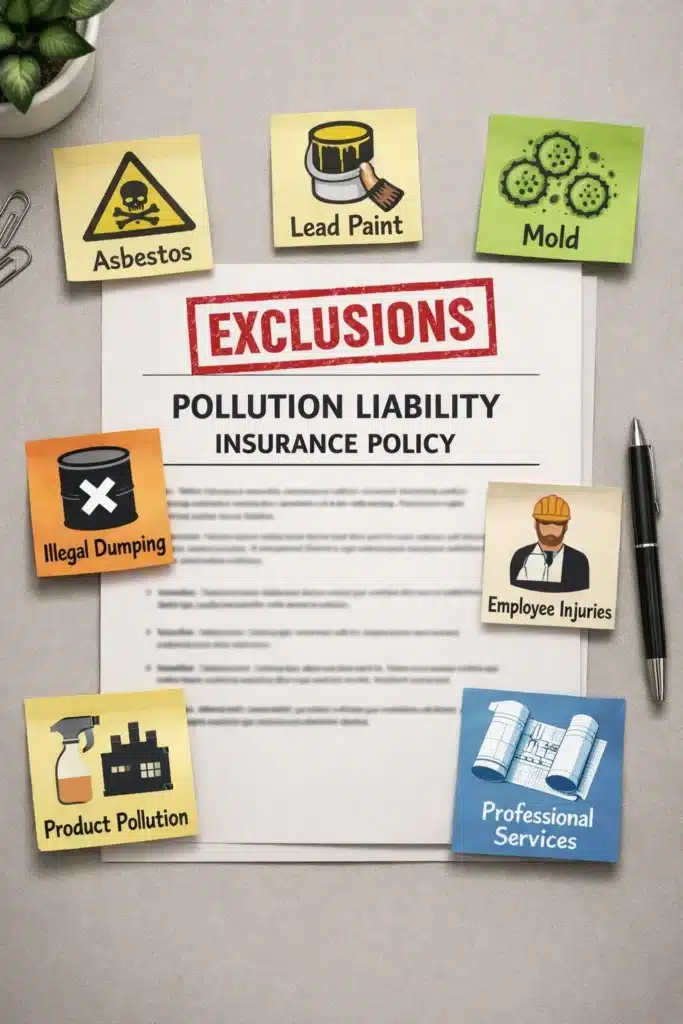
  • Named pollutant exclusions: Asbestos, lead, silica, mold, PFAS (often can be bought back)
  • Known/pre-existing conditions: Contamination you were aware of before policy inception
  • Intentional acts: Illegal dumping, willful environmental violations
  • Employee injuries: Covered under workers’ compensation, not pollution liability
  • Punitive damages: Varies by state and policy language
  • Products pollution: Your manufactured products causing contamination (requires separate coverage)
  • Professional services: Design errors leading to pollution (need professional liability)
Insurance document stamped “Exclusions,” surrounded by labeled icons for asbestos, mold, employee injuries, and intentional acts—key pollution liability coverage exclusions.

Have questions about how exclusions actually work in practice?

Questions about Pollution liability Coverage?

No. Pollution liability coverage is not legally required in most states, but it is frequently required by contracts, lenders, landlords, and government entities. In practice, many businesses must carry pollution coverage to win jobs, secure financing, or complete property transactions.

Yes. Pollution liability coverage can usually be added or bound mid-project, but it will only cover incidents that occur after the policy’s effective date. Claims tied to work performed before coverage begins are typically excluded unless specifically negotiated.

Sometimes. Pollution liability policies may cover civil regulatory fines and penalties where allowed by law, but criminal fines are always excluded. Coverage varies by carrier, jurisdiction, and policy language, making this a critical item to review before binding.

Pollution liability claims often take months or even years to fully resolve. Environmental investigations, regulatory oversight, cleanup plans, and third-party lawsuits significantly extend claim timelines compared to standard general liability claims.

Yes. Pollution liability policies can be canceled mid-term, but claims-made policies require careful handling. Canceling without securing replacement coverage or tail coverage can permanently eliminate protection for past pollution incidents that have not yet been discovered.

Yes, in many cases. Lenders commonly require pollution liability coverage for commercial real estate, manufacturing facilities, fuel storage sites, and properties with environmental risk, especially during refinancing, acquisitions, or construction financing.

Often, but not automatically. Many CPL policies include coverage for pollution caused by subcontractors, but only if the policy language explicitly grants it. Some policies require subcontractors to carry their own pollution coverage and name you as an additional insured.

Responsibility depends on ownership, timing, and policy structure. Current property owners can still be held liable for historical contamination under environmental law. Pollution Legal Liability (PLL) insurance is often used to protect buyers against post-closing discoveries.

Yes. Carrying pollution liability coverage often removes friction in contract negotiations, speeds up certificate approvals, and prevents bid disqualification. Many project owners view pollution coverage as a sign of operational maturity and risk awareness.

The most common denial reasons include:

  • Late claim reporting on claims-made policies
  • Retroactive date gaps
  • Named pollutant exclusions
  • Known conditions not disclosed in the application
  • Coverage purchased via endorsement instead of a standalone policy

Most denials trace back to policy structure errors, not claim facts.

What 40+ Years Taught Me About This Risk

In four decades of helping businesses navigate insurance challenges, I’ve seen the same pollution coverage mistakes repeatedly. The businesses that avoid devastating environmental claims aren’t the ones who never face incidents. They’re the ones who have the right coverage when incidents happen.

The most common mistake: relying on a “limited pollution” endorsement when the contract requires standalone CPL. Project owners are auditing certificates more aggressively, and contractors are losing jobs over inadequate coverage.

At The Coyle Group, we access excess and surplus lines markets where most pollution coverage is written. We verify your coverage actually meets contract specifications in the policy language, not just on the certificate.

  • 40+ years of commercial insurance expertise
  • Access to specialized environmental insurance markets
  • Contract compliance verification
  • Same-day certificates when you need them
  • Guidance on retroactive dates and tail coverage when switching carriers

95+

Years of Family Legacy in Insurance

40+

Years Personal Experience

95%

Client Retention Rate

600+

Educational Videos

Schedule your strategy call

This article was written by Gordon B. Coyle, CPCU, ARM, AMIM, PWCA, CEO of The Coyle Group, who has over 40 years of experience working with business owners of all sizes and industries across the United States, solving their insurance challenges. Gordon specializes in helping contractors, manufacturers, and property owners develop comprehensive pollution liability programs that protect their operations and support their growth objectives.

Here’s how to take the next step

Schedule Your Insurance Confidence Assessment

In our 30-minute call, you’ll discover:

  • Whether your current coverage matches your actual risks
  • If you’re getting fair value for what you’re paying
  • How your service experience compares to what’s possible
  • What questions you should be asking but probably aren’t

Not ready for a call?

Get Free Access to Our Gated Video:
How to Finally Feel Confident in Your Coverage.

And discover the exact system we use to help business owners eliminate hidden coverage gaps, stop overpaying, and finally feel confident in their protection.


What Peace of Mind Looks Like

Trusted by business owners across the U.S.

  • The Coyle Group is 1st class! Gordon and his team are knowledgeable, responsive, and attentive to detail. Gordon is that rare breed of professional who genuinely cares for his clients and works hard to exceed their expectations. I highly recommend them.

    Jeff Carton
    Partner, Denlea & Carton, LLP
  • The insurance brokerage service was truly tailored to my needs, nothing like those big brokers who steer you toward random policies that don’t fit your profile. Thank you to the team for your help.

    Yohann Josselin
    Founder & Director, RankForge
  • I was working with another broker and having difficulty acquiring General Liability coverage. A colleague recommended The Coyle Group. They were able to get coverage bound in just a couple of business days and a policy issued in ten days, and with a solid carrier at a competitive premium. Truly impressive results, plus it was a pleasure working with them. I highly recommend the Coyle Group!

    Tim McCarthy
    Director of Operations, Dalmatian Company LLC
  • If any business is looking to work with an insurance brokerage firm that is not only excellent at what the firm does, but one that deeply values the needs of the clients, then The Coyle Group is the firm for you. Give them a call and see for yourself. I can assure that you will quickly agree.
    Dahiema Grant
    Accountant, DSG Advisory CPA

Want to know more?

See related blogs