
Food Distributor Case Study
The $7 Million Property Gap: How a Growing Food Distributor Was One Claim Away from Financial Disaster
Client
Growing Food Products Distributor
Industry
Food Distribution
Challenge
A $40M operation was running on a “Starter” insurance program, leaving $7M in property value completely exposed to coinsurance penalties.
The Challenge
We were asked to review the insurance program for a food products distributor in the Northeast. The company had been in business for about 12 years and was generating more than $40 million in annual revenue.
It involved:
They had been with the same local broker since the early stages of the business. That relationship may have been appropriate when the company was smaller, but over time the business had grown substantially while the insurance program had not kept pace.
The company was still insured on a Business Owners Policy (BOP), a package product generally designed for much smaller companies.
A BOP can be useful for smaller operations, but it often limits flexibility and makes it harder to tailor limits, deductibles, and coverage terms to the actual risk.
But the real problem was not just the form. It was the numbers.
What We Discovered
Issue #1: The Property Values Were Years Out of Date
Yet the property was insured for only about $3 million, or roughly $75 per square foot.
Current replacement costs for a building like this were more in the range of $200 to $250 per square foot, placing the true replacement value somewhere between $8 million and $10 million.
And the issue did not stop there. Business personal property and business income values were also understated.
The entire property schedule appeared to have been established years earlier and then simply increased by small percentages over time, without any meaningful review of construction costs, inventory levels, or revenue growth.
“What do you mean? These are just the numbers we have always worked with.”
That is the answer we hear most often. Not because business owners are careless, but because no one ever told them there was a better question to ask.
Reality Check:
In today’s economy, construction costs have skyrocketed. If your property values haven’t been professionally appraised in the last 3 years, you aren’t just underinsured, you’re gambling with your building’s future.
Issue #2: The Business Had Outgrown the Policy Structure
This company had grown into a real mid-market operation, but its insurance program still reflected a much earlier version of the business.
That is one of the most common patterns we see:
A company starts small, grows into a $30 million, $40 million, or $50 million business, and continues renewing the same basic structure year after year.
The issue is often less about negligence and more about capability.
A smaller broker may be perfectly competent for a small account, but when the business outgrows the broker’s processes, expertise, and servicing model, the program begins to stagnate. The policies keep renewing, the premiums keep getting paid, and no one realizes how far the coverage has drifted from the business itself.
Issue #3: The Coinsurance Penalty Could Have Made a Bad Loss Much Worse
It was that the policy contained a coinsurance clause, a provision many business owners have never heard of and almost no one fully understands until a claim happens.
Most commercial property policies include coinsurance, often at 80 percent.
The concept is straightforward:
In exchange for better rates, the policyholder agrees to insure the property to at least 80 percent of its actual replacement cost. If that threshold is met, covered claims are generally paid in full up to the limit. If it is not met, the insurer can reduce the claim payment proportionally, even for a partial loss.
This company was insured for $3 million on a property worth roughly $9 million to $10 million. They were not close to the required threshold. They were below 35 percent of replacement value.
Why this matters
That means even a partial claim could have produced a far smaller recovery than the owner expected.
Real-world scenario:
Example Loss Scenario |
Amount |
|---|---|
|
Building insured value |
$3,000,000 |
|
Estimated actual replacement cost |
$9,000,000 to $10,000,000 |
|
Illustrative partial property loss |
$500,000 |
|
Possible recovery after coinsurance penalty |
$150,000 to $250,000 |
This is the ‘Hidden Tax’ of bad insurance. Most owners think a $500k limit covers a $500k loss.
In this case, the coinsurance penalty would have turned a manageable claim into a business-ending event.
In other words, a $500,000 loss might not be settled anywhere near $500,000. Not because the policy technically existed, but because the insured values were so far below the required level that the coinsurance formula could sharply reduce the payout.And that did not even account for business income exposure. If a serious property loss shut down operations for months, the company could have faced ongoing payroll, fixed expenses, and lost revenue with insufficient insurance behind it.
The owner had never heard the term coinsurance. The prior broker had never raised it.
Our Solution
We recommended a full restructuring of the property program so that the insurance actually reflected the scale and reality of the business.
Correct the Property Values
The first step was to bring the building, business personal property, and business income values into alignment with actual exposure. That required moving away from legacy figures that had simply been rolled forward year after year.
Rework the Deductible Strategy
The company had been carrying a $5,000 deductible, which is common, but not necessarily appropriate for a business of this size. After a discussion about cash flow and risk tolerance, the owner decided that a $25,000 deductible was more appropriate and more reflective of the company’s ability to absorb a smaller loss.
That change helped offset the premium impact while still preserving meaningful protection against major claims.
Reposition the Account With the Underwriter
Correcting the insured values did increase premium, as it should. But the increase was not proportional to the increase in insured value. Through a better deductible structure and a more effective presentation of the risk to the underwriter, we kept the premium increase to roughly 1.5 times what the company had previously been paying.
That is an important distinction. Properly insuring a business does not mean accepting uncontrolled cost increases. It means structuring the program intelligently.
Move the Company Off the BOP
We also moved the account off the Business Owners Policy and onto a properly structured commercial package policy tailored to the company’s actual operations. That allowed individual coverage parts to be separated and better aligned with the real risk profile, rather than forced into the limitations of a smaller-business package product.
The Results
Once the owner saw the full picture, the reaction was not frustration about paying more for insurance. It was concern about how long the company had been exposed without realizing it.
“I am not upset about paying more. I am upset that nobody told me I was exposed like this for the last five years.”
That response captures the real value of the engagement. The goal was not simply to sell more insurance. The goal was to make sure a growing business was no longer operating under the false assumption that its program had kept pace with reality.
What changed |
Outcome |
|---|---|
|
Property values were corrected |
Coverage became far more consistent with actual replacement cost |
|
Deductible was restructured |
Premium impact was better managed |
|
BOP was replaced |
The policy structure better matched a mid-market operation |
|
Coverage gaps were identified |
The owner understood where the real exposures were |
The Bigger Picture
This case highlights the difference between a Transactional Broker and a Strategic Risk Advisor.
This is not an unusual story. We see versions of it all the time with businesses that have grown steadily over the years while staying with the same broker and the same general insurance structure.
The specifics vary, but the pattern is consistent. Values are set years ago and never meaningfully revisited.
The question is not whether a growing company can outgrow its insurance program. It is whether anyone has taken the time to determine whether that has already happened.
Key Lessons for Growing Mid-Market Businesses
Lesson |
Why it matters |
|---|---|
|
Growth changes insurance needs |
A program built for a smaller business may not work once revenue, headcount, property values, and operational complexity increase |
|
Property values must be re-evaluated |
Small annual inflation bumps are not a substitute for a real review of replacement cost |
|
Coinsurance matters |
Underinsurance can reduce claim payments even on partial losses |
|
Policy type matters |
A BOP may be efficient for a smaller company, but limiting for a more complex mid-market risk |
|
Renewal is not strategy |
Just because a policy keeps renewing does not mean it still fits the business |
Facing Similar Challenges?
If reading this makes you wonder whether your own property values are outdated, whether your deductible structure still makes sense, or whether your policy type still fits your business, that instinct is worth following.
We offer no-obligation program reviews for business owners who suspect their insurance has not kept pace with their growth.
95 years of experience protecting businesses nationwide. Let’s make sure you’re actually covered.
A Note From Gordon Coyle
One of the most dangerous assumptions in commercial insurance is the belief that if a policy has been renewing for years, it must still be appropriate.
That is not how exposure works.
If the insurance program does not evolve along with the business, the gap between what you think you have and what you actually have keeps getting wider.
If you have not had a real coverage review in the last 12 months, and your business has grown materially over that time, there is a good chance something important has not kept up.
No pressure. No obligation. Just an honest look at whether your insurance still fits the business you are running today.
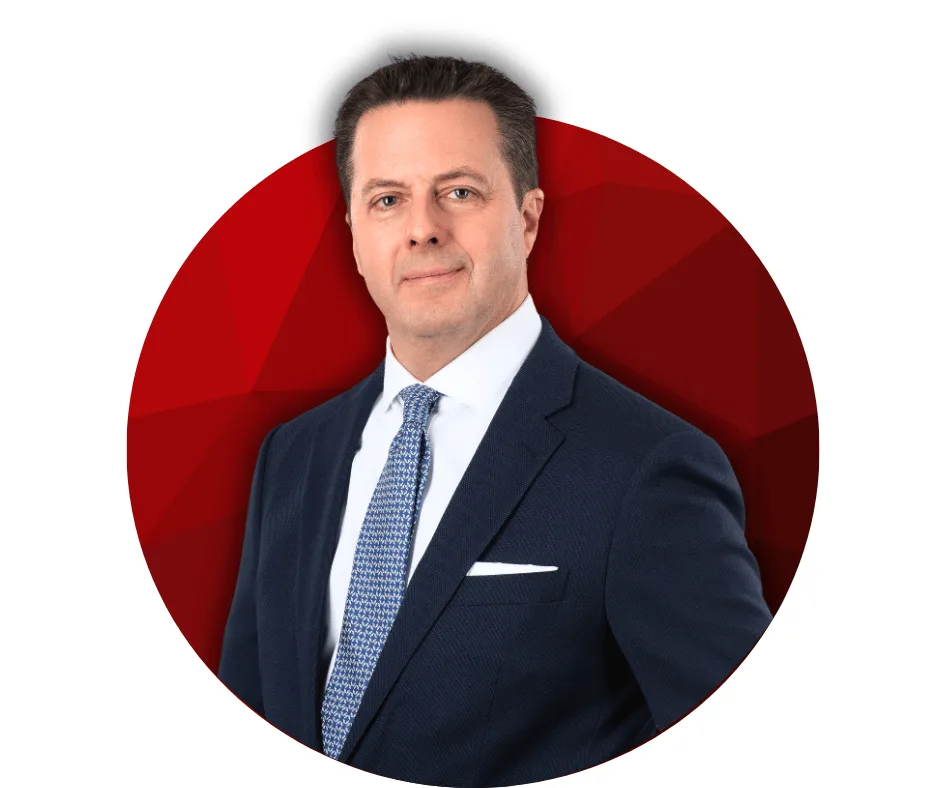
Gordon Coyle | Founder & CEO, The Coyle Group 40+ years in commercial insurance
Here’s how to take the next step
Schedule Your Insurance Confidence Assessment
In our 30-minute call, you’ll discover:
Not ready for a call?
Get Free Access to Our Gated Video:
“How to Finally Feel Confident in Your Coverage. “
And discover the exact system we use to help business owners eliminate hidden coverage gaps, stop overpaying, and finally feel confident in their protection.
What Peace of Mind Looks Like
Trusted by business owners across the U.S.
The Coyle Group is 1st class! Gordon and his team are knowledgeable, responsive, and attentive to detail. Gordon is that rare breed of professional who genuinely cares for his clients and works hard to exceed their expectations. I highly recommend them.

The insurance brokerage service was truly tailored to my needs, nothing like those big brokers who steer you toward random policies that don’t fit your profile. Thank you to the team for your help.

I was working with another broker and having difficulty acquiring General Liability coverage. A colleague recommended The Coyle Group. They were able to get coverage bound in just a couple of business days and a policy issued in ten days, and with a solid carrier at a competitive premium. Truly impressive results, plus it was a pleasure working with them. I highly recommend the Coyle Group!

If any business is looking to work with an insurance brokerage firm that is not only excellent at what the firm does, but one that deeply values the needs of the clients, then The Coyle Group is the firm for you. Give them a call and see for yourself. I can assure that you will quickly agree.

Want to know more?
See related blogs

The Crowdstrike Debacle and Cyber Insurance
Third Party Employment Practices Liability Insurance. Protect Your Business

Are You Overpaying or Underinsured on Your Business Insurance?
