
Toy Manufacturer Insurance
When a Child Is Hurt by Your Product, Generic Liability Won’t Pay
Index

Gordon B. Coyle
CEO, The Coyle Group
845-474-2924
How to get started
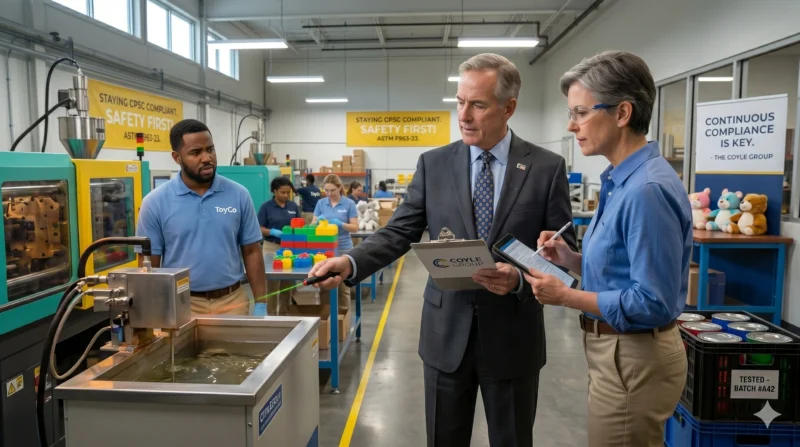
That story comes up in nearly every review we do with a toy company. Manufacturers who thought they were covered find out the hard way that standard policies exclude the exact scenarios toy businesses face.
Standard business owner policies treat toy manufacturing as a generic product risk. The CPSC, ASTM F963-23, and children’s product liability law treat it very differently, and your insurance needs to match the law, not the BOP.
The Coyle Group Works With Toy Manufacturers That Have Complex, High-Value Risks Other Agencies Don’t Know How to Structure
Your general liability policy probably has a product liability sublimit that’s too low and excludes recall costs entirely.
We build toy manufacturer insurance programs that include product liability, recall expense coverage, and CPSC compliance protections tailored to your product lines.
What Happens When a Toy Injures a Child and You’re Underinsured?
The CPSC reported 206,000 children treated in U.S. emergency departments for toy-related injuries in 2021. In FY 2024, federal authorities seized 1.6 million dangerous or illegal toys, with 101,900 specifically flagged for excessive lead levels. Every one of those products represents a company now facing legal exposure, and many didn’t have the right coverage in place when the claim hit.
The Real Financial Exposure of an Underinsured Toy Company
“Bottom line is that almost all insurance programs we review contain at least one fatal mistake.”
Gordon B. Coyle, CPCU
What Is Toy Manufacturer Insurance?
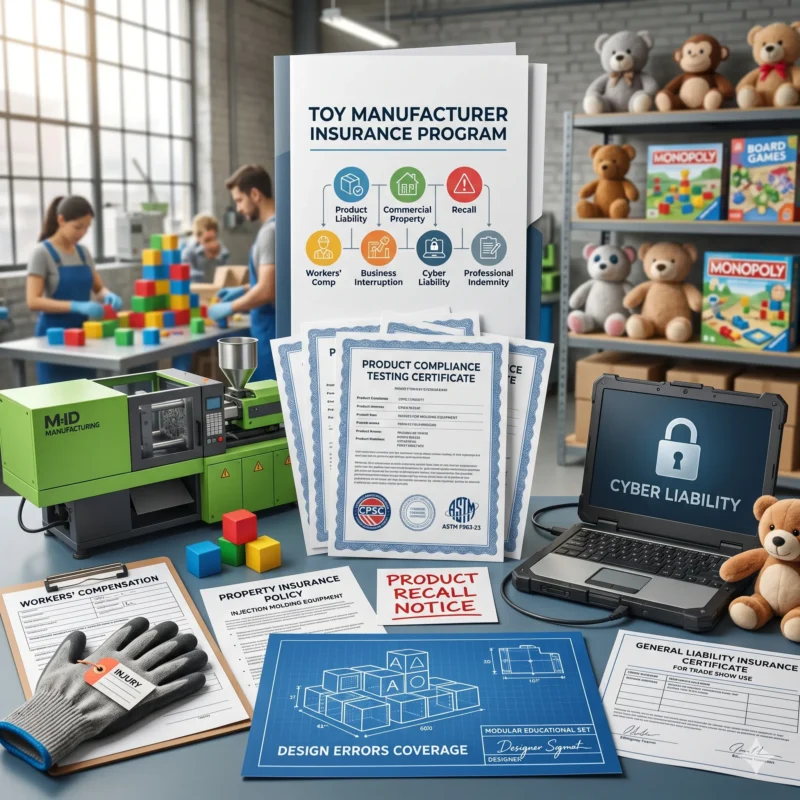
Toy manufacturer insurance is a specialized commercial program designed for companies that design, produce, or distribute physical toys and children’s products. It addresses the unique risk profile of working in an industry where end users are children and where federal safety standards carry criminal enforcement authority. The core is product liability coverage, but a complete program covers seven coverage lines, each addressing a distinct exposure that standard GL ignores.
Our manufacturing insurance practice covers the full production-side exposure as well. Not every toy-related business needs this exact program: IP licensors who don’t manufacture or distribute physical products typically need a different structure. The program described here is built for companies with physical products reaching end consumers.
What Coverages Do Toy Manufacturers Actually Need?
The right program depends on your company’s size, product lines, distribution channels, and whether you manufacture domestically or source from overseas. Coverage limits for product liability typically range from $1 million to $5 million per occurrence. A company selling mass-market children’s toys through major retailers will need substantially higher limits than a small-batch educational toy maker.
Coverage |
What It Covers |
Why It Matters for Toy Makers |
|---|---|---|
|
Product Liability |
Injuries or property damage from a defective or unsafe toy |
Non-negotiable. Children are the end users; one claim can bankrupt an underinsured company |
|
General Liability |
Third-party bodily injury at your facility, advertising injury, shipping accidents |
Covers factory visits, trade show incidents, day-to-day third-party exposure |
|
Product Recall |
Recall expenses: notification, shipping, replacement, temporary relocation |
CPSC triggered 333 voluntary recalls in FY 2024; costs often exceed $500,000 |
|
Commercial Property |
Buildings, machinery, raw materials, finished inventory |
Especially important in plastic molding operations where fire risk is elevated |
|
Workers’ Comp |
Employee injuries on the production floor |
Required in most states; toy manufacturing carries real injury risk from equipment, chemicals, and repetitive motion |
|
Cyber Liability |
Data breaches, ransomware, IP theft, connected toy data exposure |
Critical for smart toy makers collecting children’s data under COPPA |
|
Professional Indemnity |
Design errors, IP infringement, contractual disputes |
Protects against negligence claims in product design, licensing, or consulting work |
Why Is Product Liability Insurance the Cornerstone of Any Toy Coverage Program?
Product liability insurance is the most critical coverage toy manufacturers carry because it directly addresses the highest-probability, highest-severity risk: a child getting hurt by one of your products. The statute of limitations for children’s injury claims runs until age 18 plus two to three years, meaning a toy manufactured today could generate a valid lawsuit 20 years from now. This is why occurrence form is non-negotiable for this class.
Occurrence Form vs. Claims-Made: The Single Most Important Policy Decision
Children have until their 18th birthday plus two to three years to file a personal injury claim. A claims-made policy that lapses before that date pays nothing. Most major retail chains will not accept a claims-made certificate for children’s products. If a broker presents a claims-made quote for toy product liability, that’s a sign they don’t regularly place this class. Our guide on claims-made tail coverage covers how this works in practice.
Occurrence-based policies (strongly preferred)
Cover incidents that happened during the policy period regardless of when the claim is filed. A toy sold in 2026 is covered even if the lawsuit arrives in 2046
Claims-made policies (avoid for toy products)
Only cover claims filed while the policy is active. If the policy lapses before a child who was 3 years old at purchase turns 21, that claim is uninsured
What Does Product Recall Insurance Cover, and Do All Toy Manufacturers Need It?
Product recall insurance covers the direct costs of pulling a product from the market, including major expense categories your standard liability policy will not touch. Most toy companies don’t carry it. In FY 2024, the CPSC completed 333 cooperative voluntary recalls with toy manufacturers. A single recall can easily cost a mid-sized manufacturer $500,000 to $2 million, depending on distribution footprint.
Real-World Scenario: The $280,000 Lead Paint Recall
A small educational toy company producing wooden building blocks discovers that a batch of red paint from a Chinese supplier contains lead above CPSC limits. No injuries have been reported. The company voluntarily recalls 18,000 units distributed across 12 states.
Does Your Toy Product Category Change What Coverage You Need?
Toy manufacturer insurance is not one-size-fits-all. The product type you make directly affects your risk profile, which carriers will write your risk, and which coverage lines are essential versus optional. A single quote from a generalist broker often addresses only the most common category and misses the others entirely.
Product Type |
Elevated Risk |
Coverage Implication |
|---|---|---|
|
Stuffed animals / plush |
Detachable small parts, toxic materials, flammability |
Product liability with documented materials testing; CPSC flammability compliance required |
|
Electronic / smart toys |
Electrical failure, data collection, overheating |
Cyber liability becomes primary; COPPA compliance is a coverage condition |
|
Outdoor play equipment |
Fall and entrapment injuries, ASTM F1148 compliance |
Higher severity product liability claims; property and premises coverage equally important |
|
Ride-on vehicles / scooters |
Impact injuries (20%+ of all toy ER visits) |
Highest claim severity category; carriers apply stricter underwriting and higher minimums |
|
Infant and toddler products |
Children under 3, no waiver agreements enforceable, 18+3 statute of limitations |
Occurrence form non-negotiable; underwriters apply the most scrutiny to this category |
|
Magnetic toys |
Internal injury from swallowed magnets |
ASTM F963-23 specifically updated magnetic hazard requirements in April 2024 |
|
Water bead toys |
Ingestion and internal expansion injury |
CPSC enforcement actions ongoing; product recall exposure is elevated |
How Does ASTM F963 Compliance Affect Your Insurance Coverage?
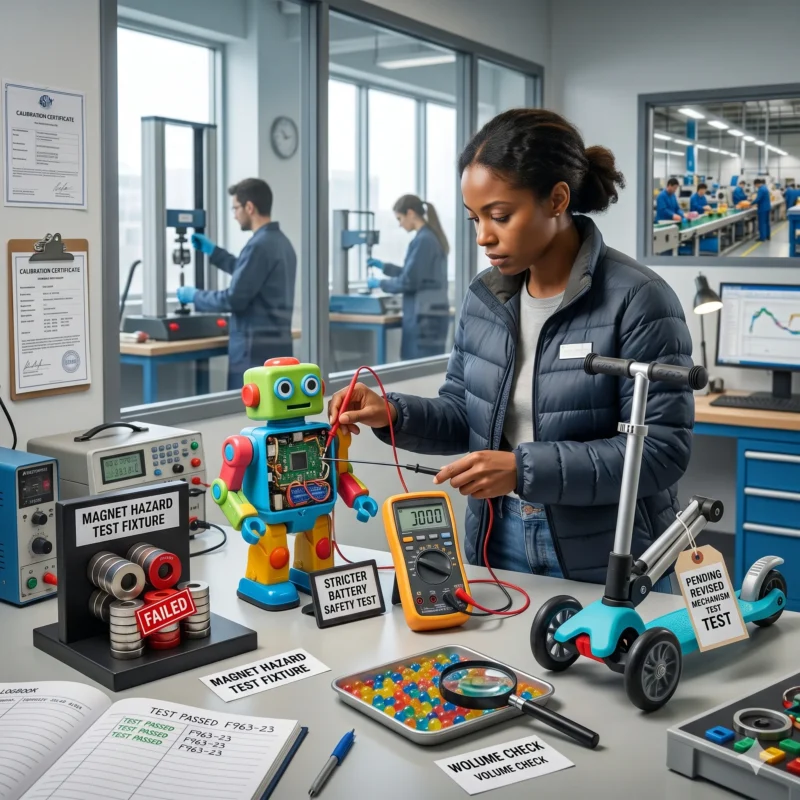
ASTM F963-23 is the mandatory U.S. toy safety specification published by ASTM International. The CPSC formally adopted the updated version under CPSIA Section 106, making it enforceable for all toys sold in the U.S. as of April 20, 2024. This has two direct consequences for your insurance program that most brokers won’t tell you about.
How Much Does Toy Manufacturer Insurance Cost?
Toy manufacturer insurance premiums vary based on company revenue, product lines, distribution channels, claims history, and whether your products are targeted at infants versus older children. The toy and children’s product insurance market has hardened meaningfully, fewer standard carriers write this class, underwriting is more rigorous, and rates have increased. That makes broker market access a decisive factor.
Company Profile |
Estimated Annual Premium Range |
|---|---|
|
Small startup (under $1M revenue, limited SKUs) |
$5,000 – $15,000 |
|
Mid-market manufacturer ($1M – $10M revenue) |
$15,000 – $60,000 |
|
Larger manufacturer ($10M+ revenue, broad retail distribution) |
$60,000 – $200,000+ |
|
Companies with prior claims or CPSC enforcement history |
Rated individually; hard market conditions apply |
How Do You Choose the Right Insurance Broker for a Toy Manufacturing Business?
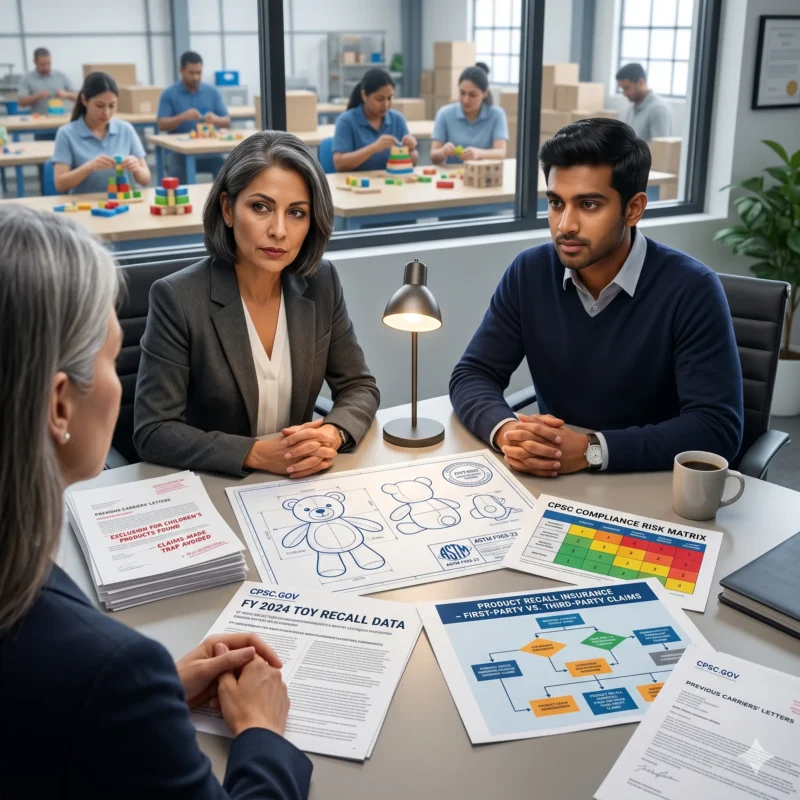
Not every commercial insurance broker has experience placing toy manufacturer insurance. A generalist broker can produce a certificate of insurance that checks a retailer’s box, and still leave you exposed to the specific claims most likely to happen in your industry. Online quote platforms frequently miss the product recall component entirely, default to claims-made forms because they’re cheaper to quote, and access only admitted carriers that may exclude children’s product risks. There’s a reason we don’t have a quote engine on our website, this class of risk requires underwriting, not automation.
Toy Manufacturer Insurance: Quick Reference
|
What it is |
A specialized commercial insurance program for companies that design, manufacture, or distribute physical toys and children’s products |
|---|---|
|
Who needs it |
Any business with physical toys reaching end consumers, domestic manufacturers, importers, private-label brands, e-commerce toy sellers |
|
Who may not need it |
IP licensors who don’t manufacture or distribute physical products (they need professional indemnity, not product liability) |
|
Core coverages |
Product liability, product recall, general liability, commercial property, workers’ compensation, business interruption, cyber liability |
|
Key exclusions |
Willful safety standard violations, intentional tampering, pollution from manufacturing, products sold outside U.S. without endorsement, prior known defects |
|
Cost range |
$5,000 – $200,000+ annually depending on revenue, product type, and distribution scale |
|
Critical policy detail |
Occurrence form strongly preferred over claims-made; confirm retroactive date covers all prior product sales |
|
What a specialist adds |
E&S market access, recall coverage as primary, ASTM F963-23 compliance built into policy language, carrier experience in children’s products |
Not Sure If Your Current Policy Actually Covers You?
The Coyle Group brings over 40 years of commercial insurance experience building programs for manufacturers, product companies, and importers with complex liability exposure. We work with carriers who write children’s product risks, and we structure programs that are built to pay claims.
The Coyle Second Opinion
9 out of 10 business insurance policies we review have a gap that would sink a claim
Yours might be one of them, and the only time you find out is when you file a claim and it gets denied. Send us your policy for an independent, confidential read: what’s covered, what’s missing, what you’re overpaying for. We never contact your broker or shop the market. Flat $2,500, refunded in full if you don’t get real value.




The team that reads your policy, line by line.
Questions about Toy Manufacturer Insurance?
Get the Right Toy Manufacturer Insurance Program Built for Your Company
At The Coyle Group, we have spent over 40 years building insurance programs for manufacturers, importers, and product companies with complex liability exposure. Toy manufacturer insurance is one of the most misunderstood programs in commercial lines, and one of the most consequential to get wrong.
Our programs for toy manufacturers are structured around CPSC compliance exposure, ASTM F963-23 requirements, and product recall coverage as a primary line, not an afterthought. We work with domestic manufacturers, importers, private-label toy brands, and e-commerce toy sellers across all product categories.
We access specialty markets that write children’s product risks, and place programs that are built to respond at claim time. If your current policy has not been reviewed by someone who regularly places this class, that review is worth 30 minutes before your next product launch or retail expansion.

This article was written by the CEO of The Coyle Group, Gordon B. Coyle, CPCU, ARM, AMIM, PWCA, who has over 40 years of experience working with business owners of all sizes and industries across the US, solving their insurance challenges.
Here’s how to take the next step
Schedule Your Insurance Confidence Assessment
In our 30-minute call, you’ll discover:
Not ready for a call?
Get Free Access to Our Gated Video:
“How to Finally Feel Confident in Your Coverage.”
Discover the exact system we use to help business owners eliminate hidden coverage gaps, stop overpaying, and finally feel confident in their protection.
What Peace of Mind Looks Like
Trusted by business owners across the U.S.
The Coyle Group is 1st class! Gordon and his team are knowledgeable, responsive, and attentive to detail. Gordon is that rare breed of professional who genuinely cares for his clients and works hard to exceed their expectations. I highly recommend them.


The insurance brokerage service was truly tailored to my needs, nothing like those big brokers who steer you toward random policies that don’t fit your profile. Thank you to the team for your help.

I was working with another broker and having difficulty acquiring General Liability coverage. A colleague recommended The Coyle Group. They were able to get coverage bound in just a couple of business days and a policy issued in ten days, and with a solid carrier at a competitive premium. Truly impressive results, plus it was a pleasure working with them. I highly recommend the Coyle Group!

If any business is looking to work with an insurance brokerage firm that is not only excellent at what the firm does, but one that deeply values the needs of the clients, then The Coyle Group is the firm for you. Give them a call and see for yourself. I can assure that you will quickly agree.

Want to know more?
See related blogs

How to Prevent Workers Comp Claims: A Manufacturer’s Guide
Manufacturers– How to Prevent Workers Comp Claims

Do Manufacturers Need D&O Insurance? The Gap That Can Cost You Personally
