
5 Cyber Insurance Claims Examples
and What They Teach You
Cyber Insurance Claims Examples: A Simple Guide
Index

Gordon B. Coyle
CEO, The Coyle Group
845-474-2924
How to get started
Executive Summary
You have cyber insurance. But do you know what it actually covers?
Real claims tell the story. Some businesses get paid. Some don’t.
These real cyber insurance claims examples reveal the difference: policy language, exclusions, and limits, often details buried in the fine print that most companies never read until it’s too late.
Learning from real cyber insurance claims helps you understand what your coverage actually protects, where the gaps are, and what to expect when you need to file a claim.
The Bottom Line (TL;DR)
What real claims reveal about cyber insurance:
Let’s examine five cyber insurance claims examples that show exactly how coverage works, and where it fails, in real-world scenarios.
To identify potential exposures before you need to file a claim.
Why Claim Examples Matter More Than Policy Promises
Cyber insurance is complex. Policies cover multiple scenarios, each with different limits, sublimits, exclusions, and conditions. Reading policy language is confusing. But studying cyber insurance claims examples shows how policies actually perform when businesses need them.
Some claims result in full payment. Others are partially paid. Some are denied entirely. The outcomes follow patterns based on coverage scope, policy language, and what actually happened.
What 40+ Years Taught Me About This Risk
Claims teach what policy documents can’t. In four decades of helping businesses navigate cyber incidents, I’ve seen how a single overlooked exclusion can mean the difference between survival and bankruptcy. The businesses that fare best treat cyber insurance as part of a broader risk management strategy, not as a standalone solution that lets them ignore security fundamentals.
5 Cyber Insurance Claims Examples That Reveal Coverage Realities
These five real cyber insurance claims span healthcare, legal, retail, and pharmaceutical industries. Each shows a different outcome: full payment, partial payment, capped payout, exclusion, and full denial, and the specific policy language that determined the result.
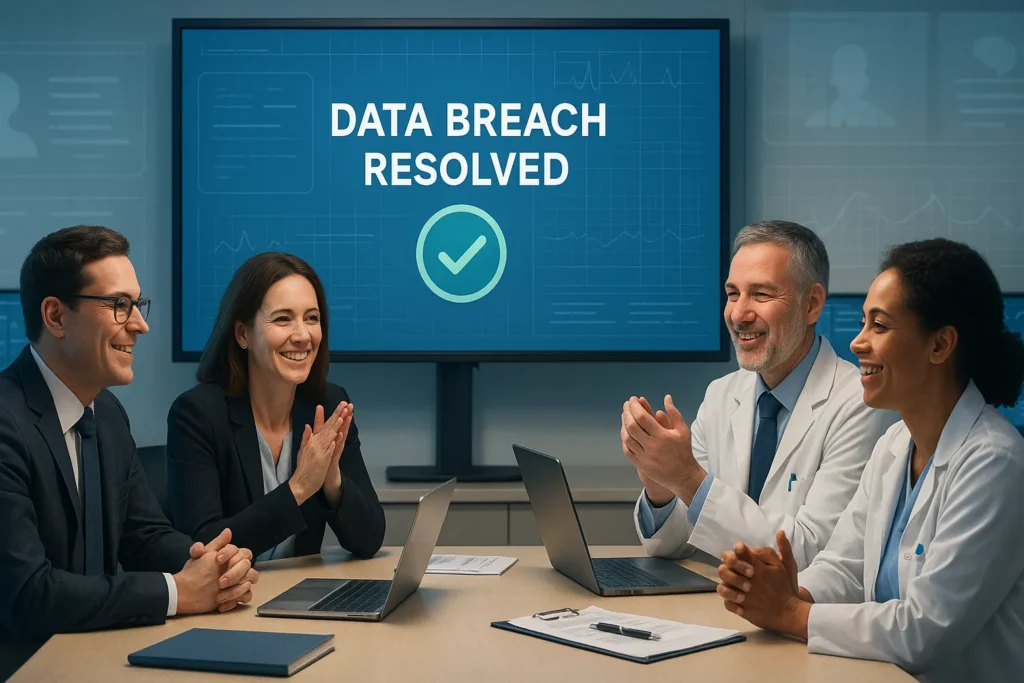
Case Study #1: Data Breach Response. Claim Paid in Full
The Scenario:
A healthcare Response covers patient medical records compromised in a ransomware attack. Data on approximately 5,000 patients was accessed. The clinic immediately contacts its cyber insurance carrier.
The Costs:
What the Policy Covered:
The cyber policy covered forensic investigation, legal defense, notification costs, and system restoration, standard breach response coverage included in most policies.
Outcome:
Claim paid in full. The clinic received $275,000 to cover all incident response costs.
What This Teaches You:
Data breach response coverage is where cyber insurance performs best. If you have a breach, forensic investigation, legal support, and notification are typically covered comprehensively. This is the core function of cyber insurance, and most carriers handle these claims straightforwardly. The clinic’s prompt notification and documented response plan helped expedite payment.
Case Study #2: Business Email Compromise (BEC) Fraud. Claim Partially Disputed
The Scenario:
An accounting manager receives an email that appears to be from the company’s CEO requesting an urgent wire transfer to a vendor account. The email has the correct tone and includes recent business context. The manager, believing it’s legitimate, approves a $250,000 wire transfer.
Hours later, the fraud is discovered. The account belongs to a hacker who compromised the CEO’s email and monitored internal communications to craft a convincing message.
The Costs:
What the Policy Covered:
The cyber policy included social engineering fraud coverage with a $250,000 limit. However, when the claim was submitted, the insurer questioned whether the loss was “direct.” The insurer’s argument: an employee with authority to make wire transfers made the transfer themselves; it wasn’t “directly” caused by the cyber attack; it was caused by human error.
Outcome:
Claim was disputed. After negotiation and clarification, the carrier ultimately covered the $250,000 limit. The remaining $15,000 was paid by the company.
What This Teaches You:
Social engineering coverage exists, but carriers can dispute causation and “directness” of loss. Additionally, your social engineering limit is likely capped at $250,000. According to the FBI’s 2024 IC3 Report, business email compromise resulted in $2.77 billion in losses, yet many SMBs carry inadequate limits. If your potential loss exceeds that limit, you’re underinsured.

Case Study #3: Ransomware with Business Interruption Sub limit. Claim Capped
The Scenario:
A legal firm is hit with ransomware. Files are encrypted; systems are down. The attacker demands a $25,000 ransom. The firm pays the ransom to restore systems quickly. During the 5-day recovery period, the firm loses significant revenue because they can’t access client files or operate normally.
The Costs:
What the Policy Covered:
The cyber policy covered ransomware and business interruption, but business interruption had a $50,000 sublimit, a cap within the larger coverage.
Outcome:
Ransom was paid ($25,000). Business interruption was covered up to the $50,000 sublimit. The firm received $75,000 total. They paid $250,000 out-of-pocket for the remaining business interruption losses.
What This Teaches You:
Business interruption coverage exists, but it’s often sublimited, meaning there’s a lower cap on this coverage even if your overall policy limit is higher. For a business where downtime is costly, a $50,000 business interruption sublimit is inadequate. According to recent claims data, ransomware attacks average $292,000 in total costs, with business disruption averaging $102,000 alone. You need to understand all sublimits, not just overall limits.

To verify your sublimits match realistic downtime costs.
Case Study #4: PCI Regulatory Fines. Coverage Excluded
The Scenario:
A retail business experiences a payment card data breach. Customer credit card information is stolen. The payment card networks (Visa, MasterCard) conduct investigations and impose regulatory fines and assessments on the business for failing to maintain adequate security standards.
The Costs:
What the Policy Covered:
The cyber policy covered forensic investigation and breach response. However, regulatory fines and assessments were explicitly excluded. The policy stated that fines and penalties imposed by regulatory bodies or payment networks were not covered.
Outcome:
Claim for breach response was paid ($2,000,000). Claim for PCI fines was denied ($2,000,000). The company paid the entire fine out-of-pocket.
What This Teaches You:
Policy exclusions for regulatory fines are common. If your industry faces regulatory exposure (retail, healthcare, financial services), you need to verify whether regulatory fines are covered. Many policies exclude them entirely. This is a critical gap for regulated industries. Understanding what cyber insurance actually covers prevents expensive surprises during claims.

Case Study #5: Ransomware Attributed to Foreign Military. Coverage Denied
The Scenario:
A large pharmaceutical company is hit with sophisticated ransomware. The U.S. government investigates and attributes the attack to Russian military cyber units. The company suffered $1.3 billion in losses (system recovery, business interruption, incident response).
The Claim:
The company files a cyber insurance claim for $1.3 billion in ransomware losses. The insurer denies the claim citing the “act of war” exclusion in the policy. The insurer’s argument: ransomware attributed to foreign military activity qualifies as an act of war, which is explicitly excluded.
Outcome:
Claim was denied. The company is in ongoing litigation to recover damages. As of recent reports, the claim remains unsettled.
What This Teaches You:
“Act of war” and “act of terrorism” exclusions exist in cyber policies. If a cyberattack is attributed to a foreign government or military, carriers can potentially deny coverage under these exclusions. This is a critical gap, especially for businesses that might be targeted by nation-state actors. The NotPetya ransomware attack resulted in similar claim denials for Merck ($1.4 billion claim) and Mondelez ($100 million claim), though Merck ultimately won its case in New Jersey Superior Court. Attribution is complex and disputed, which can delay or complicate claims significantly.

To understand what’s actually covered
Key Patterns Across Real Claims
Across these five claims, coverage performance follows consistent patterns by incident type. Data breach response pays reliably. Business interruption is consistently sublimited. Regulatory fines and nation-state attacks face systematic exclusion. Knowing which category your risk falls into tells you where your gaps are.
Coverage Performance by Incident Type
What These Cyber Insurance Claims Examples Reveal
Coverage is comprehensive in some areas, limited in others
Data breach response (Case #1) is typically well-covered. But social engineering fraud limits (Case #2), business interruption sublimits (Case #3), regulatory fine exclusions (Case #4), and war exclusions (Case #5) create significant gaps.
Policy language matters more than you think
A single phrase,”direct loss,” “act of war,” or “excluded regulatory fines”, can determine whether your claim is paid. Reading your policy and understanding exclusions is critical.
Limits and sublimits are often inadequate
Default social engineering limits ($250K) and business interruption sublimits ($50K) don’t match real-world losses. Companies often assume they’re more protected than they actually are. Recent data shows average SME claims at $345,000, well above typical limit structures.
Attribution and causation affect coverage
How an attack is classified, whether it’s a “direct” loss, whether it’s attributed to a foreign government, affects coverage. These determinations can be disputed and litigated for years.
Preparation improves claim outcomes
Companies that documented security controls, maintained incident response plans, and reported incidents promptly had better claim outcomes. Those that tried to hide security gaps or delayed reporting faced denials or reduced payments.
How Long Does a Cyber Insurance Claim Take to Resolve?
Claim timelines vary more than policyholders expect. A straightforward data breach response can close in 30–90 days. Disputed claims, BEC causation arguments, war exclusion fights, and attribution disputes can take years. The table below reflects realistic timelines by claim type, based on industry data.
Claim Type |
Typical Timeline |
What Drives the Length |
|---|---|---|
|
Data breach response (clear-cut) |
30–90 days |
Forensic scope, notification volume |
|
BEC / wire transfer fraud |
60–180 days |
Recovery efforts, causation dispute |
|
Ransomware (ransom + BI) |
60–120 days |
Sublimit negotiation, restoration verification |
|
Regulatory fines (covered) |
90–180 days |
Regulatory investigation timeline |
|
Nation-state / war exclusion dispute |
1–5 years |
Attribution complexity, litigation |
|
First-party notification requirement |
24–72 hours |
Policy condition, failure voids coverage |
The Top Reasons Claims Get Denied
Cyber insurance claims are denied more often than most businesses expect. In 2024, 40% of claims were denied or disputed. The reasons follow consistent patterns, inadequate security controls, misrepresentation on applications, policy exclusions, and late notification. Understanding these patterns before a loss is the only way to protect yourself.
Primary Denial Reasons
Failure to Maintain Required Security Controls
Insurers now mandate stringent cybersecurity protocols:
According to industry research, 40% of cyber insurance claims were denied in 2024, with inadequate security measures as a leading cause. If you can’t document these controls, expect coverage denial, higher premiums, or denied claims even after a breach.
Misrepresentation on Applications
Cyber liability insurance applications ask detailed questions about specific protections, policies, and procedures. Some businesses, intentionally or inadvertently, provide inaccurate information. When discrepancies are discovered, claims can be denied due to misrepresentation.
Example:
In Travelers Property Casualty Company of America v. International Control Services, Inc., the insurer sought to rescind the policy after discovering that the insured had misrepresented its use of multi-factor authentication during the application process.
Policy Exclusions
Common exclusions that trigger denials:
Late Notification
Cyber insurance policies often include clauses requiring immediate notification of an incident, typically within 24-72 hours. Delays can result in automatic denial.
Exceeding Sublimits
Even with adequate overall limits, specific sublimits for business interruption, social engineering, or crisis management can leave you underinsured. Understanding how much cyber insurance you should buy prevents this gap.
To identify gaps before they void your coverage
How to Improve Your Claim Success Rate
Most claim denials are preventable. The businesses that get paid share three traits: they documented their security controls before the incident, they notified their carrier within 24–72 hours, and they followed a tested incident response plan. Here’s the exact framework.
Before an Incident
1. Document Everything
Maintain comprehensive documentation of:
2. Understand Your Policy
3. Accurate Application Completion
Work with cybersecurity professionals to accurately complete applications. Misrepresentation, even unintentional, can void coverage when you need it most.
4. Maintain Required Security Standards
According to the NIST Cybersecurity Framework guidelines. Implementing comprehensive security controls isn’t just about compliance; it directly impacts insurability and claim outcomes.
During an Incident
1. Report Immediately
Contact your insurer within the required timeframe (typically 24-72 hours). Prompt reporting is critical for fund recovery and avoiding late notice denials.
2. Follow Your Incident Response Plan
Documented, tested incident response procedures demonstrate preparedness and can expedite claims processing.
3. Preserve Evidence
Maintain forensic evidence and document all actions taken. This information is crucial for your insurer and potential legal matters.
4. Cooperate Fully
Full cooperation with investigations and transparency about the incident improve claim outcomes significantly.
Real-World Cost Context
Most businesses set policy limits based on what they can afford to pay, not what a breach actually costs. The table below shows what each component of a real cyber incident costs, and how those numbers compare to default sublimits most policies carry.
Average Breach Costs by Component
According to recent Coalition data, the average cyber insurance claim globally is $115,000, but ransomware attacks average $292,000 in the United States. Small businesses can expect costs ranging from $120,000 to $1.24 million in 2025.
Industry-Specific Claim Patterns
Different industries face different claim profiles. Understanding your sector’s risk helps you structure appropriate coverage.
Healthcare
Manufacturing
Financial Services
Professional Services
The Real Lesson from These Claims
Cyber insurance works best as part of a comprehensive risk management strategy, not as a standalone solution. These cyber insurance claims examples demonstrate the importance of both preventive measures and adequate insurance coverage.
Critical takeaways:
Don’t Wait for a Claim to Understand Your Coverage
Most businesses don’t discover their coverage gaps until they file a claim. By then, it’s too late to fix the problem.
Review your cyber insurance policy now:
Questions About Cyber Insurance Claims?
Get the Right Coverage for Your Business
Understanding what cyber insurance actually covers, and where the gaps are, is the first step toward adequate protection. As these cyber insurance claims examples show, preparation, documentation, and appropriate limits make the difference between full recovery and devastating financial loss.
At The Coyle Group, we’ve spent over 40 years helping businesses navigate these complex coverage decisions. We don’t just sell policies, we analyze your actual risk exposure, identify where standard coverage falls short, and structure programs that align with how your business actually operates.
Whether you’re concerned about sublimits that won’t cover realistic downtime costs, social engineering caps that leave you exposed, or regulatory exclusions specific to your industry, we have the expertise to close those gaps before you discover them during a claim. Let us help you build coverage that actually protects your business when it matters most.
95+
Years of Family Legacy in Insurance
40+
Years Personal Experience
95%
Client Retention Rate
600+
Educational Videos

This article was written by Gordon B. Coyle, CPCU, ARM, AMIM, PWCA, CEO of The Coyle Group, who has over 40 years of experience working with business owners of all sizes and industries across the US, solving their insurance challenges. Gordon specializes in helping businesses develop comprehensive cyber insurance programs that protect their operations and support their growth objectives.
Here’s how to take the next step
Schedule Your Insurance Confidence Assessment
In our 30-minute call, you’ll discover:
Not ready for a call?
Get Free Access to Our Gated Video:
“How to Finally Feel Confident in Your Coverage. “
And discover the exact system we use to help business owners eliminate hidden coverage gaps, stop overpaying, and finally feel confident in their protection.
What Peace of Mind Looks Like
Trusted by business owners across the U.S.
The Coyle Group is 1st class! Gordon and his team are knowledgeable, responsive, and attentive to detail. Gordon is that rare breed of professional who genuinely cares for his clients and works hard to exceed their expectations. I highly recommend them.


The insurance brokerage service was truly tailored to my needs, nothing like those big brokers who steer you toward random policies that don’t fit your profile. Thank you to the team for your help.

I was working with another broker and having difficulty acquiring General Liability coverage. A colleague recommended The Coyle Group. They were able to get coverage bound in just a couple of business days and a policy issued in ten days, and with a solid carrier at a competitive premium. Truly impressive results, plus it was a pleasure working with them. I highly recommend the Coyle Group!

If any business is looking to work with an insurance brokerage firm that is not only excellent at what the firm does, but one that deeply values the needs of the clients, then The Coyle Group is the firm for you. Give them a call and see for yourself. I can assure that you will quickly agree.

Want to know more?
See related blogs

The Crowdstrike Debacle and Cyber Insurance
Tech E&O vs. Cyber Insurance: What You Need to Know
First Party vs Third Party Cyber Insurance: What’s Covered, What’s Missing, and What You Actually Need
