
Food Distributor Insurance
Protecting Your Business From Costly Risks
Food Distributor Insurance: 3 Gaps That Could Cost You Millions
Index

Gordon B. Coyle
CEO, The Coyle Group
845-474-2924
How to get started
Executive Summary
Food distributor insurance is a specialized insurance program for businesses that transport, store, and deliver food products, combining product liability, cargo coverage, commercial auto, and food contamination protection into one cohesive policy.
Operating a food distribution business means navigating daily risks, from ensuring cold chain integrity and maintaining trucking fleets to ensuring worker safety and product quality. A refrigeration failure, contamination event, or trucking accident can devastate your business financially and damage relationships that have been built over years.
Food distributors face exposures that are far more complex than those of typical warehouse operations. At The Coyle Group, we craft insurance programs designed to shield you from both the obvious and the obscure. Our specialized approach to wholesalers distributors insurance addresses the unique challenges of moving perishable products through complex supply chains.
TL;DR. The Bottom Line
To fortify your business against risks of all magnitudes.
Why Specialized Insurance is Crucial for Food Distributors?
Food distributors stand at the nexus of manufacturing, transportation, and retail, bearing responsibility for every product passing through their facilities.
Unlike many sectors, you must protect against temperature-sensitive inventory, strict FDA and USDA oversight, multi-state trucking operations, and high-traffic warehouses. A generic business policy cannot adequately address these exposures. Many businesses opt for standard policies, not realizing that food distributor insurance requires specialized endorsements.
Because many food businesses operate within broader distribution networks, it also helps to understand how a general program for insurance for distributors differs from one built specifically for perishable and contamination-sensitive goods.
What 40+ Years Taught Me About This Risk
In four decades of insuring distributors, I’ve seen how a single overlooked exposure can devastate an otherwise thriving operation. Successful distributors understand that insurance isn’t just buying policies, it’s building a risk management framework that evolves with your business.
Regulatory Exposures
The Food Traceability Final Rule requires distributors to:
When products are sourced internationally, compliance and liability issues can become even more complex, which is why businesses bringing food products into the country should also review importer insurance.
Common Risks
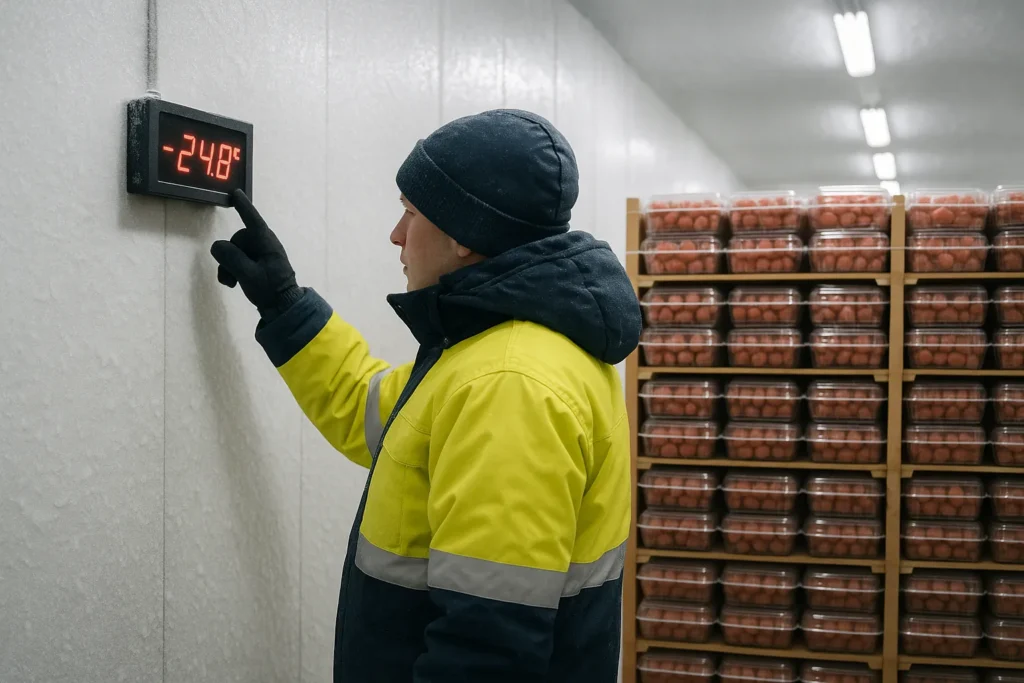
Spoilage and Refrigeration Failures
Power disruptions or equipment malfunctions can decimate entire shipments. Without proper coverage, a single compressor failure could result in substantial losses of six figures.
Prevention strategies:
Equipment breakdown insurance provides crucial protection when systems fail.
Product Contamination and Recalls
When food becomes contaminated, distributors often bear the costs of recalls. Expenses for legal defense, disposal, sanitation, and replacement escalate rapidly.
Illustrative Scenario: Contamination Response
Without product recall insurance, these costs are borne entirely by operating capital, potentially threatening business survival.
Fleet and Delivery Incidents
Each journey carries risks of accidents, cargo damage, and liability claims.
Fleet risk factors:
Commercial auto insurance costs vary based on factors such as fleet size,
Warehouse and Property Damage
Fires, water damage, or theft within temperature-controlled facilities can paralyze operations.
Critical considerations:
Workers’ Compensation
Food distributor insurance programs must account for warehouse injury rates. According to OSHA, the injury rate for warehouse workers is 5.5 per 100 workers.
High-risk activities:

Cyber Threats
From ransomware to fraudulent wire transfers, distributors are attractive targets.
Common threats:
Learn about cyber insurance versus crime insurance to understand both coverage types.
And we’ll provide a clear assessment of your protection status and outline how to make it truly comprehensive.
What Does Food Distributor Insurance Cover?
General Liability
Addresses bodily injury and property damage with standard limits of $1M-$2M per occurrence. Understanding general liability insurance coverage limits ensures adequate protection.
Property and Equipment Protection
Essential endorsements:
Commercial Auto and Fleet
Key coverages:
Workers’ Compensation
Key considerations include experience modification factors that impact premiums and workers’ compensation class codes for accurate calculation.
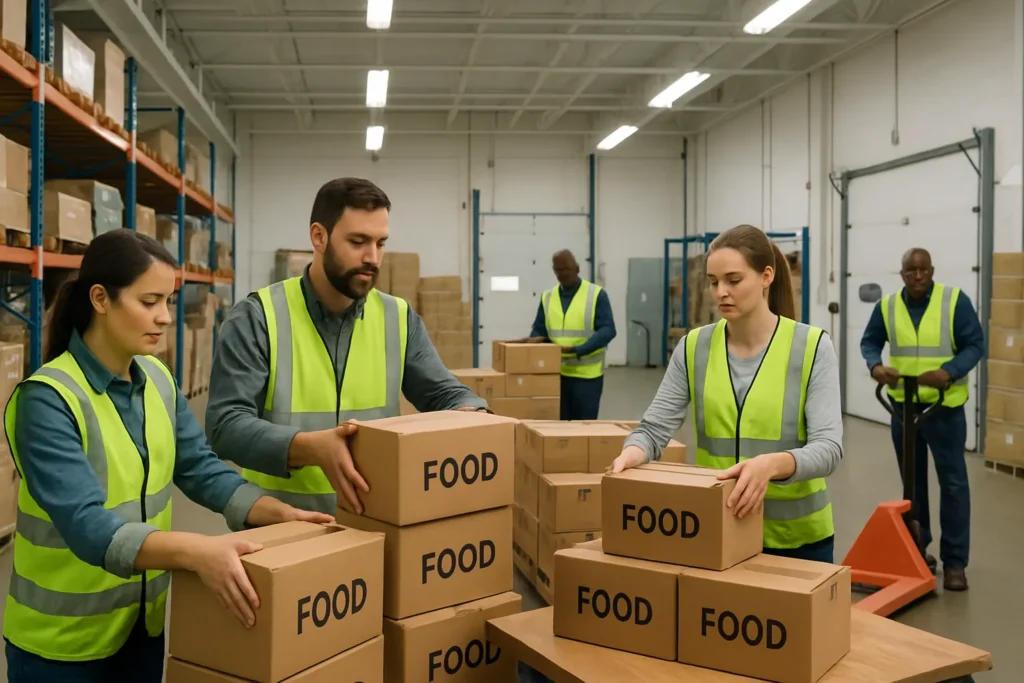
Product Liability & Recall
Product recall insurance covers:
Business Interruption
Coverage components:
Cyber Insurance
Understanding what cyber insurance covers helps you select appropriate limits.
Why Standard Business Insurance Falls Short
When brokers lack a deep understanding of cold chain logistics and vendor agreements, they cannot design coverage that aligns with your needs. A common mistake is misclassifying food distributors as general wholesalers. This triggers the wrong carrier appetite entirely, and temperature-controlled cargo riders, spoilage endorsements, and FSMA-related liability extensions get left off the program. By the time a refrigeration failure or contamination event happens, the gap is already built into the policy.
A specialist who places food distribution programs regularly knows how underwriters categorize these operations, which carriers have a genuine appetite for perishable goods, and what endorsements are non-negotiable before the policy is bound.
How The Coyle Group Gets It Right
Our approach begins with understanding your operations, from warehouse climate control and supplier agreements to delivery routes and driver training protocols.
We provide customized program analysis to ensure no gaps or overlaps in your coverage, while our fleet safety initiatives, including driver training and telematics setup typically reduce accidents by 20-30%.
Our approach begins with understanding your operations, from warehouse climate control and supplier agreements to delivery routes and driver training.
Fleet Safety Initiatives
– Driver vetting and MVR screening
– Telematics systems for real-time monitoring
– Defensive driving training
– Fatigue management policies
– Accident investigation protocols
Equipment Maintenance & Monitoring
– Preventive maintenance scheduling
– 24/7 temperature monitoring
– Redundant system design
– Emergency response procedures
Temperature Logging
– Automated logging at critical control points
– Instant alerts for temperature excursions
– Complete chain of custody documentation
– FSMA traceability compliance
Employee Safety
– Forklift certification training
– PPE protocols
– Clear warehouse traffic patterns
– Material storage safety
Cybersecurity Best Practices
– Multi-factor authentication
– Employee training on social engineering
– Vendor security assessments
– Incident response planning
What Does Food Distributor Insurance Cost?
Key Factors Influencing Cost
Bottom line
Food distributor insurance premiums reflect the specialized nature of cold chain logistics and perishable goods handling.
Gross income has a significant impact on costs, with higher revenues generally expected to result in higher premiums. The state you operate in also impacts what you pay, as regulations vary between states.
A single recall or major refrigeration failure can easily surpass your entire annual premium many times over. According to the National Association of Insurance Commissioners, property and casualty insurance direct premiums written reached $974.9 billion in 2024.
What to Know Before You Buy Food Distributor Insurance
If you’ve read this far, here’s the condensed version: everything a buyer should have in hand before making a decision.
What Food Distributor Insurance is
Food distributor insurance is not a single policy. It’s a specialized program combining product liability, commercial auto, property, workers’ compensation, product recall, spoilage coverage, and cyber insurance, built specifically for businesses moving perishable goods through temperature-controlled supply chains. A standard business owner policy (BOP) excludes most of what makes food distribution genuinely risky.
Who needs Food Distributor Insurance
Any business that transports, stores, or delivers food products, whether refrigerated, frozen, or ambient. If you’re subject to FDA FSMA traceability requirements, operate a fleet carrying food cargo, or store perishable inventory in temperature-controlled facilities, you need a program structured for food distribution specifically, not general wholesale.
What Food Distributor Insurance covers
What Food Distributor Insurance doesn’t cover
What drives your Food Distributor Insurance cost
Gross revenue, fleet size, product types (frozen and refrigerated cost more to insure than ambient), geographic footprint, claims history, and safety programs. Smaller distributors typically pay $5,000–$15,000 annually. Mid-sized operations run $15,000–$40,000. Large or multi-location businesses pay $40,000–$100,000+. A single recall event can cost $500,000–$2M+, multiples of your annual premium.
Why standard policies fall short
Generic BOPs exclude spoilage, product recall, refrigeration breakdown, and adjustable peak-season inventory limits, the four exposures most likely to generate a large loss in food distribution. Brokers who misclassify food distributors as general wholesalers compound the problem by placing coverage with carriers that have no appetite for perishable goods risk.
What to look for in a broker
Food distribution requires a broker who understands cold chain logistics, FSMA compliance, and how underwriters classify perishable goods operations. The classification matters; a wrong SIC code or commodity description can mean missing endorsements and the wrong carrier entirely. Work with someone who places food distribution programs regularly, reviews your program as your product mix and geography change, and knows which carriers actually pay spoilage and recall claims cleanly.
The Coyle Second Opinion
9 out of 10 business insurance policies we review have a gap that would sink a claim
Yours might be one of them, and the only time you find out is when you file a claim and it gets denied. Send us your policy for an independent, confidential read: what’s covered, what’s missing, what you’re overpaying for. We never contact your broker or shop the market. Flat $2,500, refunded in full if you don’t get real value.




The team that reads your policy, line by line.
Questions about Food Distributor Insurance?
Your Trusted Insurance Advisor
This article was written by Gordon B. Coyle, CPCU, ARM, AMIM, PWCA, CEO of The Coyle Group, who has over 40 years of experience working with business owners of all sizes and industries across the US, solving their insurance challenges. Gordon specializes in helping food distributors and manufacturers develop comprehensive insurance programs that protect their operations and support their growth objectives.
my Background as an Insurance Broker
95+
Years of Family Legacy in Insurance
40+
Years Personal Experience
95%
Client Retention Rate
600+
Educational Videos

Here’s how to take the next step
Schedule Your Insurance Confidence Assessment
In our 30-minute call, you’ll discover:
Not ready for a call?
Get Free Access to Our Gated Video:
“How to Finally Feel Confident in Your Coverage. “
And discover the exact system we use to help business owners eliminate hidden coverage gaps, stop overpaying, and finally feel confident in their protection.
What Peace of Mind Looks Like
Trusted by business owners across the U.S.
The Coyle Group is 1st class! Gordon and his team are knowledgeable, responsive, and attentive to detail. Gordon is that rare breed of professional who genuinely cares for his clients and works hard to exceed their expectations. I highly recommend them.

The insurance brokerage service was truly tailored to my needs, nothing like those big brokers who steer you toward random policies that don’t fit your profile. Thank you to the team for your help.

I was working with another broker and having difficulty acquiring General Liability coverage. A colleague recommended The Coyle Group. They were able to get coverage bound in just a couple of business days and a policy issued in ten days, and with a solid carrier at a competitive premium. Truly impressive results, plus it was a pleasure working with them. I highly recommend the Coyle Group!

If any business is looking to work with an insurance brokerage firm that is not only excellent at what the firm does, but one that deeply values the needs of the clients, then The Coyle Group is the firm for you. Give them a call and see for yourself. I can assure that you will quickly agree.

Want to know more?
See related blogs

Essential Insurance for beverage distributors

Best Insurance for Food Products Wholesalers & Distributors

What Type of Insurance Do Wholesalers and Distributors Need?
