
Loss sensitive workers’ compensation transfers a portion of claim costs directly to your business in exchange for 30–50% lower premiums. Guaranteed cost plans charge a fixed premium regardless of claims. The right choice depends on your annual premium volume, claims history, and risk tolerance — and most businesses should evaluate loss sensitive options once premiums exceed $250,000.
I’m Gordon Coyle, and I’ve helped hundreds of New York businesses transition from guaranteed cost to loss-sensitive workers’ compensation programs. Today, we’ll explore loss sensitive vs guaranteed cost options, identify when each makes sense, and provide the framework you need to make the right decision for your business.
Key Takeaways

What is the difference between loss sensitive and guaranteed cost workers’ compensation?
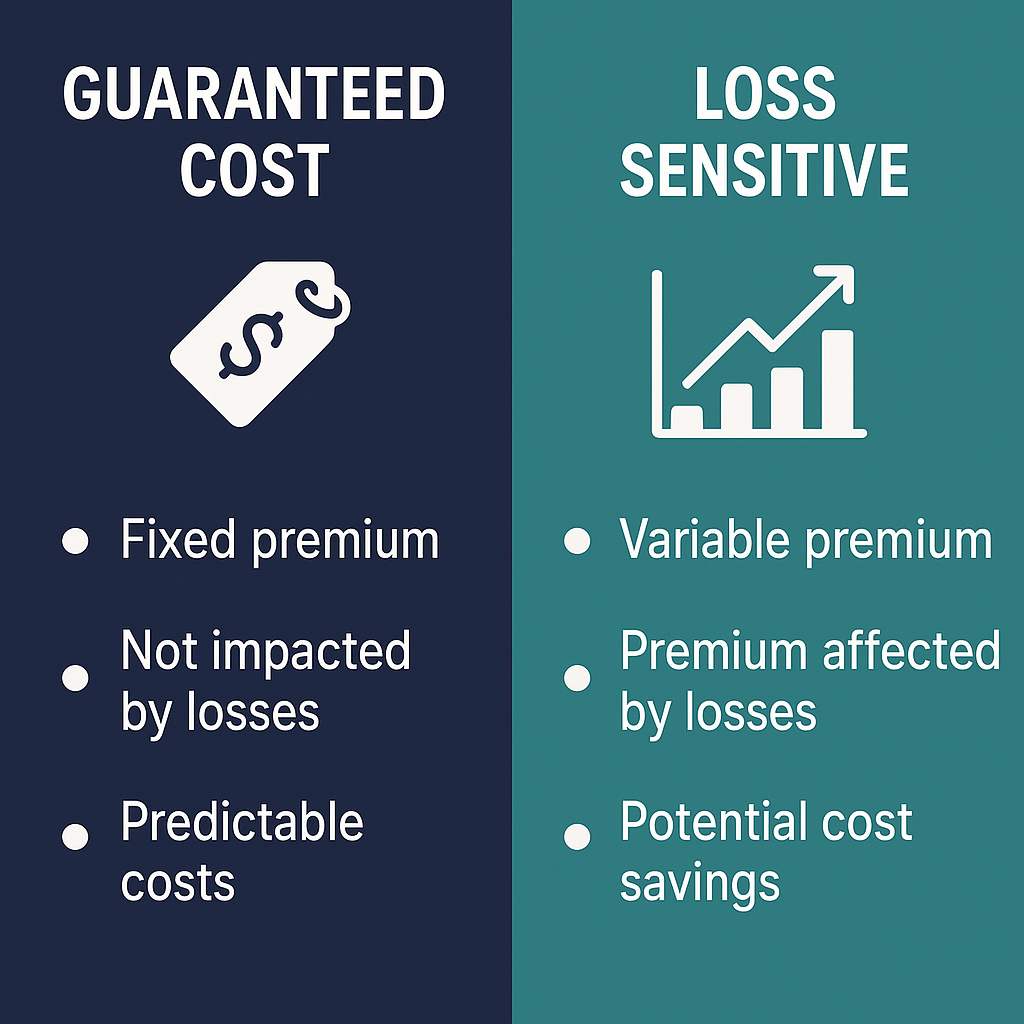
The fundamental difference lies in who bears the financial risk for claims. Understanding loss sensitive vs guaranteed cost determines whether you pay fixed premiums or assume direct responsibility for claim costs up to certain limits.
Guaranteed Cost Workers’ Compensation
Guaranteed cost plans provide predictable, fixed premiums based on your payroll classifications and experience modifier. Moreover, the insurance company assumes full responsibility for all claim costs regardless of frequency or severity.
Key features include:
Loss Sensitive Workers’ Compensation
Loss sensitive plans transfer a portion of claim costs directly to your business in exchange for significantly reduced premiums. Additionally, you maintain greater control over claims management and risk prevention programs.
Common loss sensitive options:
When should you consider loss sensitive vs guaranteed cost coverage?
Most businesses should evaluate loss sensitive options when annual premiums exceed $250,000. Here’s when each approach makes financial sense:
Choose Loss Sensitive When:
Example: A Long Island manufacturing company with $400,000 in guaranteed cost premiums moved to a $250,000 deductible plan, reducing annual premiums to $220,000 while maintaining an aggregate stop-loss at $500,000.
Stick with Guaranteed Cost When:
For more guidance on workers’ compensation basics, see our Workers’ Compensation Insurance Guide.
Not sure if your premium volume qualifies?
How do high-deductible workers’ compensation plans work?
High-deductible plans are the most common loss sensitive option. These programs typically feature per-claim deductibles of $100,000 or greater, with $250,000 being increasingly common for middle-market businesses.
Key Program Elements:
Deductible Structure:
Payment Mechanics:
Risk Management: According to OSHA’s business case research, the average worksite in OSHA’s Voluntary Protection Programs has a Days Away Restricted or Transferred (DART) case rate 52% below its industry average, demonstrating how financial incentives and active safety engagement directly reduce claim frequency. In my experience, loss sensitive clients who invest in structured safety programs consistently see meaningful claim reductions within the first two to three years.
High Deductible |
Retrospective Rating |
Dividend Plan |
Self-Insurance |
|
|---|---|---|---|---|
|
Premium Reduction |
30-50% |
10-30% |
5-15% (returned as dividend) |
40-60% (eliminates carrier premium) |
|
Collateral Required |
Letter of credit: 12-18 months of expected claims |
Moderate; letter of credit or surety bond |
None |
Surety bond or securities deposit; typically $1M+ |
|
Risk Level |
Moderate-High: employer reimburses each claim up to deductible |
Moderate: final premium adjusts within min/max range |
Low: fixed premium with potential upside only |
Highest: employer funds all claims directly |
|
Cash Flow Impact |
Variable monthly reimbursements as claims are paid |
Stable during policy year; adjusted retroactively 6-18 months later |
Predictable; dividend paid after policy year closes |
Requires dedicated claims fund and ongoing reserves |
|
Minimum Premium Threshold |
$250,000+ annually |
$150,000-$250,000 annually |
$50,000-$100,000 annually |
$500,000+ annually (varies by state) |
|
Claims Management Control |
High: employer directs return-to-work and medical providers |
Moderate: carrier manages but employer incentivized |
Low: carrier handles all claims |
Full: employer selects TPA, providers, and strategy |
|
Aggregate Cap Available |
Yes: typically 110-125% of guaranteed cost equivalent |
Yes: maximum premium caps total exposure |
Not applicable; no downside exposure |
No cap; employer absorbs all losses (excess insurance available) |
|
Best For |
Mid-to-large employers with strong safety programs and stable claims history |
Employers wanting performance-based pricing without direct claim reimbursement |
Smaller employers seeking low-risk entry into loss sensitive options |
Large employers ($5M+ payroll) with dedicated risk management staff and financial capacity |
|
Policy Duration Exposure |
3-5 years: collateral held while open claims develop |
2-3 years: retro adjustments continue after policy expires |
1 year: dividend calculated and closed |
Ongoing: reserves held until all claims fully resolved |
|
Regulatory Requirements |
Standard insurance policy; no state filing beyond carrier’s deductible endorsement |
Standard insurance policy with retro endorsement |
Standard insurance policy with dividend provision |
State self-insurance approval required; must meet financial and reporting standards |
What are the collateral requirements for loss sensitive plans?
Insurance companies require collateral to secure your deductible obligations. This typically takes the form of an irrevocable letter of credit equal to anticipated claim costs.
Collateral Considerations:
Initial Requirements:
New York Example: A Brooklyn construction company with $600,000 in annual premiums required a $1.2 million letter of credit for their $250,000 deductible program.
For businesses evaluating workers’ compensation costs in New York, understanding collateral requirements is essential for financial planning.
Want to see your collateral requirements?
What level of engagement is required for loss sensitive programs?
Loss sensitive plans demand significantly more involvement than guaranteed cost coverage. Your “skin in the game” requires active participation in claims management and risk control.
Increased Responsibilities:
Claims Management:
Risk Control:
Financial Management:
Understanding workers’ compensation experience modifiers becomes crucial for long-term program success.
How do you evaluate loss sensitive vs guaranteed cost financially?
Actuarial analysis is essential for making an informed decision. Simple spreadsheet comparisons often miss critical factors that impact long-term costs.
Key Financial Metrics:
Premium Comparison:
Cash Flow Impact:
Risk Assessment: In my experience with clients transitioning to loss-sensitive programs, first-year savings typically run 3–7%, growing to 10–15% by year three as safety programs mature.
Ready to model potential savings?
What are the common mistakes with loss sensitive programs?
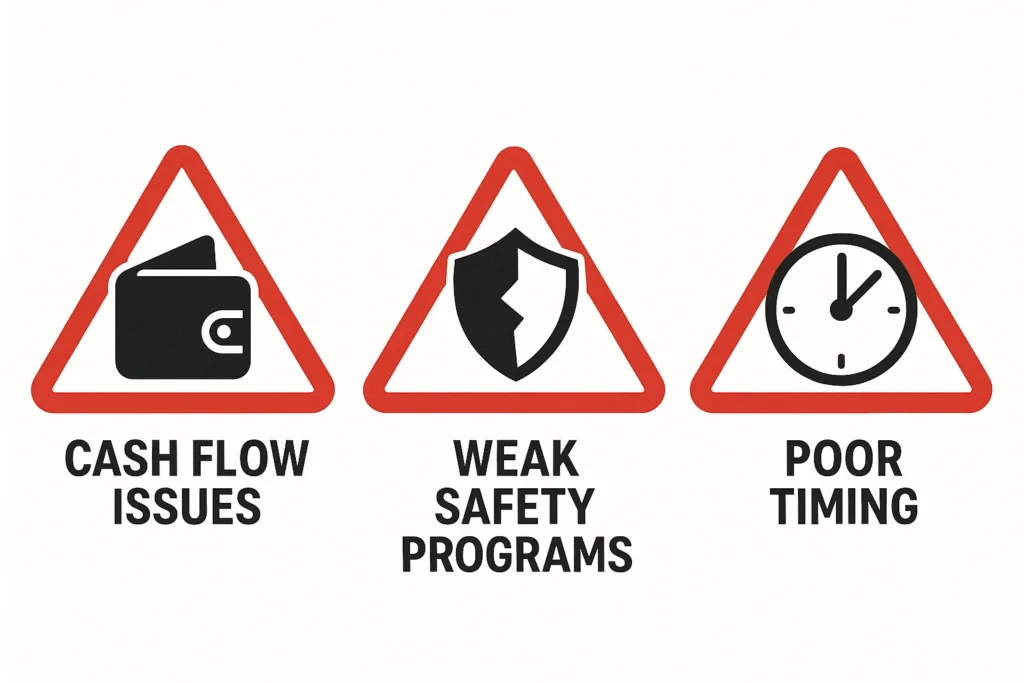
Avoid these critical errors that can turn savings into significant losses:
Financial Mistakes:
Operational Errors:
Real-world example
A Westchester manufacturer moved to loss sensitive too early, before implementing proper safety programs. A single severe claim exceeded their risk tolerance and forced a return to guaranteed cost at significantly higher rates.
For businesses considering workers’ compensation in New York, understanding these pitfalls is crucial.
Should your business choose loss sensitive or guaranteed cost?
The decision depends on your financial capacity, risk tolerance, and operational readiness. Most businesses benefit from guaranteed cost until they reach sufficient scale and sophistication for loss sensitive programs.
Consider loss sensitive if:
Stay with guaranteed cost if:
Frequently Asked Questions
Ready to explore loss sensitive workers’ compensation options?
Let’s analyze whether loss sensitive programs make sense for your business. Our actuarial partners provide comprehensive analysis to ensure you make the right decision based on data, not assumptions.
Wondering whether loss sensitive makes sense for your business? Our actuarial partners will model your specific numbers. No obligation, just data-driven guidance.


