
Ransomware Insurance Coverage
Beyond the Ransom Payment
Stop Buying Ransomware Insurance Wrong
Index

Gordon B. Coyle
CEO, The Coyle Group
845-474-2924
How to get started
Executive Summary
Ransomware insurance coverage is the component of a cyber insurance policy that pays for losses from a ransomware attack, including the ransom payment, forensic investigation, system restoration, business interruption, and legal notification costs.
Most Small and Medium-sized Businesses (SMBs) think ransomware insurance coverage is primarily about one thing: paying the ransom if their systems are locked. If attackers demand $500,000, your insurance covers it, problem solved.
That’s a dangerous misconception.
The real cost of a ransomware attack extends far beyond the ransom itself. Understanding what your coverage actually includes, and what it excludes, is critical to knowing whether you’re truly protected.
The Bottom Line.TL;DR
What Is Ransomware Insurance Coverage?
Ransomware insurance coverage pays for losses when cybercriminals encrypt your systems and demand payment, including the ransom itself, forensic investigation, business interruption, data restoration, legal notifications, and crisis communications. It is included in most cyber insurance policies but can also be purchased as standalone coverage.
The critical distinction:
Ransomware insurance coverage isn’t just about paying the ransom; it’s also about protecting your data. It’s about covering the entire cost of a ransomware event, detection, response, recovery, and business impact. The ransom is one line item in a much larger cost equation.
What 40+ Years Taught Me About This Risk
I’ve seen countless SMBs (Small and Medium-sized Businesses) discover their ransomware coverage gaps at the worst possible moment, during an active attack. Businesses that succeed the most understand their full exposure before an incident occurs and build coverage that matches their actual risk profile.
Who Ransomware Attackers Target Most
Industry |
Why Targeted |
Primary Cost Driver |
|---|---|---|
|
Healthcare |
Patient data value, critical operations |
HIPAA penalties + BI |
|
Financial Services |
Wire fraud opportunity, regulated data |
SEC/regulatory fines |
|
Manufacturing |
Operational disruption leverage |
Business interruption |
|
Education |
Weak controls, student data |
Notification costs |
|
Professional Services |
Client data access |
Data breach liability |
How Ransomware Insurance Actually Works
Ransomware insurance activates the moment you report an attack. Your insurer deploys a breach coach, forensic investigators, and negotiators, typically within hours. The process covers containment, ransom negotiation, recovery, and claims finalization, with costs reimbursed or paid directly depending on how your policy is structured.
1. The attack is detected
Your systems are encrypted, data is locked, or attackers demand payment. At this point, time matters. Delays increase both damage and cost.
2. You notify your insurer immediately
Most policies require prompt reporting. Once you call, the insurer activates its incident response process and assigns a breach coach to guide the next steps.
3. The response team is deployed
The insurer brings in specialists, typically including forensic investigators, legal counsel, and ransomware negotiators. These experts help contain the attack, identify how it happened, and determine whether data can be recovered without paying the ransom.
4. The financial impact is managed
Depending on your policy, the insurer covers key costs such as forensic investigation, system restoration, business interruption, and, if necessary, ransom payments and negotiation services.
5. Recovery and restoration begin
Systems are rebuilt, data is restored from backups if possible, and operations are gradually brought back online. This phase can take days or weeks depending on the severity of the attack.
6. Claims are finalized and costs are paid
The insurer reimburses or directly pays covered expenses, based on your policy structure and limits.
What Actually Happens During a Ransomware Event
A ransomware attack unfolds in five stages over hours to weeks: initial access, lateral movement through your network, encryption, the decision point on payment, and recovery. Costs accumulate at every stage, not just at the ransom demand.
To understand why coverage needs to go beyond ransom payment, here’s the timeline:
Throughout this event, costs accumulate across multiple categories, each requiring different types of coverage.
The Full Cost of Ransomware: Beyond the Ransom Payment
The ransom payment represents 15–30% of total incident costs in most attacks. Forensic investigation, business interruption, system restoration, legal notification, and regulatory penalties routinely exceed the ransom itself, often by a factor of three to five.
Forensic Investigation & Detection ($50K–$300K+)
You need to understand what happened: How did the attackers gain access? What systems did they access? What data was compromised?
Investigators must preserve evidence, understand the attack vector, and document all relevant information for regulatory compliance purposes.
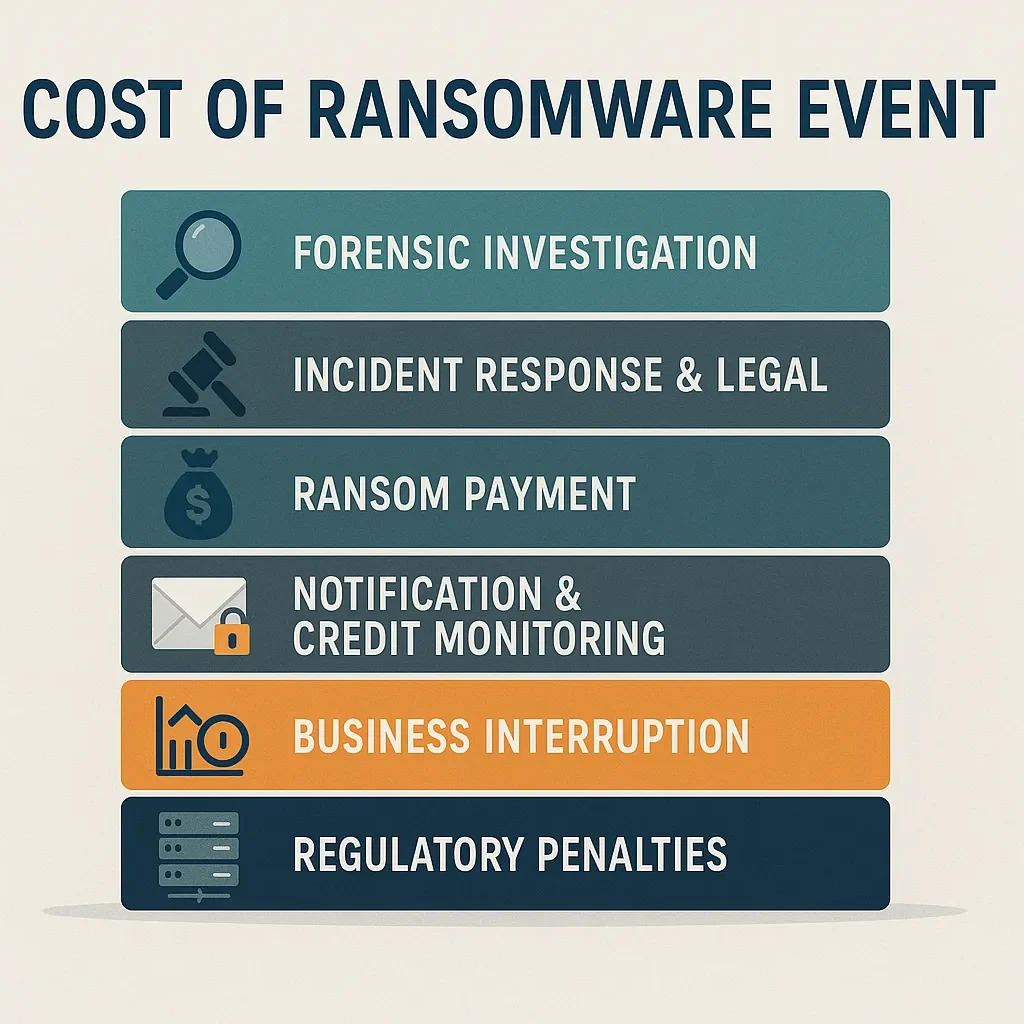
Incident Response & Crisis Management ($25K–$150K+)
Once you discover the attack, you need immediate expert help:
Understanding what cyber insurance covers helps you prepare for these expenses.
Ransom Negotiation & Payment (Variable)
If you decide to pay, you’re dealing with sophisticated attackers who expect negotiation. The average ransom payment reached $247,000 in 2024, but some attacks demand millions.
Notification & Credit Monitoring ($100K–$500K+)
If customer data was compromised, you’re legally required to notify affected individuals:
For businesses with significant customer datasets, these costs often exceed the ransom itself.
Business Interruption Losses (100K–millions)
While your systems are down, and recovery can take days or weeks, you’re losing revenue while still covering operating costs. Business interruption coverage becomes critical for survival.
System Restoration & Recovery ($50K–$500K+)
Recovery means rebuilding servers, restoring databases, verifying system integrity, implementing security upgrades, and testing before going live. Often requiring weeks of around-the-clock effort.
Regulatory Penalties & Fines (25K–millions)
Depending on your industry and the type of data compromised, you may face regulatory fines. Healthcare organizations face , financial services companies face SEC scrutiny, and all businesses must comply with state data breach notification laws.
According to IBM’s Cost of a Data Breach Report 2024, the average cost of a ransomware breach reached $4.91 million, nearly 20 times the average ransom payment itself. Ransomware victims who involved law enforcement saved an average of $1 million compared to those who didn’t.
Example: Distribution Company Attack
A 75-employee distributor experienced ransomware that locked their ERP system:
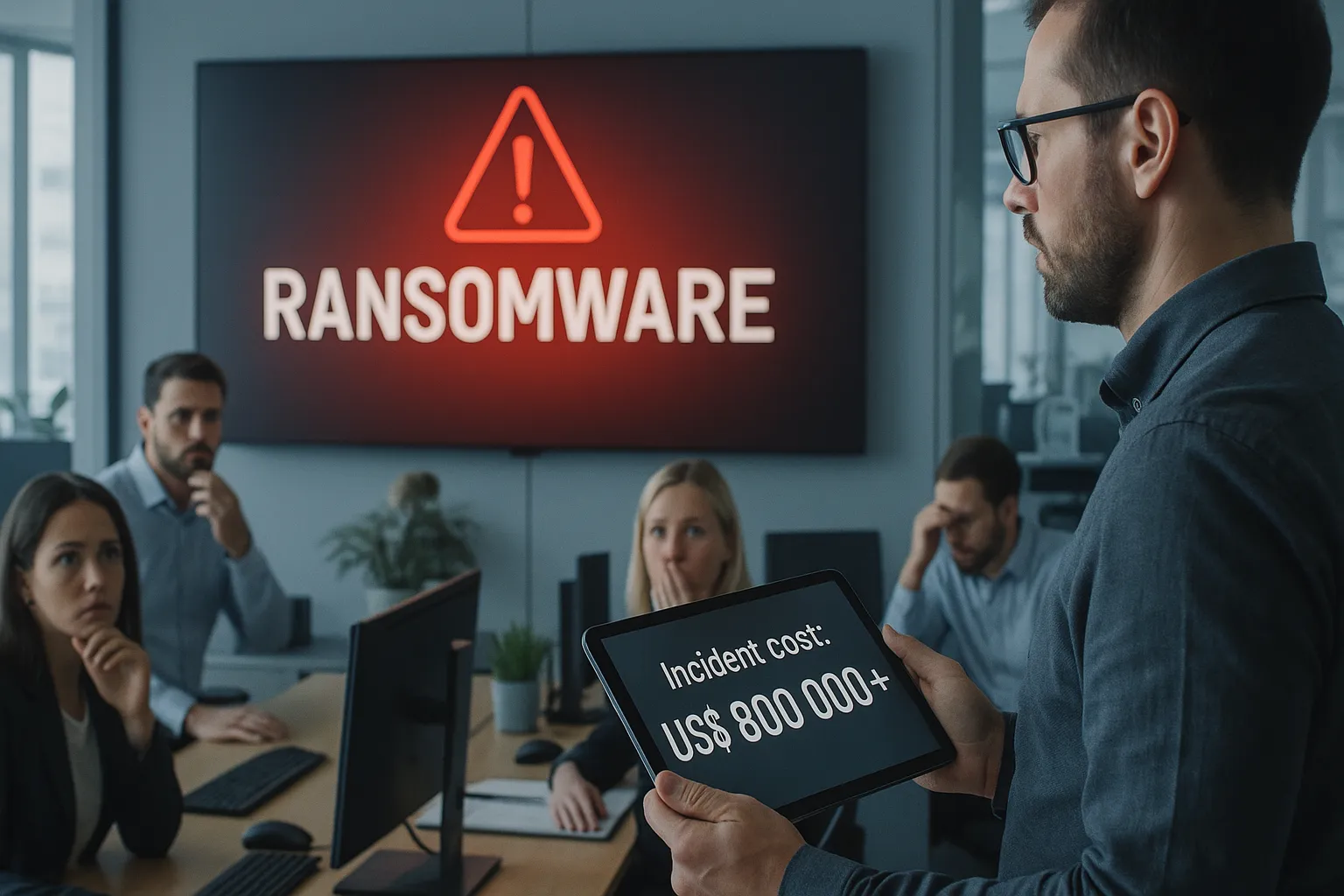
Their $1 million cyber policy covered most expenses, but their business interruption sublimit was only $250,000, leaving them with a $750,000 out-of-pocket gap.
The Customization Question: What Does Your Ransomware Insurance Actually Include?
Here’s where most businesses get tripped up. They assume their ransomware insurance coverage is comprehensive, then discover significant gaps.
How to Read Your Policy for Ransomware Coverage
When reviewing a cyber policy for ransomware protection, these are the specific terms and sections to locate, and what to look for in each:
1. Cyber Extortion / Ransomware coverage part
Look for a section titled “Cyber Extortion,” “Ransomware,” or “Extortion Threat.” It should explicitly list ransom payment as a covered loss. If the word “ransom” only appears in an exclusion or OFAC sanctions carve-out, payment may not be covered. Confirm the limit for this section specifically, it is often a sublimit, not the full policy limit.
2. Business interruption trigger language
Find the section titled “Business Interruption,” “Income Loss,” or “System Failure.” The key phrase to look for is what triggers coverage; ideally, it should read something like “loss of income resulting from a suspension of operations caused by a covered cyber event.” Watch for language requiring a “complete cessation” of operations, which, can exclude partial outages where some systems are still running but revenue is significantly impaired.
3. Incident response services: included vs. reimbursed
This distinction matters enormously. Some policies include incident response services directly, meaning the insurer deploys a forensic firm, breach coach, and negotiator on your behalf at no additional cost, usually through a panel vendor. Others only reimburse you after you hire and pay for these services yourself. During an active attack, you don’t have time to vet vendors. Look for language like “insurer will provide” or “panel vendors appointed by insurer” rather than “insurer will reimburse reasonable costs incurred.” The first gives you resources immediately; the second gives you a receipt process.
4. Waiting period for business interruption
Most cyber BI coverage has a retention period, typically 8–12 hours, before losses are covered. A policy with a 24-hour waiting period can exclude an entire day of downtime before the clock starts. Find this in the definitions or conditions section, often labeled “Retention Period” or “Time Deductible.”
5. Panel vendor requirements
Many policies void reimbursement if you hire outside vendors without prior insurer consent. Find the conditions section and look for language like “consent of insurer required prior to incurring costs.” If you call your own IT firm before calling the insurer’s hotline, you may be paying those costs yourself.

Critical Coverage Questions
Does your policy cover forensic investigation?
Some cap forensic coverage at $50K or $100K, leaving you to cover overages.
Does it cover incident response and legal counsel?
If your policy doesn’t include incident response coverage, you’re paying for expensive expert help out-of-pocket during an active attack.
Does it cover ransom payments?
Some policies explicitly exclude ransom payments due to OFAC sanctions.
Does it cover business interruption?
This is a significant gap in many policies. If your systems are down for a week and you lose $300K in revenue, is that covered?
What are your coverage limits on each element?
You might have $100K coverage for forensics, but if your investigation costs $200K, you’re covering the difference.
OFAC Sanctions Warning
The U.S. Treasury’s Office of Foreign Assets Control prohibits ransom payments to sanctioned entities. OFAC may impose civil penalties on strict liability, meaning even if you didn’t know the attacker was sanctioned, you can still be penalized. Policies with strong extortion coverage include pre-payment sanctions screening as part of incident response. Without it, there is a gap. OFAC Ransomware Advisory
How The Coyle Group Approaches Ransomware Coverage
We don’t treat ransomware insurance coverage as generic. We build it around the actual costs a business faces during a ransomware event.
Ransomware coverage has sublimit traps that most generalist brokers never negotiate around. Standard cyber policies frequently cap ransomware payment and extortion response at 25–50% of the total policy limit, meaning a $1M policy may only provide $250K–$500K for the ransom and negotiation costs themselves, while the rest of the limit is shared across forensics, business interruption, and notification. Brokers who don’t place cyber regularly accept these sublimits as standard.
A specialist negotiates them out, or structures the limit so ransomware-specific costs don’t compete with business interruption coverage for the same dollar. The distribution company example above, $750K out-of-pocket on a $1M policy, is exactly what sublimit misalignment looks like at claim time.
Our Process
Cost Element Analysis
We walk you through each cost element and help you understand what your current policy covers and where the gaps are.
Business Impact Assessment
We ask critical questions:
Custom Coverage Design
Some businesses need stronger incident response coverage. Others need comprehensive business interruption protection. We build coverage that actually protects you for the full ransomware event.
Security Controls That Reduce Risk
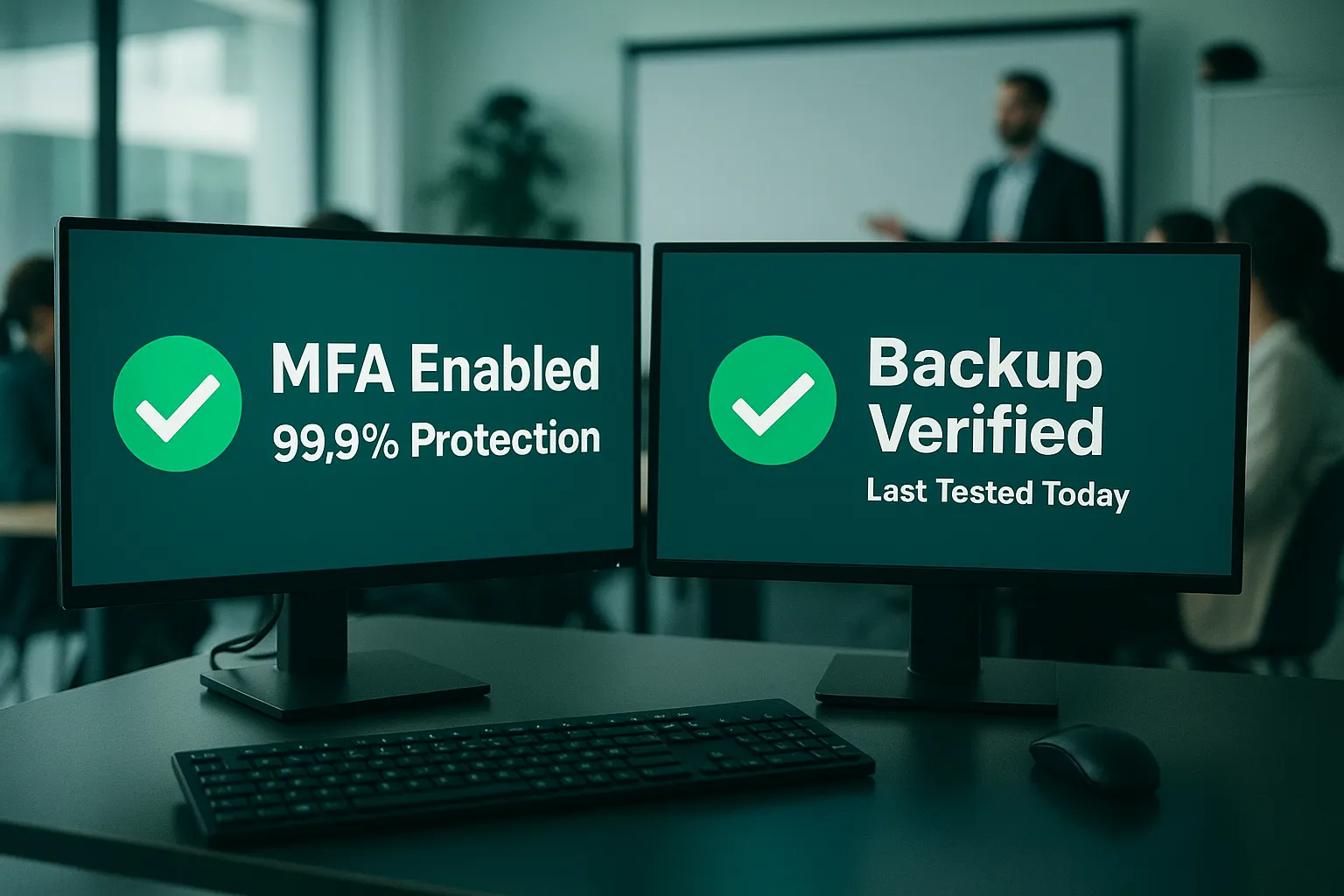
According to , these controls significantly reduce ransomware risk:
Understanding what is social engineering helps you protect against the primary ransomware attack vector.
What Ransomware Insurance Coverage Costs
For most SMBs, ransomware coverage as part of a comprehensive cyber policy runs $2,000–$15,000 annually. The biggest pricing variables are security controls, businesses with verified MFA, EDR, and tested backups pay 20–40% less than those without.
Cost factors
Company size, industry risk, revenue, security posture, claims history, coverage limits, and deductibles all impact pricing. Strong security controls can reduce premiums by 20-40%.
What to Know Before You Buy Ransomware Insurance Coverage
Before purchasing ransomware coverage, three things matter most: whether ransom payment is explicitly covered (not just implied), what your business interruption sublimit is relative to your actual revenue exposure, and whether incident response is deployed by the insurer or only reimbursed after you source vendors yourself.
What Ransomware Insurance Coverage is
Ransomware insurance is not a standalone policy in most cases; it’s a coverage component within a broader cyber insurance program. It pays for losses across the full ransomware event: forensic investigation, incident response, legal counsel, ransom payment (where permitted), system restoration, business interruption, notification costs, and regulatory penalties. The ransom itself typically represents only 15–30% of total incident costs.
Who needs Ransomware Insurance Coverage
Any business that relies on networked systems, stores customer or employee data, or would suffer material revenue loss if systems went down for 3–14 days. That covers most SMBs. Ransomware is no longer a large-enterprise problem; the average victim has 10–500 employees, and attackers increasingly target smaller businesses because their security controls are weaker and recovery resources are limited.
What Ransomware Insurance Coverage covers
What standard or generic policies miss
What drives your Ransomware Insurance Coverage cost
Revenue, industry, number of employees, security controls in place (MFA, EDR, verified backups, training), claims history, and coverage limits. Premiums for SMBs typically run $2,000–$15,000 annually. Strong security controls reduce premiums 20–40%. Missing MFA or unverified backups can result in coverage denial entirely.
What to look for in a broker
Ransomware coverage requires a broker who reads policy sublimit language, not just headline limits. The difference between a $1M policy that fully covers a ransomware event and one that leaves you with $750K out-of-pocket is buried in the business interruption sublimit and the extortion coverage cap. A specialist negotiates these terms at placement, not after a claim is filed. They also know which carriers deploy incident response resources directly versus which only reimburse, and why that distinction matters when an attack is happening in real time.
Questions about Ransomware Insurance Coverage?
Make Sure Your Ransomware Coverage Actually Protects You
Ransomware is one of the most significant threats businesses face. Your coverage needs to reflect the full cost of an attack, not just the ransom payment. Understanding what your policy actually covers, identifying the gaps, and determining whether it aligns with your actual exposure is critical.
At The Coyle Group, we specialize in customizing cyber insurance coverage for businesses. We make sure your ransomware protection covers the full scope of what an attack actually costs.
We’ve helped dozens of clients discover gaps in their coverage and rebuild their policies to actually protect them.
If you’re unsure whether your ransomware coverage is comprehensive, schedule a coverage review with us. Let’s make sure you’re protected for the full ransomware event, not just the ransom.
95+
Years of Family Legacy in Insurance
40+
Years Personal Experience
95%
Client Retention Rate
600+
Educational Videos

This article was written by Gordon B. Coyle, CPCU, ARM, AMIM, PWCA, CEO of The Coyle Group, who has over 40 years of experience working with business owners of all sizes and industries across the US, solving their insurance challenges. Gordon specializes in helping SMBs develop comprehensive cyber insurance programs that protect against ransomware and other cyber threats.
Here’s how to take the next step
Schedule Your Insurance Confidence Assessment
In our 30-minute call, you’ll discover:
Not ready for a call?
Get Free Access to Our Gated Video:
“How to Finally Feel Confident in Your Coverage. “
And discover the exact system we use to help business owners eliminate hidden coverage gaps, stop overpaying, and finally feel confident in their protection.
What Peace of Mind Looks Like
Trusted by business owners across the U.S.
The Coyle Group is 1st class! Gordon and his team are knowledgeable, responsive, and attentive to detail. Gordon is that rare breed of professional who genuinely cares for his clients and works hard to exceed their expectations. I highly recommend them.

The insurance brokerage service was truly tailored to my needs, nothing like those big brokers who steer you toward random policies that don’t fit your profile. Thank you to the team for your help.

I was working with another broker and having difficulty acquiring General Liability coverage. A colleague recommended The Coyle Group. They were able to get coverage bound in just a couple of business days and a policy issued in ten days, and with a solid carrier at a competitive premium. Truly impressive results, plus it was a pleasure working with them. I highly recommend the Coyle Group!

If any business is looking to work with an insurance brokerage firm that is not only excellent at what the firm does, but one that deeply values the needs of the clients, then The Coyle Group is the firm for you. Give them a call and see for yourself. I can assure that you will quickly agree.

Want to know more?
See related blogs

The Crowdstrike Debacle and Cyber Insurance
Tech E&O vs. Cyber Insurance: What You Need to Know
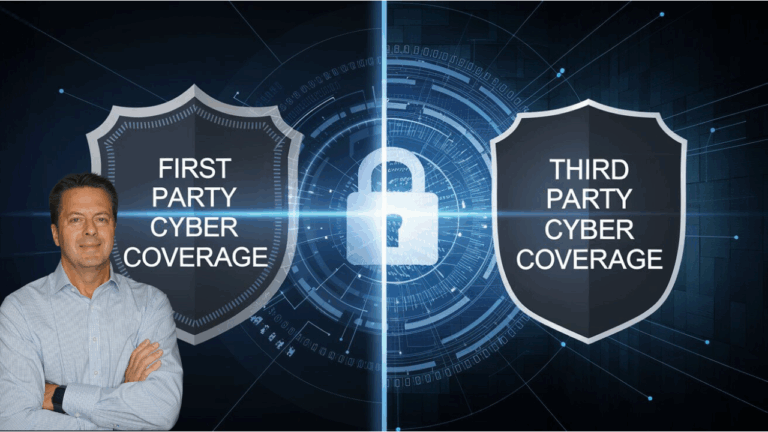
First Party vs Third Party Cyber Insurance: What’s Covered, What’s Missing, and What You Actually Need
