
Product Recall Insurance for Private Label and Imported Products
Who Pays When Your Factory Gets It Wrong

Index

Gordon B. Coyle
CEO, The Coyle Group
845-474-2924
How to get started
TL;DR. Executive Summary
Yes, you can insure products made by an overseas supplier, but the policy has to be built around the fact that someone else made them.
You put your name on the box. Someone else, often a factory on the other side of the world, actually made what’s inside it. Then a batch goes bad, and you find out who carries the cost.
Your name is on the label, so regulators, retailers and marketplaces come to you when a product has to be pulled, not to the factory that made it. We manage the market for you: we read your liability policy, your supplier contract and any recall coverage side by side, find the insurers that will write overseas-made goods, and bring back options you can compare. 95% of our clients stay with us.
Book a 15-minute call before your next production run, not an application.
The Coyle Group is a commercial insurance agency that handles the complex, high-value risks other agencies don’t know how to structure, where the details in the policy are the difference between a paid claim and a denied one.
Recall coverage for goods you didn’t make is exactly that kind of detail.
For the coverage basics, start with our product recall insurance guide.
This page covers what changes when the factory isn’t yours.
Who Pays for a Recall When Someone Else Made Your Product?
You do. If you import the product or sell it under your brand, the recall bill lands on your business, even when the defect started in your supplier’s factory. The part most owners miss is that the money often leaves before anyone is hurt. Here is why, and what it costs.
United States product safety law treats you as the responsible party. The Consumer Product Safety Commission (CPSC) says that if you are a manufacturer, importer, distributor or retailer of consumer products, you must report a possible hazard within 24 hours of getting reportable information, and the law doesn’t require anyone to be injured first (CPSC duty to report).
Your overseas factory has no seat at that table. Imported goods also drive most consumer recalls.
What Doing Nothing Costs
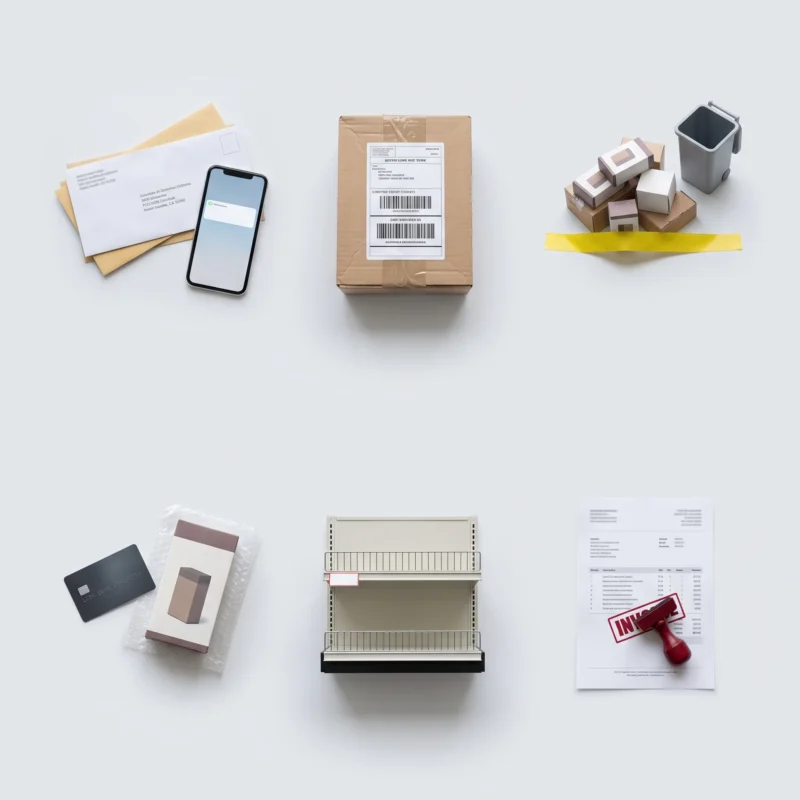
Even a contained pull hits you from several directions at once:
Not sure where your exposure sits today? Contact us and we’ll walk your product line with you.
Can You Insure Products Made by an Overseas Supplier?
Yes. A standalone recall policy can cover goods a factory made for you, as long as you are the named insured and the policy defines your products to include goods made on your behalf. The catch is that not every recall form is written that way. Here is what the right wording looks like.
Strong recall forms built for consumer goods describe insured products as goods manufactured, handled or distributed by you or on your behalf, and they respond to recalls started by you, your customer, a retailer or a regulator.
That second piece matters when a marketplace or a big-box buyer pulls your product before you’ve decided anything.
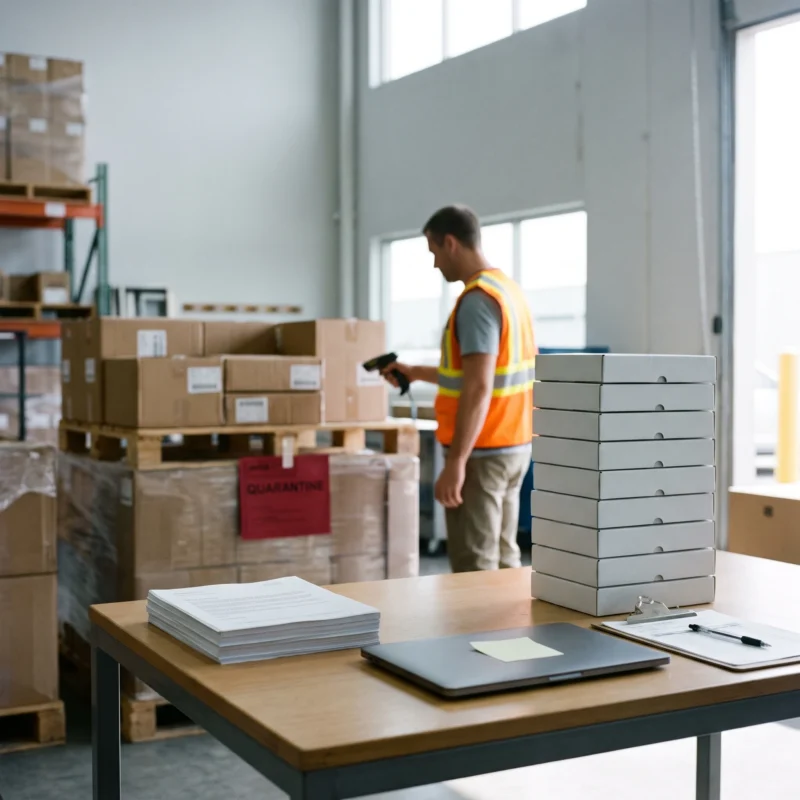
When the wording fits, product recall insurance for private label and imported products typically pays for:
If you sell mainly online, our page on product recall insurance for e-commerce walks through how a pull plays out across marketplaces and your own store.
Recall Policy vs. Product Liability vs. Your Supplier’s Coverage: What Actually Protects You?
Only a standalone recall policy written in your name pays your own recall costs. Everything else either pays someone else or depends on your supplier’s willingness and ability to pay. Most brand owners I meet are leaning on two or three of these at once, and none of them was built for a recall.
It removes the cost of withdrawing, recalling, inspecting, repairing, replacing or disposing of “your product” when it is pulled because of a known or suspected defect. Voluntary or ordered, it doesn’t matter.
Your product liability insurance as an importer pays the injured buyer. It doesn’t pay to pull the product.
I call the comparison below Paper Protection vs. Real Protection: what looks like cover on paper, and what actually pays you.
What you’re relying on |
Pays your recall costs? |
Pays your lost profit? |
Works if the supplier disappears? |
The catch |
|---|---|---|---|---|
|
Your GL or product liability policy |
No |
No |
Yes |
Exclusion (n) removes recall costs |
|
Supplier’s certificate of insurance (COI) |
No |
No |
No |
Foreign policies often exclude United States claims |
|
Additional insured on the supplier’s policy |
Rarely |
No |
No |
Covers their exposure, not yours |
|
Supplier indemnity clause |
Maybe |
Maybe |
No |
Only as good as their ability to pay |
|
Platform order protection or inspections |
No |
No |
Not applicable |
Covers order disputes, not a post-sale recall |
|
Standalone recall policy in your name |
Yes |
Yes, if included |
Yes |
Wording, triggers and territory must fit |
Why Do Your Supplier’s Insurance and Indemnity Usually Fall Short?
Because a promise is only as good as your ability to collect on it. Overseas factories often carry policies that exclude claims in the United States, have no assets here, and can’t easily be sued here.
What we see in practice is a certificate that looks reassuring and a contract that says the supplier will “indemnify and hold harmless.” Then the recall comes. The factory denies the defect, stops answering email, or closes.
Before relying on any supplier promise, I run what I call The Supplier Recourse Test.
Three questions:
Your recall insurer asks the same questions. After it pays a claim, it steps into your shoes to recover from whoever caused the loss. That’s subrogation.
If your contract leaves nothing to recover, underwriters price that in, or decline.
We cover the liability side of this in our page on insurance for imported Chinese products, and the contract mechanics in risk transfer and indemnity agreements.
Want to know how your supplier contract scores? Book a call and we’ll run the test with you.
What Triggers Recall Coverage for a Private Label or Imported Product?
Most recall policies respond when a product has caused, or would likely cause, bodily injury or property damage, whether you pull it yourself or a regulator steps in. The trap is the recall that has nothing to do with safety. That kind of pull can fall outside both your liability and your recall policy.
Here is how common triggers usually line up, and what to check in your wording:
Trigger |
Usually covered? |
What to check |
|---|---|---|
|
Voluntary recall over a safety defect |
Often |
Whether the form says “would result” or “has resulted” in injury |
|
Recall a regulator requests or orders |
Often |
Whether “requests” counts, not just formal orders |
|
Recall started by a retailer or marketplace |
Sometimes |
Whether recalls “by or on behalf of” your customer are included |
|
Accidental contamination or mislabeled allergen |
Often, on contamination forms |
Whether allergen mislabeling is named |
|
Quality or performance failure with no safety risk |
Rarely |
Usually excluded as failure to perform |
|
Non-compliance with no injury risk |
Rarely |
The commercial-defect gap |
That last row matters more for imported goods than anything else on this page. A shipment that fails a United States standard, carries the wrong label or lacks a required certificate may have to come off the market even if nobody could get hurt. The stakes went up in 2026.
Since July 8, 2026, importers of regulated consumer products must eFile compliance certificates before goods enter commerce.
If you import food, the Food and Drug Administration (FDA) also requires you to verify your foreign supplier under its Foreign Supplier Verification Program (FSVP).
Supplement brands face their own layer, covered in our page on private label supplement insurance.
What Do Underwriters Look At Before They Cover Overseas-Made Goods?
Underwriters decide eligibility on five things: your product’s hazard, your supplier controls, your contract recourse, your traceability and your recall plan. Get those in order and overseas manufacturing stops being a deal breaker. Skip them and you’ll hear “we don’t write private label,” even with a clean record.
From what I’ve seen, the brand owners who get declined usually aren’t too risky. They just couldn’t show their work.
Diagnosis comes before quotes, so this is what we put together first:
Factor |
Why underwriters care |
What to have ready |
|---|---|---|
|
Product and hazard class |
Children’s products, ingestibles and batteries carry the highest recall frequency |
Product list, intended users, applicable safety standards |
|
Supplier controls |
They need confidence the factory makes what you approved |
Supplier names and countries, written specifications, approval process, inspection reports |
|
Contract recourse |
It decides whether they can recover after paying a claim |
Supply agreement with indemnity, insurance requirements and a United States forum |
|
Traceability |
It decides whether you recall one lot or everything |
Lot and batch coding, records linking lots to shipments and customers |
|
Recall plan and loss history |
It shows you can act fast and have done it before |
Written recall plan, a mock recall result, five years of loss history |
Everything else about your import program, like cargo, warehouse stock and trade credit, sits on our importer insurance page.
Red Flags in a Private Label Recall Program
Want a second set of eyes on any of these? Contact us and we’ll check them against your policies.
What Should Your Supplier Contract Say Before the Next Production Run?
Your supplier contract should make the factory pay for what it causes, prove it can pay, and let you enforce that in the United States. It’s also the document your recall underwriter reads closely. The good news is you don’t need perfect terms to get covered. You need clear ones.
Here’s the checklist I use with brand owners who manufacture overseas or through a contract manufacturer:

Many factories won’t sign all of this. That’s normal.
The point is to know which gaps you’re keeping, so your recall policy, not your cash, absorbs them.
How Much Recall Coverage Does a Private Label Brand Need?
Enough to pay for your worst realistic recall, plus the profit you’d lose while the product is off the market. For most established brands, that number lands far above the small recall sublimits tucked inside package policies. The math is simple, and it usually ends the debate.
Build your number from these pieces:
Cost piece |
How to estimate it |
|---|---|
|
Units in the field |
Your largest lot or production run that’s sold or in transit |
|
Freight both ways |
Return shipping plus shipping of replacement stock |
|
Storage and destruction |
Quarantine space plus disposal or reconditioning |
|
Refunds or replacement |
Retail value of affected units |
|
Retailer chargebacks |
What your biggest customers would bill back |
|
Lost gross profit |
Weekly margin on the product times the weeks you’d be off the market |
Our breakdown of what a product recall costs shows how quickly these add up.
Price depends on product type, annual sales, distribution, supplier controls and loss history, so I won’t quote a number without seeing yours.
Treating that inner limit as real recall protection is like treating a spare tire as a second car.
Ready to size it against your actual volumes? Book a call and bring your largest lot size.
What Won’t Product Recall Insurance Cover?
Recall insurance won’t pay for defects you knew about before you bought it, quality problems with no safety risk, fines, or a product redesign. Those limits are normal. What hurts is discovering them after a recall starts, so here is the short list to read before you sign.
Usually covered |
Usually excluded |
|---|---|
|
Notification, retrieval, storage and destruction |
Defects you knew about before the policy started |
|
Refunds or replacement product |
Quality or performance complaints with no safety risk |
|
Lost gross profit for a set period |
Regulatory fines and penalties |
|
Crisis communication help |
Redesigning or improving the product |
|
Third-party recall costs, if included |
Liability you took on by contract beyond what the law requires |
|
Recalls a regulator requests, if worded that way |
Recalls started outside the policy territory |
Bodily injury and property damage claims stay with your product liability policy.
The two policies have to work together, with no gap in between.
How Do We Build a Recall Program for an Importer or Private Label Brand?
We start with what you already have, not with a quote request. Then we line up your liability policy, your supplier contracts and your recall exposure before any insurer sees your account. That order matters more for overseas-made goods than almost anywhere else, and here’s why.
Bottom line is that almost all insurance programs we review contain at least one fatal mistake.
How we work:

For you, that means fewer applications, no duplicate requests and one point of contact. We return calls and emails within one business day.
That’s in our ocean cargo case study.
How it plays out:
A home goods brand imports a kitchen appliance from an overseas factory. A component swap the factory never disclosed starts causing overheating complaints. The brand reports to the CPSC and announces a voluntary recall of two production lots. The factory blames the parts supplier and stops responding. The brand’s product liability policy handles the injury claims that follow, but pays nothing toward the pull. A recall policy written around goods made on the brand’s behalf pays notification, return freight, destruction, refunds and the lost profit while the product is off the market. The insurer then pursues the factory under the supply agreement, which only works because that agreement named a United States arbitration forum.
What About Getting Quotes From Several Brokers?
Comparing options is smart. The problem is how it usually happens. When several brokers send the same account out, the same few recall insurers see duplicate submissions, and a generalist can misclassify a private label importer as a simple distributor.
You answer the same questions three times and still get a price-only comparison.
Who This Isn’t Right For
If you’re still testing a first product, a basic packaged policy may serve you better for now, and I’ll say so. And if the plan is to put three brokers in a race, we’re not the right fit.
We get hired to win, not to bid.
Questions about Product Recall Insurance For Private Label And Imported Products?
Build Recall Coverage Around the Factory You Don’t Control
When someone else makes your product, your insurance has to be built around that fact: the factory, the contract and the label with your name on it. That’s the difference between being covered and being adequately covered. It shows up when a lot fails testing, when a retailer pulls your product, and when your supplier stops answering.
Our family has been in the insurance business since 1929, and we only do business insurance. We’re independent, not captive to any carrier. We review contracts before you sign, start renewals 90 to 120 days out and re-underwrite your business every year, which matters every time you add a factory or a product. You don’t need five brokers shopping your insurance. You need one capable broker making sure the right insurers compete for your business.
The first step costs nothing and doesn’t disrupt your current broker. We put your liability policy, your recall coverage and your supplier contracts side by side, then tell you what’s working, what’s missing and what I’d change.
Book a 15-minute call. If your program is solid, I’ll tell you that too.
This article was written by the CEO of The Coyle Group, Gordon B. Coyle, CPCU, ARM, AMIM, PWCA, who has over 40 years of experience working with business owners of all sizes and industries across the US, solving their insurance challenges.
Here’s how to take the next step
Schedule Your Insurance Confidence Assessment
In our 30-minute call, you’ll discover:
Not ready for a call?
Get Free Access to Our Gated Video:
“How to Finally Feel Confident in Your Coverage. “
And discover the exact system we use to help business owners eliminate hidden coverage gaps, stop overpaying, and finally feel confident in their protection.
What Peace of Mind Looks Like
Trusted by business owners across the U.S.
The Coyle Group is 1st class! Gordon and his team are knowledgeable, responsive, and attentive to detail. Gordon is that rare breed of professional who genuinely cares for his clients and works hard to exceed their expectations. I highly recommend them.

The insurance brokerage service was truly tailored to my needs, nothing like those big brokers who steer you toward random policies that don’t fit your profile. Thank you to the team for your help.

I was working with another broker and having difficulty acquiring General Liability coverage. A colleague recommended The Coyle Group. They were able to get coverage bound in just a couple of business days and a policy issued in ten days, and with a solid carrier at a competitive premium. Truly impressive results, plus it was a pleasure working with them. I highly recommend the Coyle Group!

If any business is looking to work with an insurance brokerage firm that is not only excellent at what the firm does, but one that deeply values the needs of the clients, then The Coyle Group is the firm for you. Give them a call and see for yourself. I can assure that you will quickly agree.

Want to know more?
See related blogs

Product Liability Insurance for Importers: What You Need to Know (Video)
How to Protect Your Business From a Product Recall
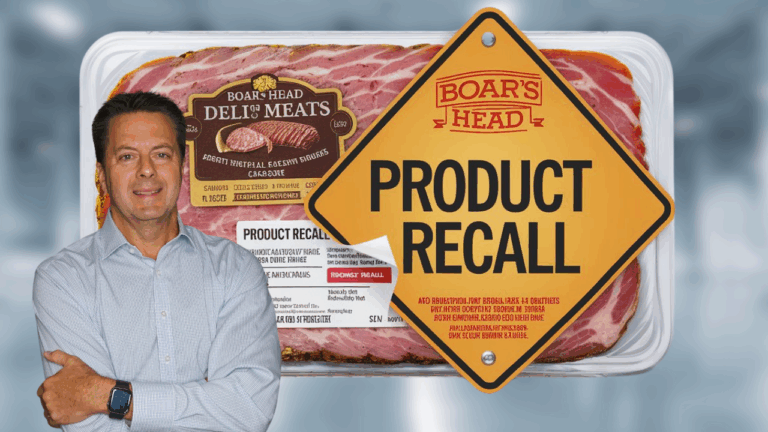
The Boar’s Head Product Recall – What’s Insured?
